

Spraying Your Walls With Vinegar: What It's For And Why It's Recommended
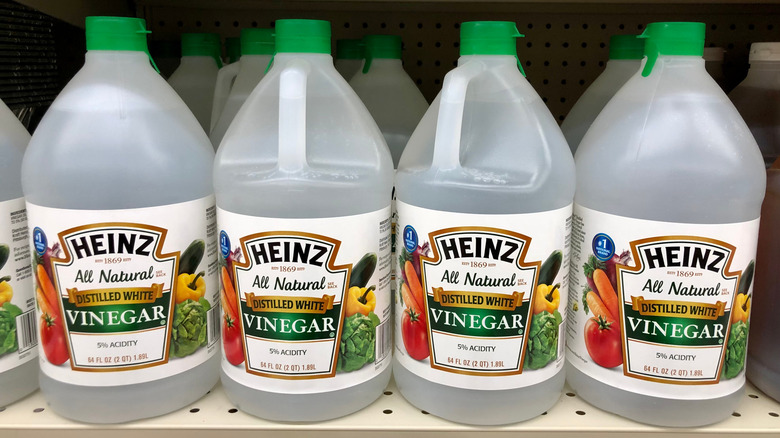
Nothing's worse than watching moisture on your walls slowly turn into mold. Whether it's after a long shower or the kitchen humidity was through the roof at dinner, you can't always avoid mold growth. At some point, you'll have to deal with those walls because it'll only get worse the more you wait. Luckily, there's a simple solution that's probably already in your pantry: White vinegar is a powerful ingredient that works like magic to clean walls.
Spraying vinegar on your walls can help contain all the excess moisture and act as a preventative step before mold takes over and causes damage. White vinegar contains acetic acid, which can fight small amounts of mold and bacteria, especially if you address it early. It's also especially effective when done routinely, so you'll want to start cleaning the walls in high-moisture areas, like bathrooms and kitchens, on a monthly basis. Of all the different ways you can use vinegar to make your kitchen sparkle, using it on the walls probably wasn't what you expected, but it works like a charm.
All you'll need to get started is white vinegar, a spray bottle, a scrub brush, and a soft cloth. While this cleaning method is effective for addressing small areas of light mold, it's not for in-depth or large mold problems. In fact, it's important to note that the Environmental Protection Agency (EPA) advises that you seek out professional help with cleaning any mold that covers more than 10 square feet of space (which is a little under 3 feet by 3 feet).
How to safely and effectively clean walls with white vinegar
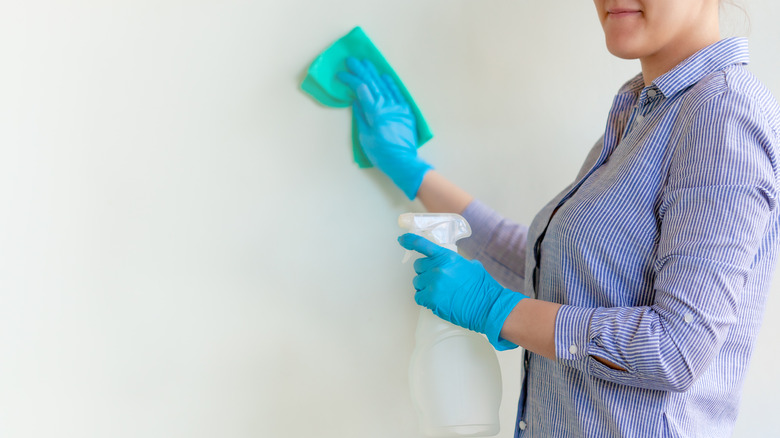
This might be one of the easiest ways to clean your interior walls, but before you jump into your new wall-cleaning routine, make sure you are working in a well-ventilated area, especially if you're cleaning a space that already has some mold showing up. You can do so by opening a window or turning on a fan (or both). It's important to also wear protective gear, like gloves, a face mask, and safety glasses.
Pour the white vinegar into a spray bottle and spray it directly onto the wall. Allow it to sit for 30 to 60 minutes. Then, scrub the area with a cleaning brush that has firm bristles for extra tough areas or softer bristles for routine cleaning. Use a damp cloth to wipe down the walls after scrubbing. Keep the window open or the fan on to ensure that the wall has enough time and ventilation to fully dry.
When you're done, wash your cleaning tools extremely well, especially if you suspect any mold was present. Alternatively, throw them away to prevent spreading mold that might be lingering on the tools. If you're noticing recurring issues with excess moisture or mold on your walls, make sure your space is adequately ventilated so moisture from showers or cooking are able to dry out. You may also want to check if there are any leaks from outdoors or in your pipes.