

Woven Willow Edging Gives Mulched Flower Beds A Cottage-Garden Border

We may receive a commission on purchases made from links.
Until recently, cottage gardens were considered quaint and old-fashioned — and not in a good way. Today, however, this whimsical style is increasingly coveted by homeowners. Peruse any ultimate guide to cottagecore decor, and you're likely to see cottage gardens mentioned. They're carefree, charming, and colorful — outdoor spaces where casual mixed plantings replace strictly sectioned-off garden beds and fuss-free natives take the place of high-care introduced species. In a cottage garden, maintenance focuses primarily on plant health rather than keeping things looking tidy. In this gardening style, the plants are the stars of the show. However, that doesn't mean you have to forgo decor altogether. Lean into the rustic look and edge your mulched beds with woven willow.
Woven willow is often overlooked in favor of edging made from other materials — think plastic, metal, or stone. In fact, it's a natural landscape edging idea to elevate your yard that's well worth considering. Thanks to its gorgeous texture, natural coloring, and imperfect finish, woven willow edging is right at home in a cottage garden. Plus, it easily holds in the mulch you'll definitely be laying on your beds if you want to keep your plants healthy. If you really want to embrace cottage living, you can weave the edging yourself, though we won't blame you for taking advantage of the modern luxury of buying it pre-woven. Woven willow edging does have a downside: it naturally decomposes over time. This is unavoidable when using any eco-friendly material in the garden.
How to decide if woven willow edging is right for your garden
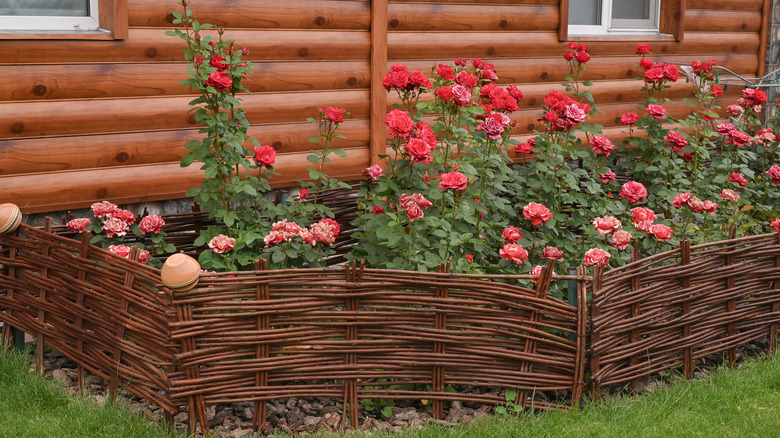
Let's start with the pros of woven willow edging. It's traditionally made from the stems of coppiced shrubs in the Salix genus, which regenerate incredibly quickly — so quickly, in fact, that willow biomass is being explored as a renewable source of energy. This, coupled with the fact that it adds nutrients to the soil as it breaks down, makes it an extremely green option for garden edging. Oh, and did we mention that it's got an undeniably whimsical aesthetic? The wide range of designs on the market makes it easy to find an option that looks great around mulched beds in cottage, boho, or even tropical landscapes. Arguably, the only setting where willow edging might look a bit odd is in particularly modern, structured gardens.
With all the good willow edging brings, there's a little bad, too. You can extend the lifespan of woven willow by treating the stems with a mixture of boiled linseed oil and turpentine — it's also a simple solution that gives your rustic wicker basket decor more life and better protection. They will, however, eventually break down from constant exposure to the elements. What's more, gardeners who live in humid or rainy areas should take note: willow will rot if it's consistently waterlogged, especially when it's holding back damp mulch. Woven willow also isn't a strong material. It's a fantastic choice for visually sectioning garden beds from a lawn or from one another, but it's primarily decorative. Woven willow is far too lightweight to control soil erosion or function as a retaining wall. You'll need to explore other materials if you need edging for these purposes.
How to install woven willow edging in a cottage garden
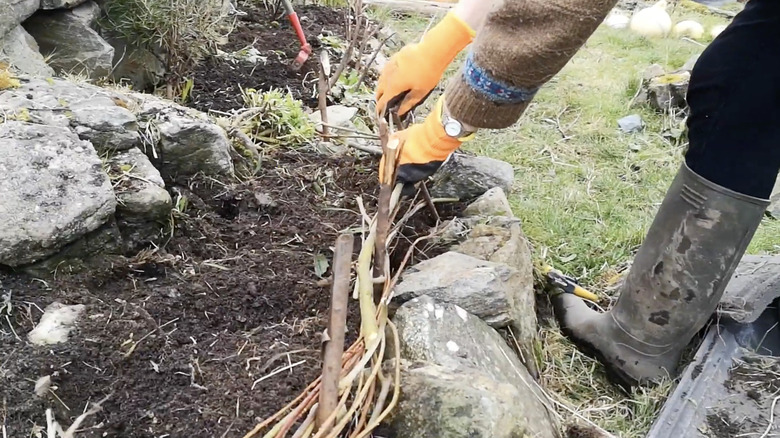
Installing woven willow edging around a mulched bed isn't all that difficult. If you're buying pre-made edging, measure the perimeter of the bed and select edging that matches the existing style of your garden. The Relaxdays Willow Flowerbed Edging is almost 4 inches tall and costs just a bit over $74 for a set of 10 panels that are 40 inches long. It's a great pick for a rustic, simple garden. There are also more detailed options, like the MGP Cross-Pattern Woven Willow Edging. You get a four-pack for around $61. Pre-made edging comes in panels or rolls. Regardless of how it arrives on your doorstep, all you need to do to install it is drive the pointed stakes attached to the bottom of the edging into the ground around your garden bed, then add some mulch.
You could also DIY some woven willow edging. If you have a supply of willow stems on hand or can get some for free from neighbors, friends, or family, it's relatively simple to construct a border from this flexible material. Select some thick stems for the stakes or uprights, cutting them to whatever height you want your edging. Drive them into the ground around your garden bed at regular intervals — about 10 inches apart will do. Then begin weaving the longest, most supple willow stems horizontally through them. The final result may look a little messy, especially if it's your first attempt at woven willow edging, but in a cottage garden, such imperfections only add to the aesthetic. Protect your creation with a finish of boiled linseed oil and turpentine so you can enjoy your handiwork for several years.