

The Door To Your Attached Garage Could Be Why It Feels Drafty
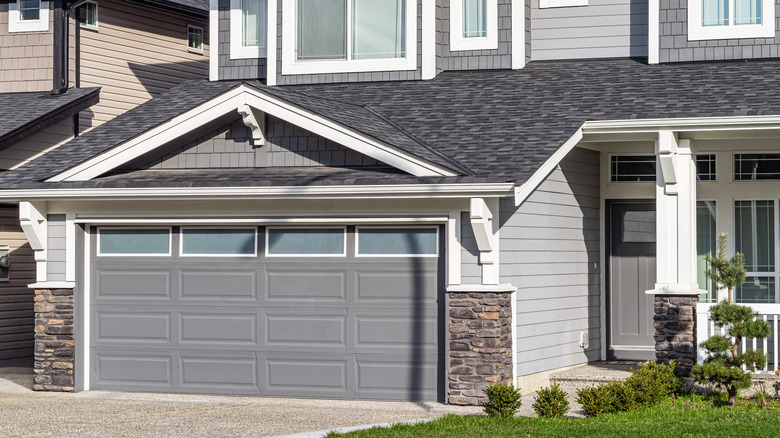
If a room with a little chill has you reaching for extra blankets, the real source may not be your windows or the fact that older homes inevitably get draftier. That unwanted cold air could be coming from somewhere else entirely, especially for home owners with an attached garage. You'll already know that your garage gets seriously cold in the winter and so if the door that sits between the garage and your heated living space is accidentally letting cold air slip through, this can make nearby hallways and rooms feel much colder than they need to be.
The way to test for drafts actually costs nothing — simply close the door to your garage and run your hand around the top and sides to see if you can feel moving air (wetting your hand first can make the draft more apparent). Or you can hold a strip of tissue paper or an incense stick near the edges and watch to see if the paper or smoke moves; if it does then you know that air is getting through. You can also easily check the door for drafts with a match or a candle – a flickering flame can be an indicator of air leakage. Another easy trick is to check if you can spot visible daylight coming through any gaps between the door and frame — the weatherstripping should sit snugly around the frame rather than looking cracked or loose. Once you have determined that the cold draft is coming from the garage in the first place, then you can start fixing the problem.
A better seal can stop the chill
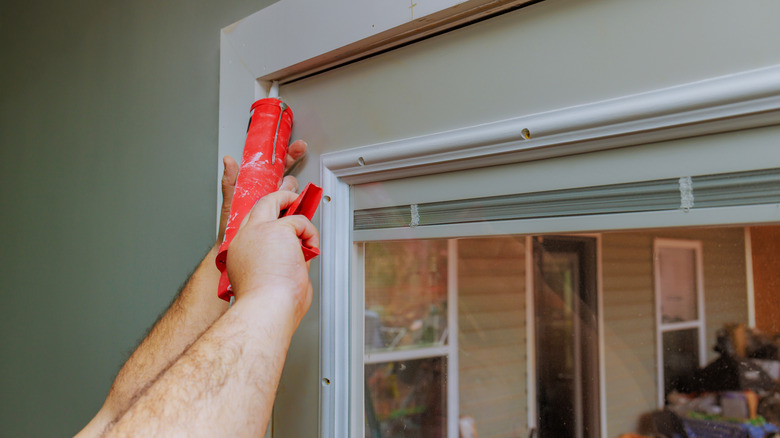
If, upon inspection, you've determined that the weatherstripping around the garage door has been compromised, you can simply replace it with an appropriately fitted seal. These seals come in several materials that include rubber, vinyl, and foam, and choosing the best weatherstripping material will depend on both your door and the size of the gap in question. Don't forget that the bottom edge deserves attention too, since gaps anywhere can be what are letting in a stream of cold air.
In the quest for a warmer hallway, be mindful not to sacrifice the door's actual functionality — especially a door that connects to an attached garage because these need to have certain fire safety requirements. The self-closing function must remain intact too, so do not remove or disable a closer, prop the door open, or use weatherstripping that prevents it from closing and latching properly. While we all love a DIY, there is also no harm in calling in a professional for the job, especially if the door or frame is damaged.