

Say Goodbye To Traditional Mulch: The Popular Garden Vegetable That Can Suppress Weeds
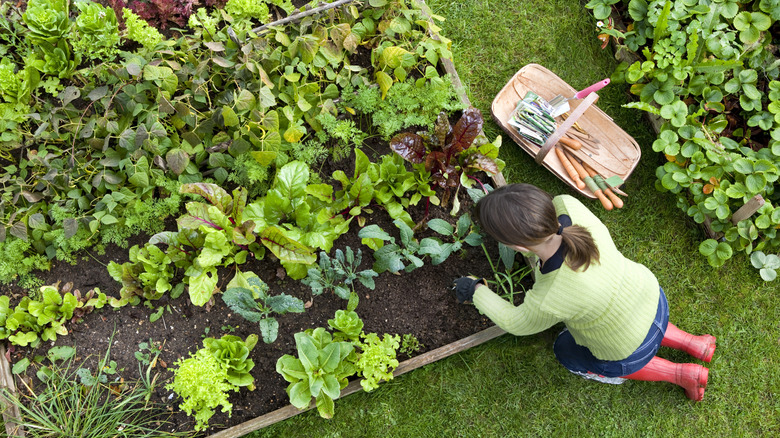
Mulching is crucial to a garden's health. A layer of mulch stops sunlight from reaching annual weed seeds and protects the soil during heavy rain, preventing it from washing away. Mulch also helps retain moisture in a garden bed during intense heat and drought cycles, as well as insulate plant roots in cold weather. Green mulches add nutrients to the soil as they decompose. Ever wonder what to do with those oversized, inedible leaves that your rhubarb (Rheum rhabarbarum) produces each season? Don't overlook their usefulness in providing mulch in the fall for stronger, healthier plants in the spring. Even better, turning yard scraps into DIY mulch (and compost) gives you a free, never-ending source of this nutrient-rich, protective material.
Unlike other green materials, such as lawn clippings, rhubarb leaves don't contain any weed seeds or stems that could take root in your garden. However, as with other green compost materials, you'll need to reapply or replace rhubarb leaves more often than you would other longer-lasting organic mulches like straw or wood chips. The best time to remove rhubarb leaves is in fall, after the plants have experienced their first hard freeze. That gives the foliage and stalks a chance to send nutrients to the plants' roots after the spring harvest. After that happens, the leaves are ready for their second life as mulch. Some people may be concerned about the toxic oxalic acid in rhubarb leaves — it's what makes them unsafe to consume, after all. When you use the leaves as mulch or drop them into your compost pile, the oxalic acid won't harm the plants in your garden because plants don't absorb it easily.
Shred rhubarb leaves for best results as mulch
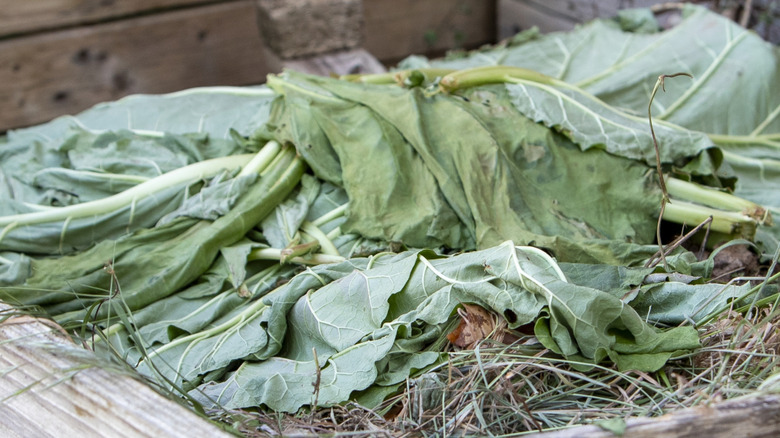
The size of rhubarb leaves can be both a pro and a con when you use them as mulch. On the one hand, a single rhubarb plant can produce a significant amount of mulch. On the other hand, large, flat mulching materials can block too much of the air, water, and sunlight that plant roots need to thrive. Taking the time to chop or shred your harvested rhubarb leaves will give you the best of both worlds — large amounts of free mulching material that's broken down to the ideal size to let essential inputs through.
Without question, chop 'n' drop pruning is the easiest and best way to take care of your plants. To benefit the soil the rhubarb is growing in, you could simply trim the leaves and leave them where they fall. In colder climates, employing the chop 'n' drop method in fall means the rhubarb foliage will cover the bare soil, helping to protect the soil — and any nearby plant roots and crowns — from harsh winds and deep freezes. Discard any trimmed leaves that look notably diseased or infested with insects, just as you would with any other organic mulching material.
Of course, you can also use rhubarb leaves as mulch elsewhere in the garden, like on your vegetable beds. The non-edible parts of other kinds of veggies are typically not suitable for mulching because they're more likely to harbor insect eggs or disease spores than rhubarb leaves. Although rhubarb isn't immune to these issues, rhubarb plants are quite pest resistant, and their large leaves are also easier to inspect for problems. In fact, you can make a tea using the leaves that may repel insects!