

Why Potted Hydrangeas Often Don't Return After Winter
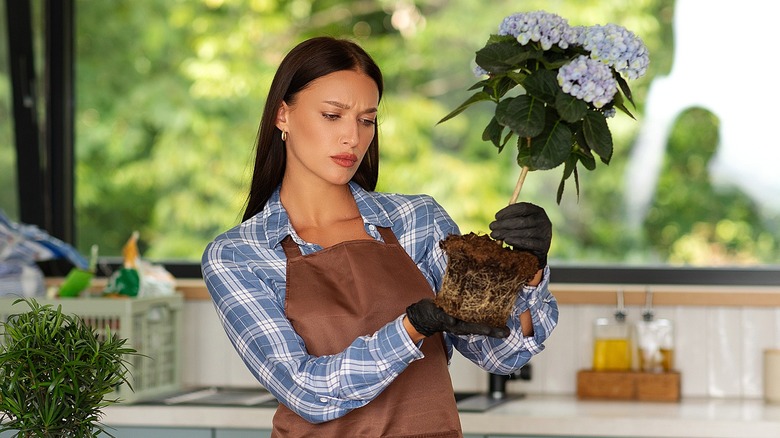
If you're wondering why your potted hydrangeas keep dying, you're not alone. While several members of the Hydrangea species are small enough to fit in pots, that doesn't mean they were bred to be long-lasting. The trick is to find the best way to extend the life of florist-type gifts as long as possible, while also focusing on container-sized plants that can live indefinitely.
Your first opportunity to avoid the mistakes everyone makes when growing hydrangeas in containers starts at an unlikely place: the garden center. Which type of hydrangea variety you choose can make a big difference toward its ultimate survival. Don't confuse patio types that just happen to be compact enough to grow in containers with those that are specifically prepared to bloom indoors for a few months, also known as florist hydrangeas, which are generally not winter hardy. They're often varieties of bigleaf hydrangea (H. macrophylla) – often not the best type for long-term container culture. Think of them more as poinsettias. They're there to brighten your days until the real outdoor action begins.
If you do want to take a chance on a potted hydrangea, plant it outside in the spring where it can get the most protection from the elements. Give it a severe pruning in midsummer, to more than 5 inches above the soil-line to promote new blooms. Then, before the first frost, protect it inside a burlap covering with good insulation like peat moss.
Growing potted hydrangeas successfully
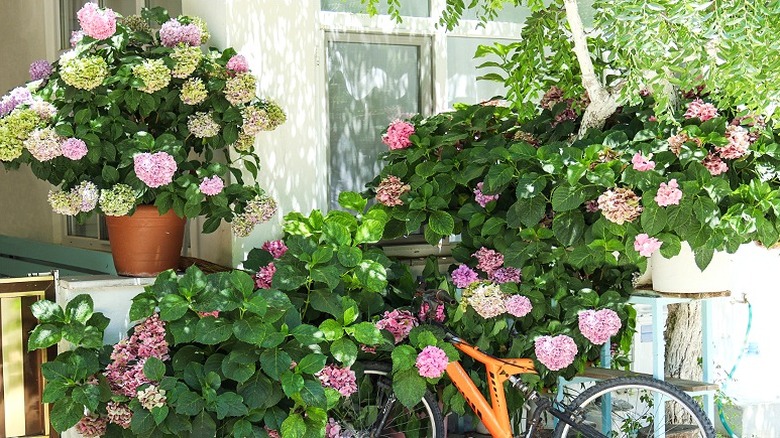
If you've purchased a non-blooming, potted hydrangea, even in the winter, it's likely meant to be planted outdoors in the spring. Sometimes these are sold as out-of-season specials from garden centers. These can actually be planted in the colder months, as long as the ground is not too frozen to work. Until then, keep the plant in an unheated room so that it doesn't break dormancy too early, and water them about once a week.
But when you're aiming to grow hydrangeas in pots long term, look for the ones most suitable for container culture. Compact options include mophead types like 'Annabelle,' oakleaf varieties such as 'Alice,' cone-shaped cultivars such as 'Little Lime,' and lacecap options including 'Norma.' Plant them in a container (with good drainage holes) that is at least 18 to 24 inches in diameter and at least the same deep.
Place your potted hydrangea outside in the warmer months, where it can get full or partial sun. When settling your hydrangea into its container, don't skimp on the amount of potting soil. The growing shrubs' roots will need soil that goes all the way to the bottom, rather than encountering filler material. Include a slow-release, balanced fertilizer such as 10-10-10. Because soil in pots dries out more quickly than garden soil does, check the moisture level about 1 inch below the soil line and water when needed. Crucial things to do for potted hydrangeas before the first frost include moving them to an unheated indoor space and wrapping the pot in burlap.