

How To Keep Your Lawn Mower Deck From Rattling With A Simple Fix

Lawn mowing and caring for your property can be a dirty, noisy job when you use power equipment. While you're sweating and struggling through a mowing job (or if you're wearing hearing protection like you should), you might not pay as much attention to the shaking and rattling noises your machine is making. If you're feeling new vibrations or hearing louder-than-normal noises from the machine, though, it's time to investigate the source and determine whether it needs repairs.
Severe rattling noises and massive vibrations could be a sign that you need to replace your lawn mower deck. However, before you undertake that expense, you can perform any of several DIY tasks designed to fix the rattling problem and return the deck to normal operation with fewer scary noises. The most common causes of rattling noises and vibrations from a walk-behind lawn mower's deck include loose bolts, screws, and mounting brackets. If you have a riding mower, the mounting brackets, hairpins, and bars that support the floating deck could be loose, worn, bent, or broken.
Why the deck on your push mower is rattling and making noise

One of the most overlooked lawn mower maintenance tasks is checking your machine for loose bolts and other loose parts. Although a walk-behind mower deck has a simple design, it has a number of bolts, brackets, and screws that affix different components and hold everything together, including securing the motor to the body. When these loosen or fall off, the deck may begin rattling and vibrating, leading to excessively noisy operation. Before putting the push or walk-behind lawn mower into storage after using it, just use your fingers to check the tightness of the bolts and screws you can see. Use a screwdriver or wrench to tighten any loose items after observing a few safety precautions. Remove the spark plug boot, drain or seal the fuel so that gas does not leak into the carburetor while the machine is tilted, and if you are tightening the main blade bolt, be sure to clamp the blade.
Use caution and don't overtighten these bolts and screws, or you could damage the deck or the fastener. Each fastener might have a different requirement, and your lawn mower's user manual may have this information. Engine mounting bolts may need to be tightened to about 250 in-lbs, for example, while fuel tank mounting screws may only need 40 in-lbs of torque. If you can't measure the torque, some people suggest hand tightening the fasteners until they're snug and then only going another quarter or half turn.
How to alleviate a vibrating riding lawn mower deck
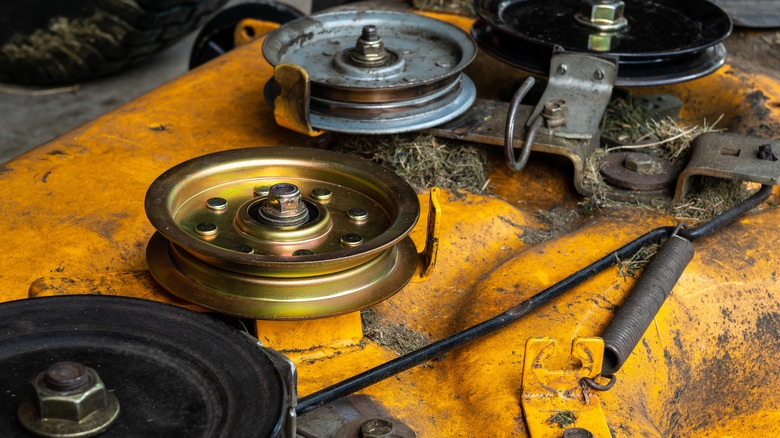
Riding lawn mowers have more complex designs than a walk-behind model. They usually include a floating deck, so they may have more areas susceptible to vibrations that can lead to rattling noises. A floating deck hangs from the riding lawn mower's frame using brackets, mounting arms, and bolts. This suspension system allows the deck to move independently from the machine's body, which prevents cutting the grass too short in hilly areas (called scalping). You should regularly check the condition of bolts, brackets, pins, and screws along the top of riding unit's floating deck. Tighten any of them that seem loose. As always, be sure to disconnect the spark plug wire and lower the mower deck before doing this.
Additionally, inspect the top of the deck whenever you hear rattling noises. Pay particular attention to the spindles that hold the blades in place on the deck, as they can loosen and create vibrations and significant noise. The area where the motor mounts to the riding lawn mower's frame also has bolts and screws that could come loose and create rattling noises.