

Can A Handheld Moisture Meter Tell If A Wall Stain Is Still Wet?
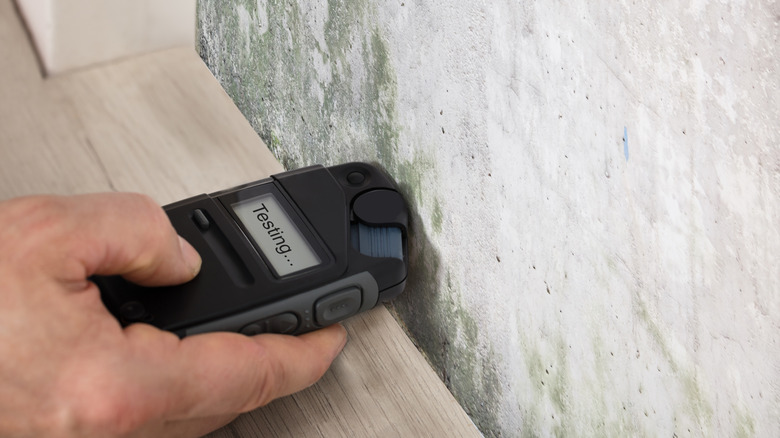
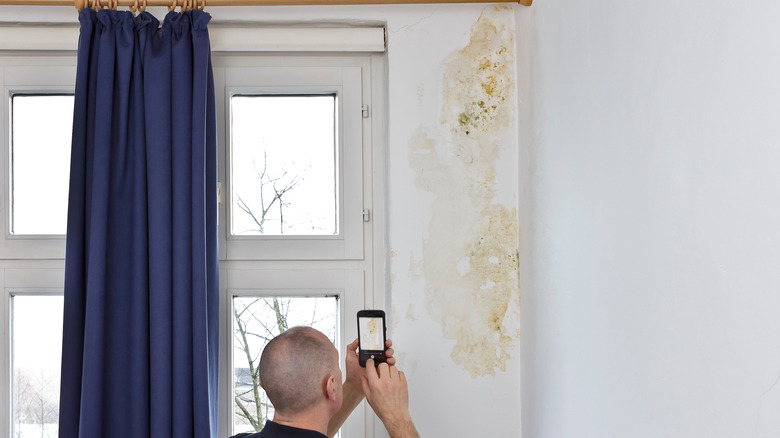
Hidden moisture in your walls is no joke. Without you even knowing, you may end up with mold and severe structural damage. Unsightly water stains on your walls or ceiling are never a good sign. Unfortunately, it can be difficult to tell if a suspicious mark on the wall is old, new, or growing. This is especially the case if it was covered by wallpaper or furniture and you aren't sure when it first appeared. Touching the stain doesn't always provide the answer, because it might feel dry on the surface but still be holding water deeper inside the wall. Thankfully, moisture meters can help you see if that stain is still wet underneath, but it's important to get the right one and use it correctly.
There are two main types of handheld moisture meters: pinned and pinless. With a pinless meter, you simply sweep the tool across your wall, and it will detect moisture up to about 3/4-inch deep. These can help you quickly identify which areas might be wet, and they don't leave any holes behind.
However, with a stain on your wall, you can already see where moisture has been sitting. Now you want to know just how moist it is. To save time and get the most accurate reading you can, a pinned meter is best to figure out if water stains are still wet. Pinned meters use two prongs that you push into the wall. These prongs measure the electrical current passed between them to determine if there is a high or low moisture content based on conductivity. They are often used in unfinished areas or damaged walls where pin holes in the material won't make a difference. Although it will leave holes, you'll probably want to replace the stained wall or ceiling at some point anyway.
Yes, a pinned moisture meter provides the most accurate readings
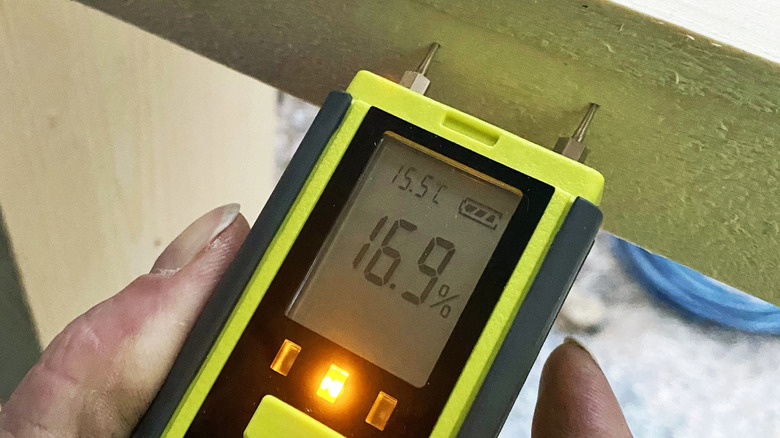
A pinned meter is one of the handy mini tools you can pick up at Harbor Freight and other popular retail stores. The pins can give you a much more accurate reading than a pinless one and help you understand exactly how far the problem extends. To use one, place the meter in the heaviest part of the stain, then see what it says. You may also want to explore further than you think, as water has a habit of spreading in weird ways and may end up in places you wouldn't expect. To be safe, plan to test around 2 feet in every direction from the edge of the stain.
If your tests determine that the stain is still wet inside, you'll have to figure out what's causing it. You can use a pinless meter to try to trace the path of the water after your pinned meter confirms high moisture levels, or even use a simple piece of tin foil to identify your home's moisture problem. If you want to see how large the wet area is, if it's shrinking, or if it's spreading, you should conduct multiple tests in and around the stain and across several days. This can give you a better idea of what's going on behind the scenes. Pinned moisture meters are also useful in ensuring the issue causing the water stain was fixed after any maintenance. For example, if you think you've solved the problem with a leaky upstairs pipe, lower readings day by day are a good sign that your walls are actually starting to dry out.
Reading your moisture meter and thinking deeper than the stain
However, handheld moisture meters aren't always perfect. They can be pretty accurate, but only if you understand how they're measuring. Most are set to work on wood, so if you're using it on another material, the readings may come off differently than you might expect. For example, testing the meter on drywall could give you an inaccurate reading. Instead of buying specific moisture meters though, you can simply compare the reading on the stain against somewhere you know is dry, but is made from the same materials, like a different wall in the same house.
You can also translate the typical wood measurement to drywall. Generally, drywall should have a lower reading than wood; a 5 to 10% moisture level is considered normal for gypsum drywall, while 10% to 15% could indicate some residual or low-level moisture. Anything above 15% is abnormally high, most likely indicating an ongoing problem. However, 15% can be a normal reading for wood, so don't let the green light on your meter fool you.
Keep in mind that while a moisture meter can highlight wet spots in your walls, it doesn't tell you anything about mold. So if you suspect a spot has been damp for a while, it may be best to open it up so you can see if there is anything hiding below the surface. If you do find evidence of mold growth, mold growing inside your walls might mean you need to replace them.