

Rubbing Beeswax On Faucets: What It's Used For And Why It's Recommended
We may receive a commission on purchases made from links.
Faucets are one of the hardest working fixtures in the home. Whether it's your kitchen or bathroom tap, they get used frequently and should therefore be given a little TLC. One common complaint with faucets is that they become easily stained and damaged by lime scale, which is ultimately inevitable, especially if you live in a hard water area. However, there is an easy way to prevent this, and it involves a simple household item that you may already have in your home. For this hack, beeswax is your secret weapon for a sparkling clean house.
Beeswax is commonly recommended as a way of protecting your faucets because it has hydrophobic properties that naturally repels water. This means it'll reduce the likelihood of hard water stains, fingerprint marks, and smudges. It's also a natural material that contains no harsh chemicals, which could potentially damage the finish of your faucets. All you're going to need to apply the beeswax to your faucets is a microfiber cloth — it really is that simple!
Create a water-tight barrier your faucets with beeswax
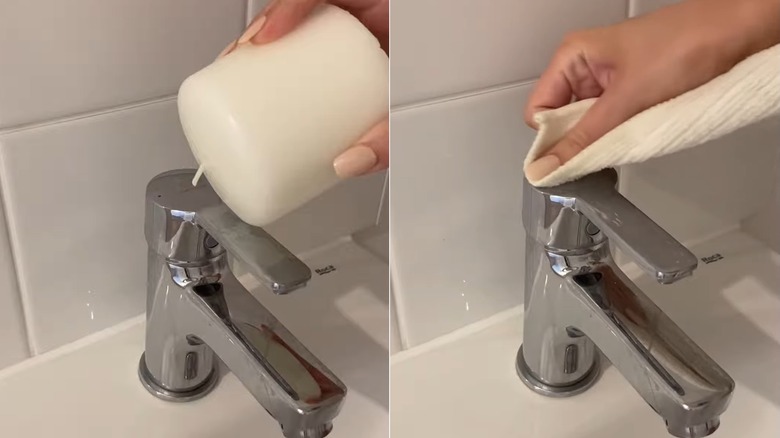
A candle is a common object to use for this hack, especially if you have a surplus of them. However, ideally it should be made from 100% beeswax. The problem with using dyed or scented candles is that they can potentially damage the material that your faucet is made from, so all natural is best for this. If you don't have a collection of beeswax candles that you can reach for, you can buy a pack of wax bars from Amazon for under $10, like the Honey Farm All Natural Food Grade Beeswax. Take your beeswax and generously rub it all over your tap, then use your microfiber cloth to buff it in. Not only will your tap be left with a protective layer on top of it, but the beeswax will also make your faucet sparkle and shine – it's a win win.
It's worth noting that this is a process that needs to be repeated at least every 3 to make sure you see the continued benefits. If the tap is used primarily for hot water, then you'll likely need to reapply the beeswax more often, as the hot water will gradually soften it. If you find it awkward to apply the beeswax to the hard to reach places with a candle, beeswax paper is a great alternative. Because of its shape and flexibility, you can cover your entire faucet much easier.