

Follow The 2 Bucket 'Law' For Cleaner Floors Every Time You Mop
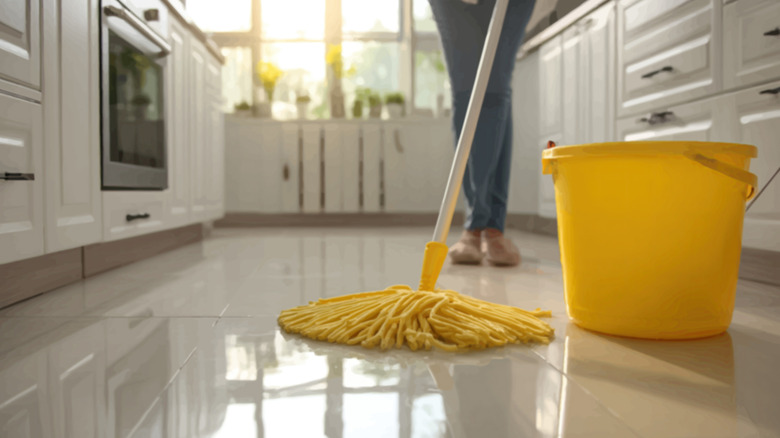
You can spend hours mopping your floors until they sparkle, but the sad reality is: if you're rinsing the mop in the same dirty water you're picking up from the floor, your floors aren't as clean as they may look. This is the thinking behind the "two-bucket method," where you use two buckets to keep the water you're using to clean separate from the water that collects all the dirty runoff. And it's one of those mopping tips for floors that might just change your life.
To utilize this trick next time you're mopping, you'll need, as the name suggests, two buckets. One bucket is to hold your cleaning solution in hot water while the second only holds hot water and this will be your rinse bucket. After mopping a section, you simply dunk the dirty mop into the rinse bucket which will release the grime its just collected and then you can wring it out and return it to the cleaning solution. That way, the dirt you've just lifted from the floor isn't being repeatedly rinsed back into the same water you're using to clean, which is how you ensure your floors are actually getting cleaned thoroughly, and not just superficially.
The trick can also give you a helpful visual cue when mopping patterned or textured flooring where it's not always easy to see dust and grime. If the water in your rinse bucket is getting progressively darker, then you can clearly see that the mop is picking up a lot of dirt from the floor.
Where two-bucket mop method makes the biggest difference
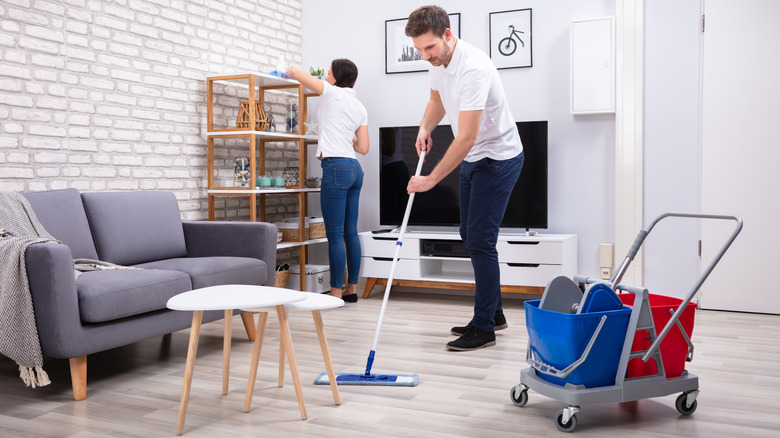
The two-bucket method is a particularly clever move when you're dealing with floors that need a good scrub. Some of the signs that you're not mopping enough are visible grime or tackiness, and this is especially true across high-traffic areas like entryways and kitchens. In these kind of areas, where muddy boots may be getting walked through or food gets dropped, a mop can very easily turn its cleaning water murky and contaminated as you work your way around the floor. Then instead of cleaning, you're basically smearing some of the diluted grime back onto your floors. To use the method properly, work in smaller sections, around 10 by 10 feet, before you rinse and recharge the mop.
It's also a handy mopping habit for keeping your home clean if you have a house with particularly larger areas. The separate rinse bucket prevents you from having to stop and replace the cleaning solution after every few square feet; you can just keep on working. But whilst this trick should keep your cleaning solution relatively fresher for longer, if you notice the water is becoming visibly dirty, then you should replace it rather than carrying on with contaminated water. This way you know the water you're using to clean is actually helping you do just that — clean.