

The Valuable, Antique Teacup And Saucer Set That Collectors Dream Of Finding
We may receive a commission on purchases made from links.
Regardless of when and where they were made, teacups are undeniably quaint. If you're a fan of this aesthetic, you might be tempted to use old teacups to make charming DIY planters or even quirky curtain tiebacks. After all, you can often find them for under a dollar at thrift stores, and they're certainly not in short supply. While these are perfectly acceptable crafting projects for teacups that have seen better days, you might want to be a bit more discerning every now and then. Paragon China teacups might look like a run-of-the-mill option in a sea of vintage porcelain pieces, but wares featuring the company's cabbage rose patterns are particularly prized by collectors.
Originally released as a line by Star China Co. in 1903, Paragon China doesn't actually hail from China. It was produced in London and quickly earned a reputation as a luxury porcelain product. It was popular throughout the early 20th century, and eventually, Star China Company decided to capitalize on this fame, establishing The Paragon China Company. In the decades that followed, the company received recognition from the British royal family, with pieces frequently finding their way into the personal collections of well-known figures like Queen Mary. All good things must come to an end, however. After several acquisitions and changes in ownership, Paragon China was officially discontinued by its last owner, Royal Doulton, in 1992. The downfall of this once-thriving manufacturer is a sad tale, but for collectors, it makes the pieces that still exist more valuable.
Paragon China teacups come in many cabbage rose patterns
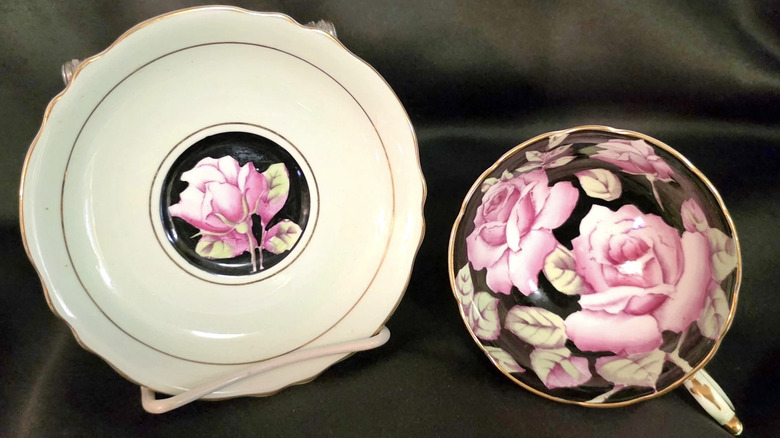
Like the most valuable Pyrex patterns to look out for at thrift shops and estate sales, these floral teacups can fly under the radar if you don't know what you're looking for. Exact prints vary, but what all the cabbage rose-patterned Paragon teacups have in common is the presence of, you guessed it, a large cabbage rose. There are several other patterns that include roses, like the valuable Victoriana Rose and Tapestry Rose patterns, but in these cases, the roses are accents in a larger design.
Colors vary widely. Some teacups and saucers feature a light-colored background and accent color with a deep-toned rose that stands out. On others, a spring-pink bloom adorns a bold black background. One of the most valuable cabbage rose patterns even features a teacup with a gilded interior, a luxurious addition that draws the eye to the large rose at the bottom of the cup.
Paragon China isn't the only company to have produced teacups featuring cabbage roses. Luckily, identifying these designs is relatively easy. Paragon China ware features a stamp that clearly states the name of the company. What's more, the specific font and content of the stamp can help you understand when the piece was produced, its history, and its potential value.
Determining the value of cabbage rose-patterned Paragon China teacups
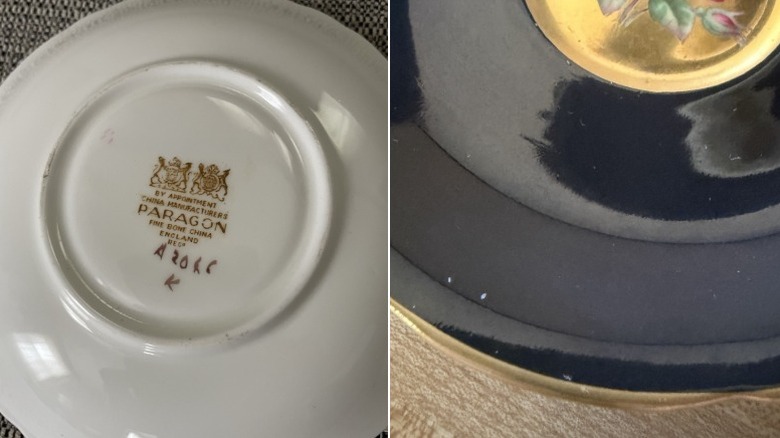
When appraising any antique or vintage item, complete sets, pieces in good condition, and decor that was produced for a limited period will generally have the highest price tags. A matching cabbage rose-patterned Paragon China set that includes both the cup and saucer and has no cracks, chips, or scratches will likely be priced higher than a standalone cup or saucer with obvious flaws. That doesn't mean you should disregard damaged or incomplete pieces. These items can still sell and may even earn you a profit if, for example, you scored them at thrift store prices.
The exact value of your teacup will depend heavily on the pattern and its rarity. Unfortunately, the latter attribute can be a bit tricky to determine. Generally speaking, sets are priced between $50 and $150 by independent sellers, though there are some outliers. Prices are higher on antique auction sites like 1st Dibs, where a set can go for around $500. Curious about how to tell if your antiques are worth anything? Take your find to a professional appraiser, post in online collectors' forums, or, as a last resort, run a reverse image search. A pro will obviously provide you with the most thorough and reliable information, but sometimes, all you really need to get a general idea of the value are a few online listings for the same product.