

Neither Mulch Nor Landscape Fabric: How To Suppress Weeds With Cloth

If you're increasingly discovering the downsides to using landscape fabric, you're not alone. Some types don't let enough nutrients and water reach the soil beneath, while others may not be so great at actually suppressing weeds — their main job. At the same time, Americans discard more than 80 pounds of fabric waste, per person, each year. That's why using old cloth pieces to suppress weeds can kill two birds with one stone.
Stained or torn bedsheets, tablecloths, and curtains obviously can't be donated the way clothes can. But don't throw out those old bed sheets yet! When those fabrics are made out of all-natural cotton, why not use them in the garden as a free alternative to landscape fabrics and other types of artificial mulch? Old cotton cloth remnants can actually protect against weeds in a few different ways.
One simple weed-suppressing method involves using cotton cloth in garden pathways as a base mulch. Fold the cloth in half to create a double layer and place it between plant rows. Next, cover the cloth with your preferred surface, whether it's straw in the veggie garden or wood chips among the ornamentals. Both layers are natural and compostable. The sheets give the wood chips an assist with any weed seeds or runners that might otherwise emerge. At the same time, the chips cover the potentially unsightly fabric. Even without additional mulch on top, the cloth suppresses weeds and keeps mud from splashing onto foliage.
Use cotton fabric as sheet mulch
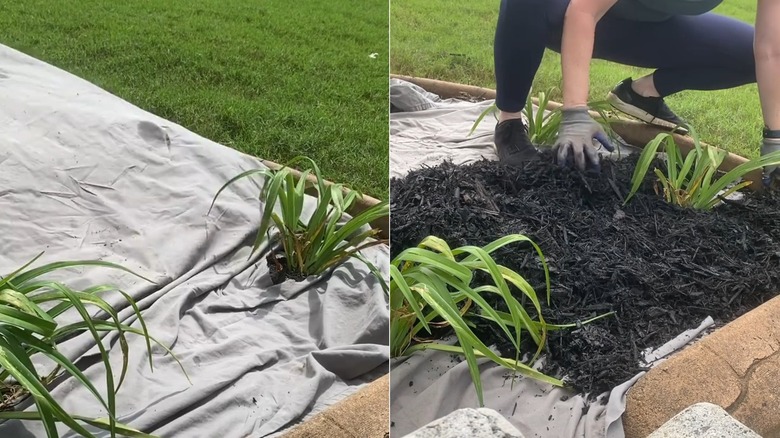
You don't have to fold up the cotton fabric in order to make use of the textile as weed-suppressing mulch. Use full bedsheets, tablecloths, curtains, or large remnant pieces to cover an entire garden section, right up to the plant base. First, rake up last year's old mulch and pull any existing weeds. Next, billow out the old cloth so that it lays flat over the garden patch. Use garden shears to cut holes to accommodate perennials or small shrubs that are already in the garden. Finish by covering the flat sheet with wood chips or other landscape mulch. When you need to add seeds or seedlings to this garden bed, just move the landscape mulch aside and cut a slit or hole into the cotton fabric.
Even before the growing season, you may find there are benefits to getting out your old cotton cloth pieces. Swaths of tablecloths and sheets can be gently draped over newly-established landscape plants if there are sudden cold snaps. A few short weeks later, these budget-friendly cloche alternatives will be ready to have yet another life, morphing from frost-blockers to weed blockers!