

Gas Or Electric: Which Is The Cheaper Option For Heating Your Garage?
We may receive a commission on purchases made from links.
When you use your garage for a variety of activities, such as a home gym, an entertaining area, or a woodworking space, you want it to have a comfortable temperature. Even if you only use a garage to park a vehicle, the idea of walking through a warm garage to your car door in winter might sound pretty appealing. Figuring out how to warm up your garage during cold months usually involves installing a heater, which will typically run on one of two energy sources: electricity or natural gas – although a few models technically use oil heated by electricity. Natural gas and electric garage heaters have various pros and cons, and thinking about how each design's strengths line up with your needs is a good way to choose between them. However, if you want to focus on saving money while using a heater, finding the cheaper option isn't always as clear-cut as it may seem.
Generally, electric models are less expensive to purchase and install because they don't generate dangerous exhaust that would require installing a vent. However, natural gas is usually a cheaper way to power the unit in the long run compared to electricity. The size of your garage may matter too. Warming a space big enough to hold two vehicles typically costs more when using an electric heater instead of natural gas (or propane). However, it's important to note that electric rates vary by location, and natural gas prices can fluctuate, which can significantly affect the difference in cost.
Electric heaters can save money on installation
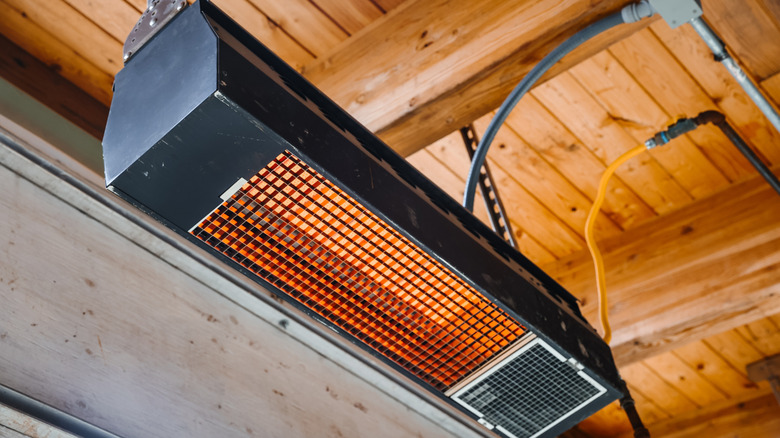
For an affordable garage heater to keep you warm at the lowest upfront cost, an electric model is usually the answer. Generally, buying and installing an electric garage heater will cost $400 to $1,200, which is lower than the expected upfront cost of $500 to $2,000 for a gas garage heater. Installation costs are lower because you won't need to add gas supply lines or a ventilation system. However, you might find that you need a different type of outlet to power the electric unit; some machines need a 240-volt outlet. This may also require you to install a new, larger circuit in your breaker box to support its power needs. If you have to hire an electrician, you can expect to pay up to $130 per hour for labor.
But assuming installation goes smoothly, it's the ongoing costs that actually sting. As of July 2026, the national average price for electricity was 18.31 cents per kilowatt-hour, according to the U.S. Energy Information Administration. In theory, an electric heater emitting 10,000 BTUs of heat would draw about 2.931 kilowatts per hour. This electric heater would cost about $0.54 per hour to run. That's $12.88 per day or $386.42 per month, assuming you run it constantly.
If you only need to warm a portion of the garage, such as the corner with your home gym, you can save money with a smaller unit that needs less wattage. Products like the Elevoke 1500W Space Heater use a standard 110-volt outlet that you likely already have in the garage. If you only turn it on when needed, a space heater can be pretty affordable, but running it every day still adds up — and leaving it on all night could be a mistake.
A gas heater can be cheaper in the long run
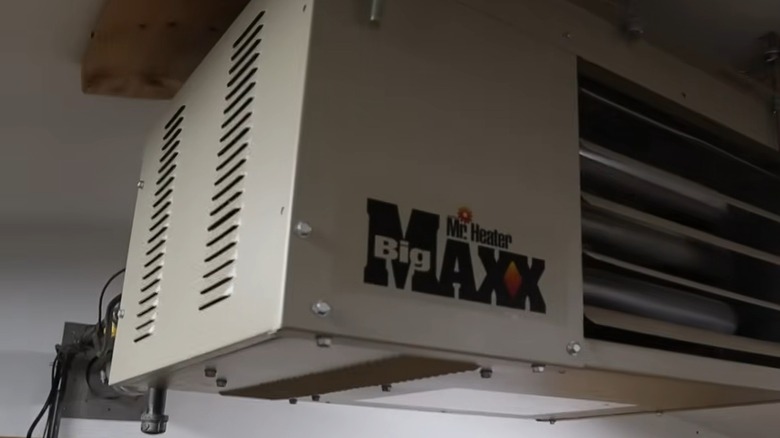
Even though you'll usually pay more upfront for a natural gas heater — and potentially a lot more if you need a gas line installed — it may be your best option for heating a garage. Gas heaters work well for a large garage space where a consistent temperature is desired. Electric units tend to struggle to heat these larger spaces. If you live in an area with extremely cold temperatures, you'll typically save money by going with a gas garage heater because they fire up quickly and throw heat more efficiently.
Compare the electric heater example above to this Procom Natural Gas Heater, which also emits 10,000 BTUs (0.1 therms) per hour. According to the U.S. Energy Information Administration, the national average for residential natural gas was $2.65 per therm in July 2026. That means this heater would cost about $0.27 per hour, which is roughly $6.36 per day or $190.80 per month when running constantly. Therefore, when comparing two heaters that emit the same BTUs, natural gas can be less than half the cost.
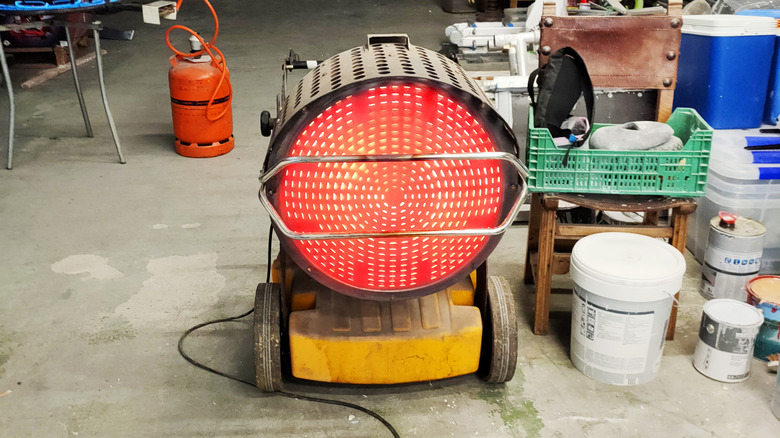
You might be tempted to try to save money by purchasing a portable heater or patio heater that runs on a propane tank. After all, it may cost only $50 to $200 upfront. However, such models are not safe to use as a garage heating solution because of the risk of carbon monoxide exposure, which could lead to death. When outdoors, the carbon monoxide can dissipate, but the University of Alaska-Cooperative Extension Service explains you shouldn't use such heaters in enclosed areas because they are not ventilated well enough. It's also not safe to store a propane tank in a garage.