

Skip The Vegetable Oil: The Longer-Lasting Way To Prevent Grass Sticking To Your Mower
We may receive a commission on purchases made from links.
Keeping your lawn mower clean isn't always the easiest task. Damp grass clippings have a tendency to stick to just about everything, potentially causing clogs that can impact the machine's functionality, and lingering clumps of grass still stuck on a mower can become a recipe for rust in storage. Vegetable oil is often recommended as a kitchen staple you can use on your lawn mower to minimize this problem, and while it can work in a pinch, it's a short-term non-stick solution at best. For a longer-lasting improvement, consider taking a cue from the automotive industry and giving your mower's deck a ceramic coating.
Essentially, this silica-based coating chemically bonds to the surface it's applied to — in this case, the underside of your mower's deck — to create a thin yet strong coat that minimizes the risk of scratches, repels water, and makes cleaning easier. The protective layer's hydrophobic nature will also discourage grass and dirt from sticking to your mower's deck; the same products can even be used to keep glass shower doors clean and streak-free. While it won't last forever, single-layer ceramic coatings have an impressive lifespan of about one to two years in traditional automotive applications, so this is a chore you'll only have to tackle once in order to have a friction-free mowing season. The best part is that you can apply the coating yourself with no specialized tools. After a bit of prep and a few minutes of wiping, you'll be left with a mower deck that's seemingly immune to clogging with clippings.
How to apply a ceramic coating to your mower
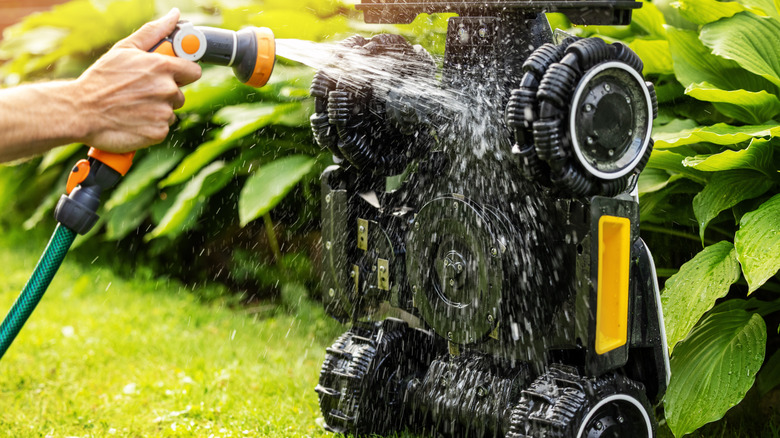
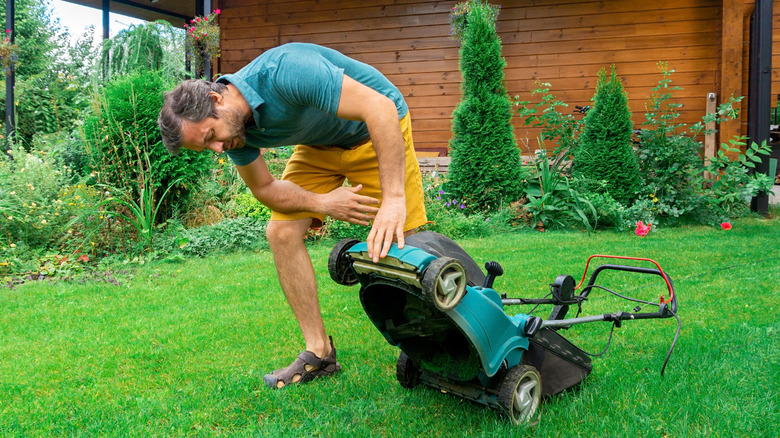
Before you begin applying your ceramic coating, you need to ensure that your lawn mower's deck is squeaky clean. Disconnect the spark plugs before doing any work to minimize the risk of accidents, then tilt the mower to the cleaning position recommended in the manual to expose the bottom side of the deck. Then clean your lawn mower with a brush — if you're working with a gas-powered mower, you can also hose it down, but be sure to check the manual if you're working with an electric machine. Once the debris has been cleared from every nook and cranny, follow up with a wipe-down with isopropyl alcohol to eliminate any stubborn residue that could be hanging around.
Now that you have a pristine surface, it's time to apply the coating. True ceramic coatings mostly come in the form of a small bottle, like this Weiruxin Advanced Graphic Ceramic Coating, but you'll also come across spray-on products like this Turtle Wax Hybrid Solutions Ceramic Spray Wax Coating. While both will work for this task, the latter is a hybrid product that combines a traditional wax coating with ceramic — great for cars that need that show-stopping shine, but a bit unnecessary here.
Once you've decided on your product, follow the provided instructions to apply it. Most will require you to pour a few drops of the coating onto an applicator cloth, rub the coating on, and wait about five minutes before buffing it out. After everything is cured, the results after your next mow will speak for themselves.