

The Medicinal Perennial That'll Fill Your Garden With Dainty Flowers

If you're an avid collector of plants with medicinal properties that you can grow in the garden, don't overlook this sweet-smelling, flowering herb with a long tradition as a healing botanical. The reputation of this upright perennial is likely due to the plant's high concentrations of salicylic acid, the same compound used in aspirin. But whether you plan to explore the herb's purported ability to ease headaches, use the plant to perfume rooms as an old-fashioned strewing herb, or plant it in your yard to enjoy its frothy, fragrant white flowers, meadowsweet (Filipendula ulmaria) has something to offer every gardener.
Meadowsweet's lacy flowers grow in creamy clusters on 3- to 6-foot-tall perennial plants. The white flowers are strongly scented and sprout above leaves that are also pleasant-smelling. This popular garden herb, also commonly known as Queen of the Meadow, reliably produces flowers in early to mid-summer, while the foliage provides visual interest at other times of the year. If you have a boggy spot in your yard, plant meadowsweet. This is a flowering plant that thrives in soggy soil, although it will likely grow well anywhere that's moderately damp to quite wet. It's a perennial in USDA Plant Hardiness zones 3 to 9.
Before you head out to the nursery to pick up some bare-root plants, note that Maine and Wisconsin categorize meadowsweet as invasive. It's also officially considered a noxious weed in the Midwest and is named as a competitive non-indigenous aquatic species by the U.S. Geological Survey. Proceed with caution if you live and garden in any of these areas. Also, since invasive plant statuses change over time, check with your local cooperative extension office before planting meadowsweet to make sure it's still okay.
Give meadowsweet damp soil and room to spread
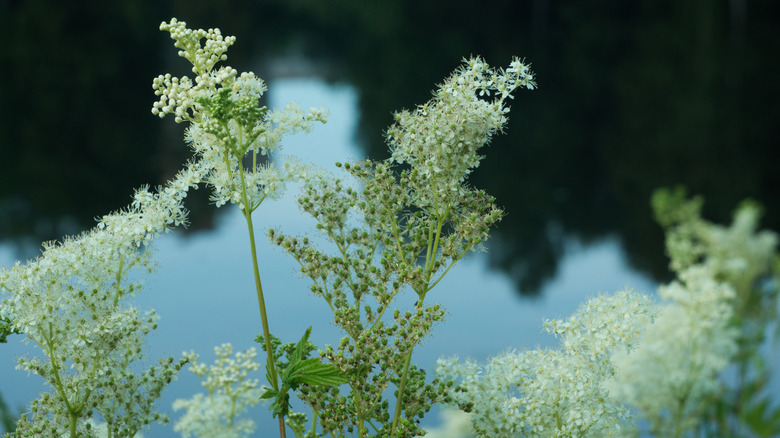
Perhaps surprisingly for such a delicate-looking herb, meadowsweet isn't difficult to grow in home gardens. Plant this flowering perennial in moist soil, ideally in a site free from deep shade. This adaptable plant will tolerate partial and dappled shade, as well as full sun. In hotter climates, however, it will do best in a spot that gets some shade. Grow meadowsweet in your garden from seeds, potted seedlings, or bare-root plants, spacing individual specimens more than 3 feet apart to accommodate their spread. Then be patient.
Unless you've invested in an older plant, it could be three or four years before a plant flowers. Despite the wait, this is still one of the best perennials to grow for gorgeous white flowers. When meadowsweet finally blooms, you'll be rewarded with large cloud-like drifts of blossoms, especially if you've clustered several plants together in a bed.
To prevent meadowsweet from spreading riotously in your garden, deadhead the flowers after the blooms begin to fade and dry up. Alternatively, cut sprays of meadowsweet's marzipan-scented blooms to use in potpourri, dried-flower wreaths, and cut-flower arrangements. This pretty perennial herb is an obvious inclusion for a medicinally themed herb garden. Alternatively, consider allowing the plant to naturalize in low-lying, wet meadows or near ponds. Its affinity for moist soil makes meadowsweet a strong candidate for a rain garden. It has a tenacious root system, so it's a great choice for tackling soil erosion.