

Better Looking Than Landscape Fabric: The Native Plant To Suppress Weeds
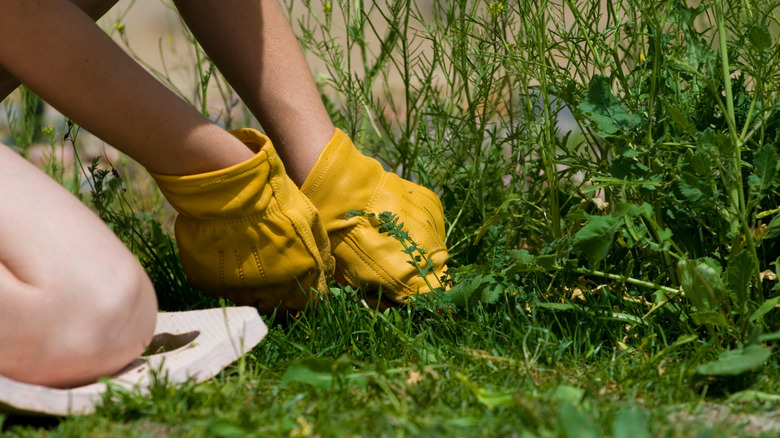
Keeping weeds from taking over your garden isn't a simple task. Herbicides are useful but harmful to the environment and your other plants, hand-pulling is eco-friendly but exhausting, and landscape fabric can help in certain situations but is generally considered a fairly ineffective eyesore. If you're tired of warding off weeds with these lackluster measures and putting up with their downsides, consider fighting fire with fire. If you plant a pollinator-attracting ground cover — say, bunchberry — weeds won't ever have the chance to take hold in your garden.
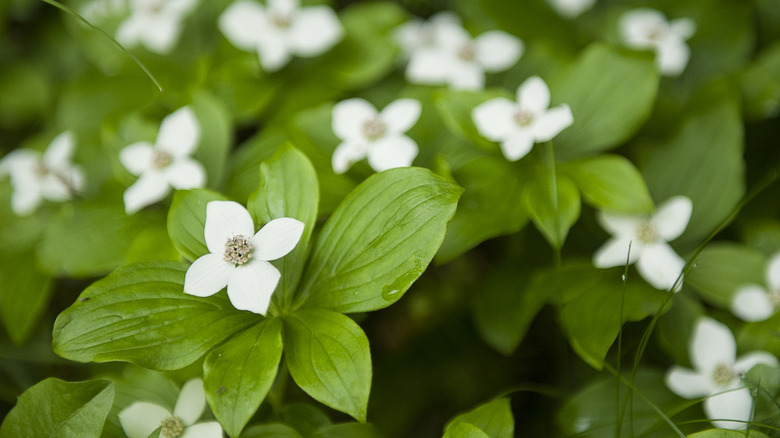
Bunchberry (Cornus canadensis), also known as dwarf dogwood, is a pretty, low-maintenance, and flowering ground cover that's perfect for those shady parts of your garden where nothing else besides weeds seem to want to grow. Hardy in USDA Zones 2 through 6, this plant will thrive in much of the northern United States, bringing with it gorgeous, four-petal white flowers that hint to its relation to the larger dogwood species. Unlike many of the other plants in its family, however, bunchberry stays low to the ground. Measuring in between 6 inches and 1 foot tall, it can help to create a low-profile covering that protects the more vulnerable areas of your garden from opportunistic weeds.
While this plant is fairly hardy once it's established, it can be a bit challenging to get there. It's a slow grower, especially compared to some other popular ground covers, and it has some specific care requirements that need to be met in order for it to thrive. Before planting, make sure you know how to avoid the mistakes everyone makes when trying to grow bunchberry ground cover.
How to successfully grow bunchberry
Before you select bunchberry as your ground cover of choice, it's necessary to gauge whether or not it will thrive in there area where you intend to plant it. Simply living within this plant's USDA Growing Zone isn't enough — it also requires dappled sunlight or partial shade, soil that's rich with organic matter but well-draining, and a significant amount of moisture. It's partial to acidic soils in particular — if your soil leans more basic, it could be beneficial to amend with sulphur.
Once you have your plants established, the main thing you'll have to worry about is stress. Hot summers and foot traffic can negatively impact this plant, and when it's facing off against these factors, it becomes much more vulnerable to diseases like dogwood anthracnose, root rot, powdery mildew, blight, and canker. Be sure to space plants 1 to 3 feet apart to allow for more breathing room and reduce the risk of some of these issues. Luckily, it isn't particularly appetizing to deer or rabbits, so you won't have to worry all that much about garden visitors munching on your hard-earned foliage.
While this plant can be a bit of a diva as it's getting started, the rewards are more than worth it. You'll get to enjoy pretty white flowers that attract pollinators in late spring, bright red berries that pop up in summer, and gorgeous green leaves that turn a stunning purple or red in the fall. Of course, there's also the benefit of weed suppression. With bunchberry growing in the more shaded areas of your garden, it will be able to outcompete unwanted invasive plants.