

What To Know Before Double Layering Your Landscape Fabric
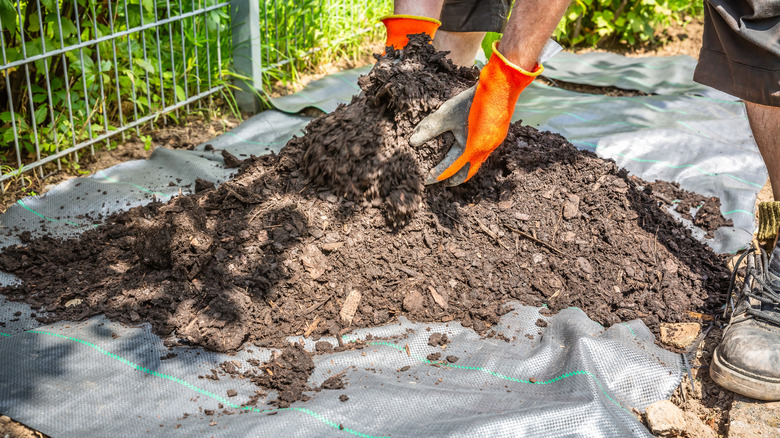
Many gardeners use landscape fabric in an attempt to reduce the number of weeds that invade their beautifully-curated garden beds. Typically made of polypropylene woven mesh, landscape fabric is designed to be porous enough to let air and water reach the soil, but impassable enough to physically block weeds and prevent light from reaching them. As a weed-loathing gardener, you might wonder if it would make sense to double up on landscape fabric to double your chances of suppressing annoying weeds. However, this could potentially harm the health and productivity of your soil.
Adding a second layer of landscape fabric significantly reduces the ability of air and nutrients to reach the soil, weakening and degrading it by depriving the soil's essential microorganisms of their basic needs. Poor soil, of course, is not conducive to healthy plant growth, and your garden will almost certainly suffer. Another issue with doubling up on landscape fabric is that water that could easily soak through one layer to provide crucial irrigation might be rebuffed by two layers. This could lead to under-watered plants and cause undesirable runoff problems — after all, the water has to go somewhere.
Two layers of landscape fabric are not better than one
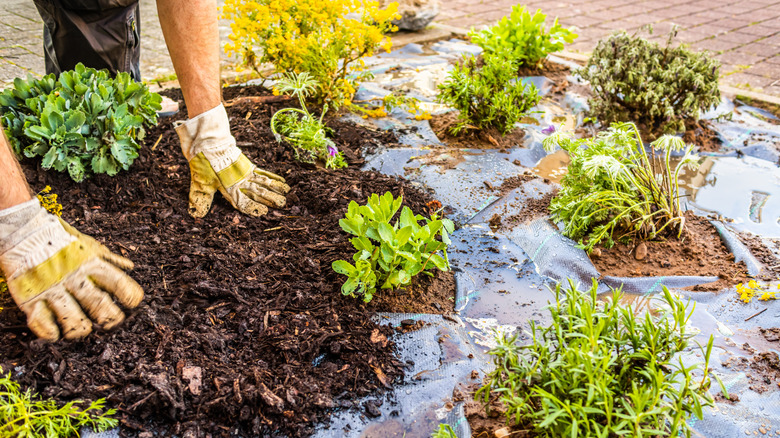
For the health of your plants, if you want to use landscape fabric, stick to one layer. Bear in mind, however, that many gardeners feel that landscape fabric is out since it only blocks weeds temporarily and isn't always porous enough to let plants get the water, light, and air flow they need. These concerns are doubly the case if you use two layers of landscape fabric. The fabric also only blocks weeds from underneath — weed seeds can still find their way on top of it, and if they end up placing roots between or through both layers, pulling them by hand will be difficult.
Moreover, landscape fabric's synthetic material can leach harmful microplastics into the soil, which then find their way into food and water sources, and eventually our bodies. If you're looking to ditch landscape fabric altogether, applying a layer of organic mulch up 3 to 6 inches thick a couple times a year can help achieve the weed-blocking benefits with fewer drawbacks. Newspaper is also an option since it's biodegradable, but be sure to keep the layers thin so water and light can still get through. Lastly, you can use cardboard as long as any staples or labels have been removed, and as long as you keep it moist so it's less likely to repel water.