

Can You Put Eggs In The Compost?
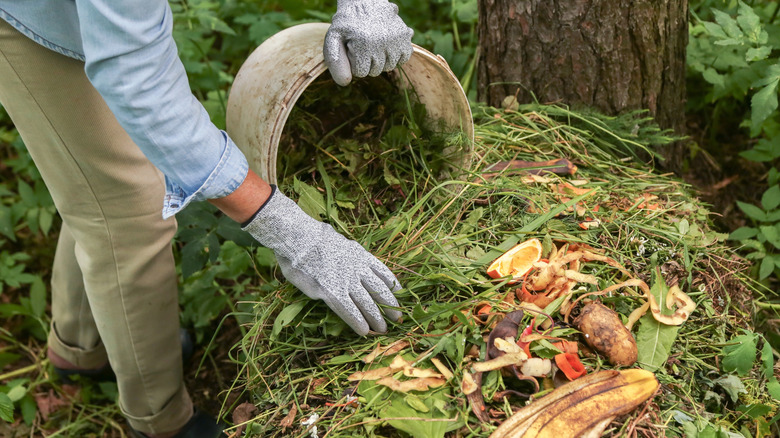
In many ways, eggs really are all that they're cracked up to be. There are expert ways to use eggshells in your garden, such as adding calcium to your soil and detering pests. You can even use raw eggs to keep bunnies out of your garden — thank us later. However, choosing to add these home cooking staples to your compost pile might just leave you with, uh, egg on your face. Allow us to break down the reasons why. While some experts say you can add small amounts of cooked or raw eggs to your compost pile, the U.S. Environmental Protection Agency recommends against it, noting that animal-related waste such as meat, bones, dairy, and grease can attract rodents and flies. Plus, the whole pile can start to smell like, well, rotten eggs.
However, if you're going to attempt to scramble a few eggs into your backyard pile, you need to understand the not-so-obvious difference between hot and cold composting. For hot composting, you need to include enough high-nitrogen materials to heat a pile to between 140 and 160 degrees Fahrenheit, the temperature range at which a number of pathogens die off. Similarly, you can add eggs to a bokashi bin. This enclosed, airtight composting system ferments organic materials, containing odors and stopping pests from getting at the waste. If you'd rather not risk mucking things up with hard-boiled or raw eggs, though, consider repurposing the eggs themselves and adding just the nutrient-rich shells to your compost.
Best practices for composting eggs and eggshells
If you're going to take a crack at adding eggs to your compost pile, you need to do so with care. Give cooked — and especially fried — eggs a thorough rinse to wash off any dairy products or oil used in the cooking process. If you're concerned about creating unpleasant odors or attracting pests, bury the egg pieces deep into the pile and cover the compost with a metal sheet, board, or screen. Never include rotten or spoiled eggs in your pile. They can encourage the growth of unwanted bacteria and produce unfortunate smells.
It also helps to blend in some fruit and vegetable scraps, as well as non-edible waste. The necessary ingredients for composting include nitrogen-rich green materials (like eggshells, fruit and vegetable pieces, and coffee grounds) and carbon-heavy brown materials (like dried leaves, shredded cardboard, and paper). You want to strike the right balance: about three or four parts brown to one part green.
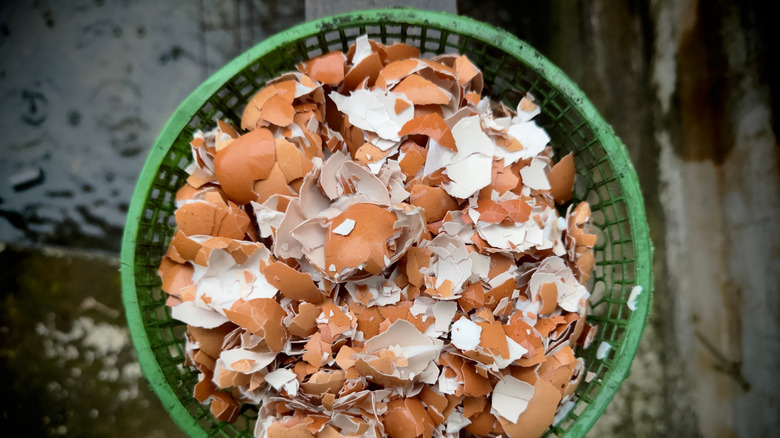
Even if you're only adding eggshells to your compost, clean them before tossing them onto the pile. Washing them can reduce, though not eliminate, the risk of salmonella, which can contaminate your soil and any plants or vegetables grown in it. Letting the shells dry out for a few days can make it easier to grind them into smaller pieces, which can then be mixed into your compost pile. In other words, don't throw out eggshells. This classic DIY can transform your garden by enriching your soil with calcium, magnesium, potassium, and other nutrients.