

Skip The Landscape Fabric For An Eco-Friendly Alternative You Already Have In Your Yard
We may receive a commission on purchases made from links.
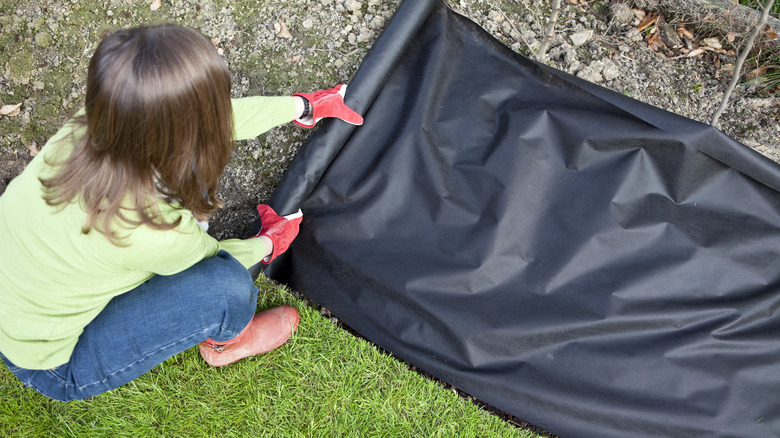
It's often seen as an easy first-line defense against weeds, but there are several downsides to using landscaping fabric that will have you second-guessing your investment. The premise behind its effectiveness goes like this: Weeds won't grow in the dark, so adding a layer of sun-blocking material over your garden beds should keep these pesky plants from sprouting. While it sounds logical, when you take a deeper look, the cons start to appear. Landscape fabric isn't biodegradable. Plus, it can damage the health of the soil below, and buying it means you have to spend more money on your yard. If you're turned off by the idea of intentionally adding more plastic to your garden, consider using a more eco-friendly weed blocker that you might even already have: pine needles.
Pine needles, also known as pine straw, are an effective, visually pleasing, and environmentally conscious landscape fabric alternative. Learning when and how to use pine needles in your yard and garden isn't difficult — you lay the material down just like traditional mulch. Because they're lightweight, they don't require much manpower to move around. Despite being easy to spread, you shouldn't underestimate their ability to stay in place. Their long, thin shape allows the needles to lock together, forming a stable yet permeable layer over your garden beds that's particularly resistant to wind and rain. While dried pine needles make fantastic mulch in many situations, they do have one major downside: they're highly flammable. If you live in a wildfire-prone area, it's worth exploring safer mulches like composted wood chips to help minimize this unexpected fire risk in your garden.
How to use pine needle mulch in place of landscape fabric
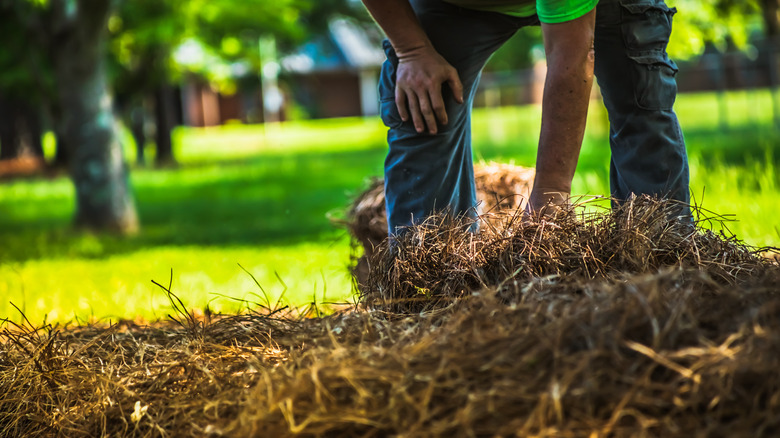
If you have pine trees in your yard, you've hit the jackpot. Pine trees can shed up to a third of their needles each year, a phenomenon you're likely very familiar with if you have a tree. Cleanup can be annoying, but a switch in perspective can mean you stop viewing it as a chore and start seeing it as a chance to score free mulch for your yard or garden. If you're not lucky enough to have your own pine trees, this could be a great opportunity to barter with neighbors. You could, for example, offer to clean up a neighbor's lawn in exchange for some pine needles. Of course, you could also just buy a few bales of pine straw. A Colored Pine Straw Longleaf Landscaping Roll costs about $55 and will cover 125 square feet. But where's the fun in that?
Once you get your hands on some pine needles, make sure they're completely dead and dry before using them as mulch. Fresh pine needles can add more acidity to your garden beds as they break down, but it's a common myth that they have the same acidifying effect when dry. You need to spread the needles across your garden beds in an even layer about 3 to 6 inches thick to block enough light to effectively minimize weed growth. It's as simple as that. Unlike with landscape fabric, you don't have to worry about eventual removal. Pine needles are a great source of carbon for your soil and plants. They take upwards of two years to fully break down, but adding 2 to 4 inches of material every year or two will ensure your mulch layer stays thick enough to continue blocking weed growth.