

Do This Regularly To Your Deck During Colder Months To Prevent Damage And Stains
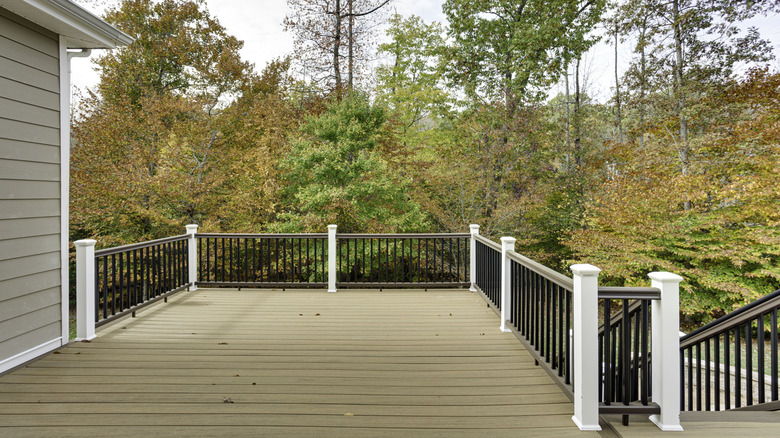
By the time winter comes around, many of us have done our fair share of deck maintenance for the year. Between cleaning, sealing, replacing loose boards, and putting away outdoor furniture, we're more than happy to hang up our tools and hunker down indoors until spring. However, there is one thing you should continue doing all year long (yes, even in the colder months): removing leaves from your deck. While this probably isn't the news you want to hear, removing leaves from your deck usually isn't a tough, time-consuming, or expensive task. In fact, clearing off debris (including leaves) is one of the simplest ways to protect your deck in winter. Even better? You don't need to hire a professional or buy any pricey equipment for the job.
According to Deck Rescue, there are several reasons that you shouldn't let leaves pile up on your deck in winter. For one, they can stain the wood, making it look a lot less attractive. And if the leaves sit there long enough, the discoloration can be very difficult (if not impossible) to fix. You might be able to remove more recent stains with soap and water or deck cleaner, but still, it's better to avoid this problem in the first place by clearing out the leaves as soon as possible.
Another reason to keep leaves off of your deck in the winter? They can lead to mold or algae growth. Not only does that create an ugly mess, but it can also weaken the wood and affect your deck's structural integrity. Hopefully, sweeping or blowing the leaves will help prevent this issue — but if you do need to remove mold and mildew from your deck, you can try pressure washing it (on a low setting) or scrubbing it with deck cleaner.
Tips for clearing leaves from your deck in the winter
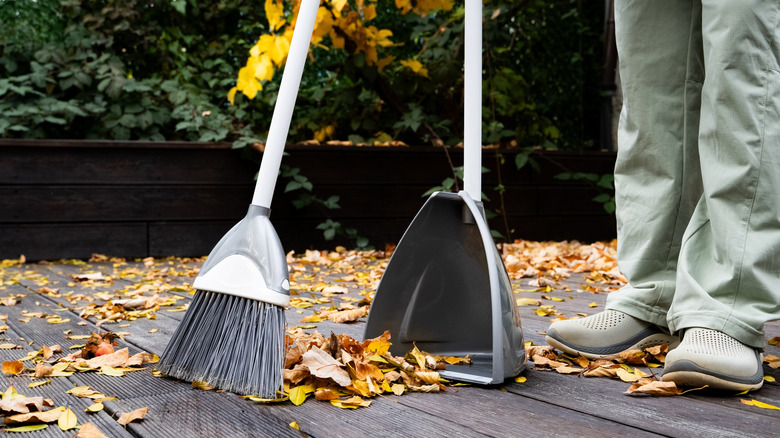
Even though working outdoors in winter isn't ideal, regular leaf removal helps keep your deck in the best possible condition. (For reference, the average lifespan of a wood deck is 10 to 20 years — and maintenance plays an important role in how long one lasts.) So, what should you know beforehand? First, you need the right equipment for the job. Specifically, you shouldn't use a metal rake to remove leaves from your deck. Its sharp, rigid edges can scratch the wood, so it's better to use a broom, rubber rake, or leaf blower.
Something else to keep in mind: Wet leaves are heavier than dry ones. If it's recently rained or snowed in your area, you may need to work in smaller sections and put fewer leaves in each bag to prevent them from ripping. Also, piles of wet leaves can be slick when you step on them, so be sure to wear slip-resistant footwear while you work.
Near the end of winter, there are also a couple of things you should do to prep your deck for spring. Start by giving it a deep cleaning, then inspect for any damage — like wobbly boards, protruding nails, and cracked wood. If it needs any repairs, tackle them as soon as possible. Once it's in good shape, apply sealant to protect the wood from harsh sunlight and moisture and reduce the risk of future problems.