

Not Marble: The Durable Material That Makes Bathroom Counters Look Luxurious
We may receive a commission on purchases made from links.
When you're trying to create an elegant, sophisticated vibe in your bathroom, marble might seem like the obvious choice. However, there are some downsides to trendy marble bathrooms, like higher costs. Something else that's less than ideal: Marble is soft and porous, so it can stain and scratch more easily than you'd like — especially on bathroom counters, where it's often exposed to makeup, toothpaste, soap, and other beauty products. For those reasons, you might want to consider a more durable (but still stylish) alternative, like Taj Mahal porcelain.
Taj Mahal porcelain is known for its warm, high-end appearance, and it does a good job of mimicking the look of natural stone. It comes in several shades, with some closer to white and others more beige, and features subtle veining much like marble. It's a versatile material that can be installed throughout bathrooms on counters, in showers, on floors, and in kitchens.
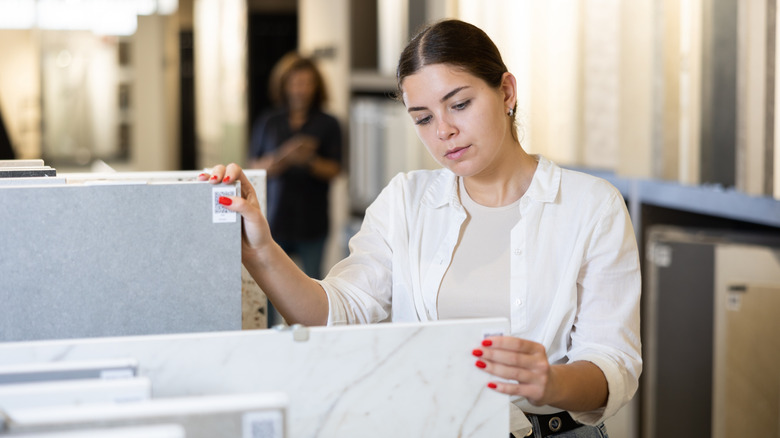
According to Floorence Tile & Slab, Taj Mahal porcelain is available in different sizes and types as well, including slabs, tiles, and mosaics. Each one serves its own purpose, but if you're going for a more luxurious look, consider installing slabs. They're larger than tiles or mosaics, so you won't have to restore the grout around your tiles, and you'll have a more seamless, sophisticated aesthetic. That said, slabs are usually the most expensive option when compared to tiles and mosaics.
Pros and cons of using Taj Mahal porcelain for your bathroom counters
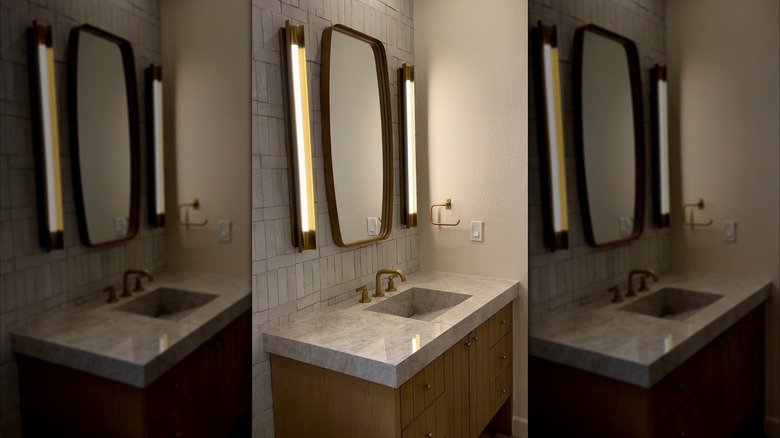
So, what makes Taj Mahal porcelain a good choice for bathrooms? There are a handful of reasons, but let's start with durability. Unlike marble, porcelain is not a natural material, but that isn't necessarily a bad thing. In fact, that actually gives it several advantages over authentic stone. For example, porcelain holds up better than marble against scratching and staining, which makes it an excellent choice for bathroom counters. It also resists moisture well and doesn't require sealing.
In terms of cost, porcelain tends to be less expensive than marble, according to Angi. On average, you'll pay $5 to $50 per square foot for porcelain (including labor and materials), while marble ranges from $8 to $30 per square foot. However, more premium types of marble can cost up to $350 per square foot. More of a DIYer? At Home Depot, you can buy Taj Mahal porcelain tile for $2 to $10 per square foot (not including installation).
Even though Taj Mahal porcelain may be more durable and cheaper than marble, it may not be the right choice for everyone. For example, if you're set on using authentic materials in your bathroom, then marble could be a better pick. Each piece is one of a kind, with unique veining that feels organic and natural. In addition, if you decide to sell your home, genuine stone could influence potential buyers, but you must maintain its appearance. To keep your natural stone countertops looking their best, you'll need to commit to regular cleaning and sealing, and clean up spills as soon as possible to prevent stains.