

This Strange Plant Is Completely White And Has No Chlorophyll At All
We may receive a commission on purchases made from links.
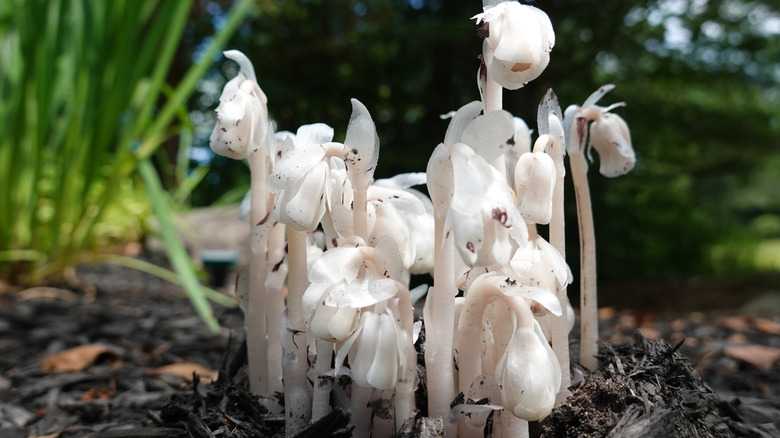
When it comes to real plants with names that sound scary, few beat this plant. It's one of the few plants that doesn't contain chlorophyll and relies on fungi instead of sunlight to supply it with nutrients. The result is a pure-white plant, including the stems and the bent flowers, which, taken together, resemble a cluster of pipes standing on end. The ghost plant (Monotropa uniflora), also called Indian pipe, is an intriguing native woodland wildflower that quite honestly deserves its spooky name.
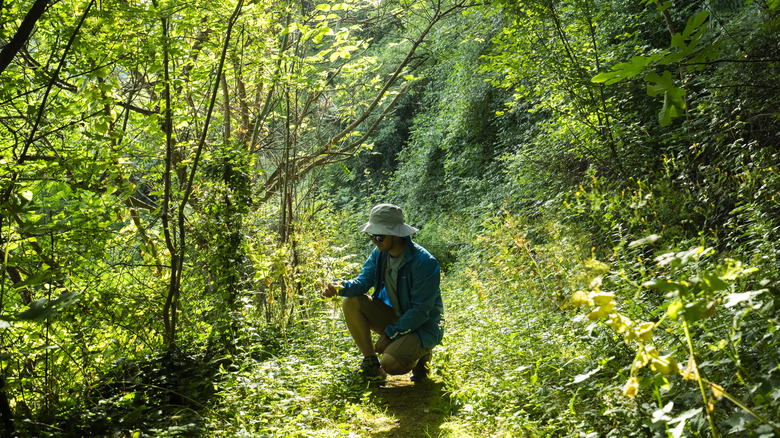
Ghost plants grow no taller than 9 inches, and their bell-shaped floral heads nod downward. Although it seems like these spooky plants would look right at home with your Halloween decor, they actually pop out of the ground sometime between spring and early fall and survive above the surface for only one or two weeks. This unpredictable blooming season makes these botanical apparitions all the more special for those hikers who stumble across them on the trail or gardeners who have the patience to grow them.
Ghost plants depend on fungi that grow in areas densely forested with beech trees. Like poltergeists, ghost plants are the tricksters of the natural world. These parasitic wildflowers fool the fungi into supplying them with sugars when, in reality, the ghost plants are the ones doing all the taking. Ghost flowers aren't always white — Monotropa hypopitys produces red flowers. Aside from their color differences, the red species differs from the white species in producing several small flowers per stem.
Raising a ghost plant will challenge even the most experienced gardener
Whether you're seeking to spot these elusive plants in the wild or even grow them, you'll have the best luck in wooded areas in USDA Plant Hardiness Zones 4 to 11. Establishing ghost plants in your own backyard is not for the faint of heart. It's widely considered a difficult-to-impossible task. You need soil filled with organic matter and the right fungi nearby. Plus, plants are not propagated in nurseries. Hobbyists up for the challenge, however, will be rewarded with the spookiest of backyard additions.
The key is investing in both ghost plant seeds and a fungal inoculant from a specialist supplier or online retailer. A packet of 10 New Fresh Monotropa Uniflora Flower Seeds costs about $10. Mycorrhizal inoculum comes in granular or powder form with prices starting at around $12. You first seed the soil with the fungal inoculant to provide the ghost plant with a suitable partner — primarily fungi from the large Russula genus. Choose a shaded spot with moist, acidic soil and plenty of leaf litter. Once the fungi are thriving, plant your ghost pipe seeds according to the supplier's instructions. However, some suppliers also recommend applying the mycorrhizae at seeding, so it's worth experimenting with the timing.
It can take years for ghost plants to establish. Until then, keep the soil moist but not overwatered and free from vegetation. Ensure that the area retains a rich layer of humus (leaf litter). Most importantly, don't forget to visit the site frequently during the warmer months so that you don't miss the emergence of these ghosts of the plant world. With lots of perseverance and even more luck, you could be the proud parent of an unquestionably unique flower that will have your neighbors staring.