

27 Bold Purple Flowers That Hummingbirds Can't Resist
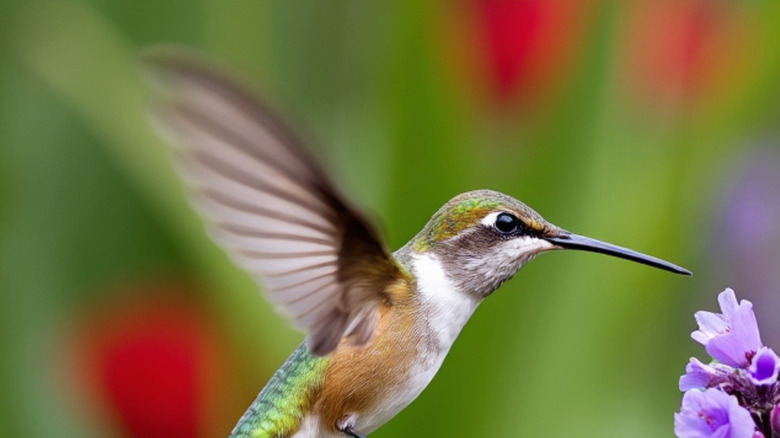
For some mystical reason, we humans are obsessed with creating a "perfect match." Whether it's in coupling (yes, that reality show) or in our gardens, we strive for things that fit perfectly. Ever since the discovery that nectar-rich, red, tubular flowers most attract hummingbirds, they've become the default planting choice for anyone desiring a wave of iridescent feathers and territorial backtalk in their garden. But the downside to this approach is that it limits your color design, especially if you're a cool-hue lover.
But it so happens that hummingbirds, while undoubtedly besotted by the warmer palette, are nectar maximizers. In other words, as long as they can zap enough nectar to offset the burnt calories, they'll gladly drink from any color of flower, and luckily, many bold purple or lavender flowers are up for this task, such as Mexican bush sage, petunias, and obedient plant. This opens up more planting opportunities, including honing in on autumnal colors, while keeping hummers happy.
For the quickest results, grow each plant in drifts, so the feisty birds can easily spot them. Also, aim for a continual display. You can achieve that through long-blooming annuals like salvias, though you will need to replace them every year unless they self-seed. For longer-lived plants, intermix spring-, summer-, and fall-blooming perennials, such as clustered bellflower, wild bergamot, and golden dewdrop. Bear in mind that hummingbird attraction is highly variable, so what works in one area might not in another, and you'll have to experiment to find the visiting hummers' sweet spot.
Rockin' Deep Purple II salvia
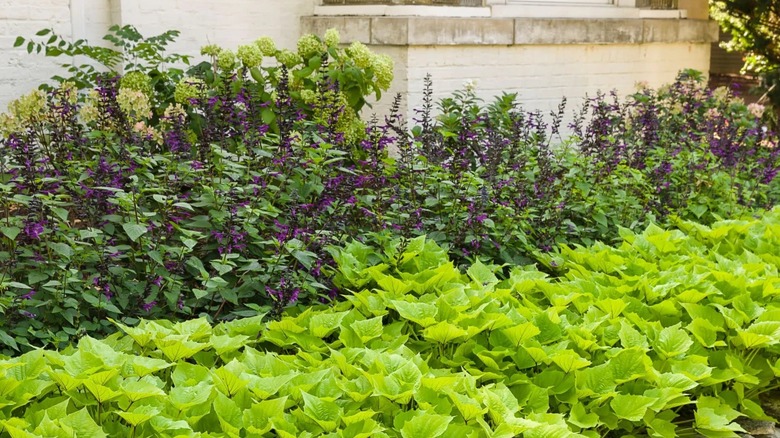
Perennial in mild climates (USDA Hardiness Zones 9 to 11) but annual elsewhere, Rockin' Deep Purple II salvia is an excellent addition to hummingbird-friendly gardens. As it doesn't set seed, it produces a ceaseless supply of dark purple flowers from planting right up to a killing frost. It can handle drought and heat, and performs best in full sun to partial shade. It looks spectacular both in beds and containers, though in the case of the latter you'll have to water and fertilize it more often. If the plant grows water-stressed, trim it by one-third, and it'll bounce back.
'Violet Queen' cleome
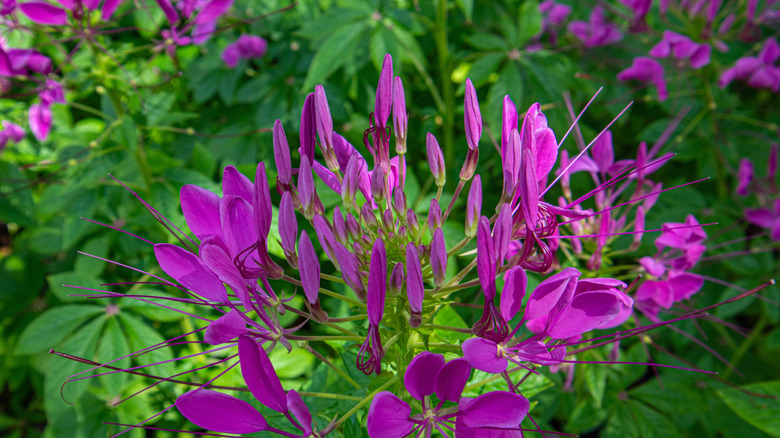
Whether you're trying to add height to your beds, fill out back borders, or grow easy-to-care-for plants that will kickstart a parade of hummingbirds, try 'Violet Queen' cleome (Cleome hassleriana 'Violet Queen'). Also called spider flowers because their stamens protrude like spider legs, they bring a fascinating touch when their buds unfold into bold purple petals. These summer bloomers can flower right until the first frost. Although annuals, they can return on their own if you allow them to set seed. For best flowering, fertilize them regularly.
Clustered bellflower
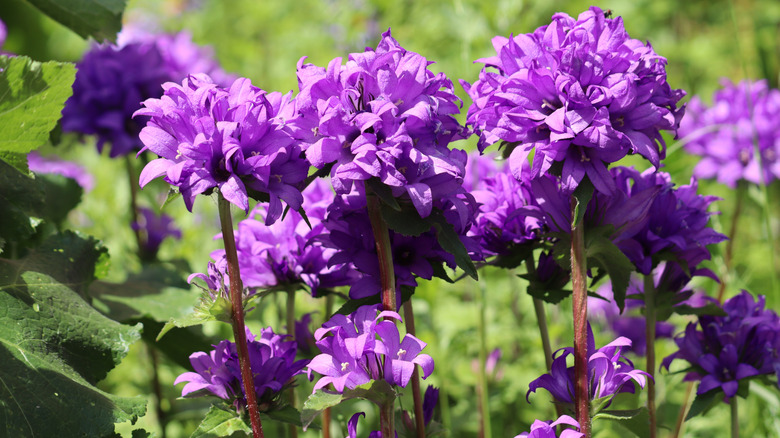
If you're looking to fill in the gaps during the spring-summer transition, clustered bellflower (Campanula glomerata) can be a wonderful choice. Over rosettes of green leaves hover flowering stalks of violet-blue petals, drawing streams of hummingbirds, specialized bees, and butterflies. Regularly remove dead flowers to control seed production and promote reblooming. Cold-hardy in zones 3 through 8, clustered bellflower grows best with full sun in colder regions and light shade in hotter areas. It requires consistently moist soil, as well as frequent division or weeding to contain its spread.
Wild bergamot
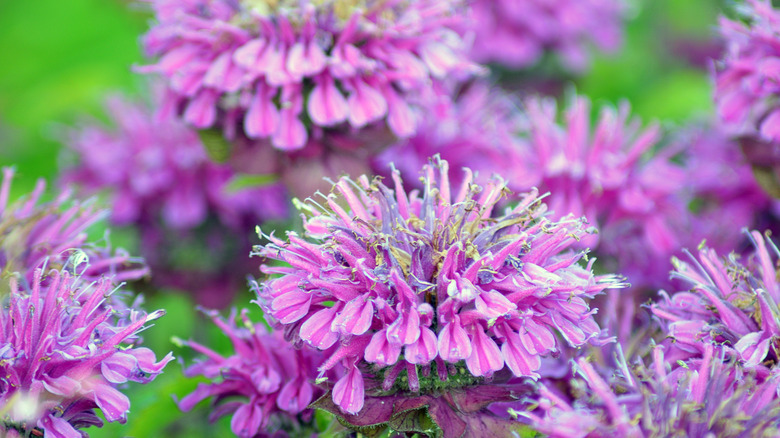
Hummingbirds favor plants with tall flowering stems, such as those on wild bergamot (Monarda fistulosa), which match their hovering height or spare them the hassle of fighting off surrounding leaves to reach sweet nectar. With wild bergamot, whorls of lilac tubular flowers appear mid-summer and continue into early autumn. But since it self-seeds, it's best utilized in meadows or informal spaces. For more wildlife benefits, delay cleanup to spring, as some native bees overwinter in dead stems. Although these plants can handle drought, too much can cause them to grow stressed and become susceptible to mildew. They're hardy in zones 3 to 9.
'Midnight' Mexican bush sage
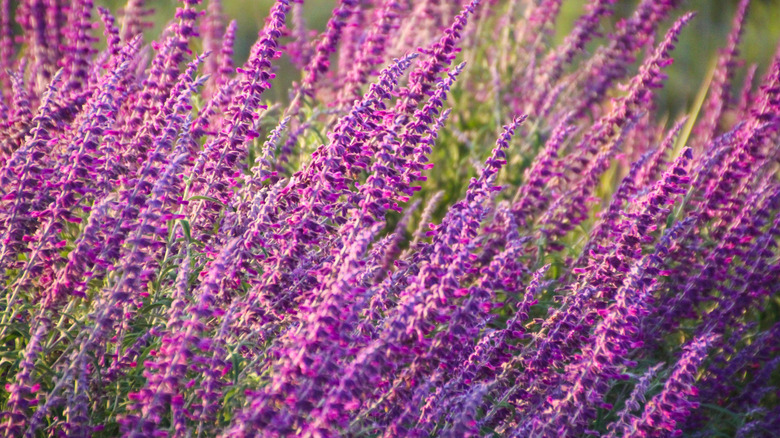
Mexican bush sage (Salvia leucantha) bears tall stalks of velvety purple flowers with white corollas. But its cultivar 'Midnight', which is occasionally sold as 'All Purple' or 'Purple Velvet', ditches the white corollas for purple, striking a dominating pose that easily catches the eye of hummingbirds and other pollinators. Perennial in zones 7 through 10, it flowers right up to frost but may retain year-round blooms where weather cooperates. Deer-resistant, it prefers moist, fertile soil and full sun, except in scorching summers, when afternoon shade is appreciated.
Lobelia 'Vedrariensis'
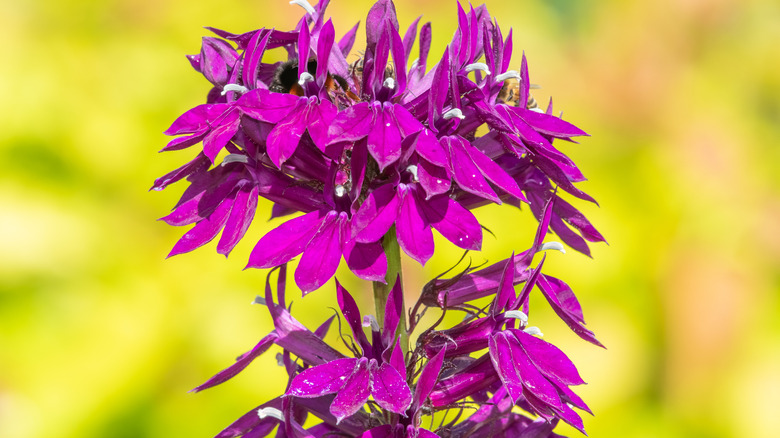
Are you looking for plants that will flood your rain garden with abundance and hummingbirds, all at the same time? Consider Lobelia 'Vedrariensis' (Lobelia x speciosa 'Vedrariensis'), as it thrives in wet conditions. Where soils remain consistently damp or boggy, you can grow it in full sun; otherwise, partial shade is best. In zones 5 through 8, where it is winter-hardy, sprays of tubular purple blooms appear in mid-summer and last into fall, contrasting beautifully with sword-shaped, red-tinted, green foliage. Removing spent blooms may prolong their season. Note that it is a short-lived perennial, but it may return from seeds if conditions remain favorable.
Obedient plant
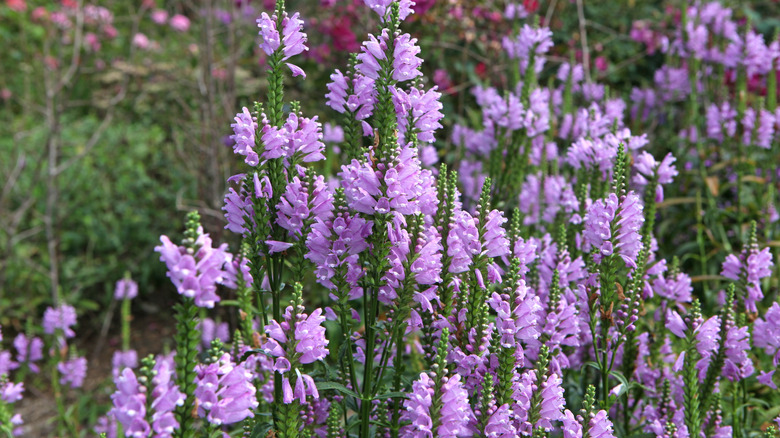
Native to the eastern U.S., obedient plant (Physostegia virginiana) is a fast-growing, pollinator-friendly perennial you can grow in zones 2 through 9. Starting around mid-summer, its narrow foliage is dotted with long spikes of pale purple petals that continue appearing until the first frost, magnetizing hummingbirds and bees. Unless you're trying to quickly cover up damp, fertile sites, it's best to locate this plant in a sunny site with average, well-draining soil where it won't grow as aggressively or look straggly. It's also a useful choice in alkaline sites.
Golden dewdrop
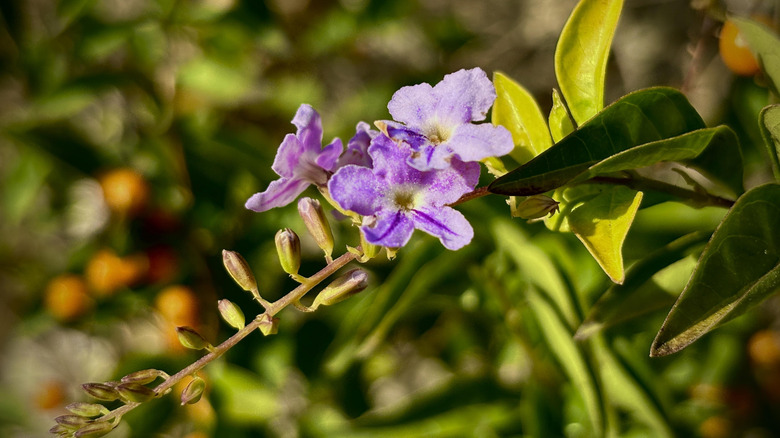
Hardy in zones 9 to 11, golden dewdrop (Duranta erecta) is a sprawling, fast-growing, evergreen shrub that makes a lovely backdrop or barrier plant in moist, sunny sites. Cultivars like 'Gold Mound', 'Sapphire Shower', and 'Geisha Girl' produce purple flowers throughout the summer and fall (or year-round where winters are mild), luring in hummingbirds, as well as butterflies and bumblebees. Later, flowers share space with golden fruits and persist through winter if birds spare them. Unfortunately, it's unsuitable around curious toddlers and pets, as the fruits and leaves are fatally poisonous.
'Dark Lavender Chiffon' rose of Sharon
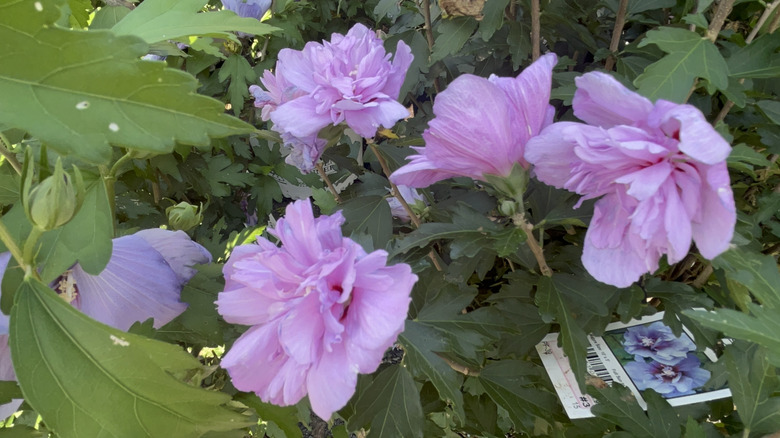
Like its parent 'Lavender Chiffon,' 'Dark Lavender Chiffon' rose of Sharon (Hibiscus syriacus 'SMNHSPCL') produces anemone-esque purple flowers all summer long, albeit in richer tones. Since it can grow up to 12 feet tall and 10 feet wide, you can either use it as an accent plant or grow it en masse for privacy screens and hedges. Once established, it can tolerate drought, heat, and deer browsing. Highly adaptable even in clay soils, 'Dark Lavender Chiffon' requires full sun and is cold-hardy in zones 5 through 9. However, it is invasive in Maryland, West Virginia, Virginia, Georgia, and Kentucky.
'Bowles's Mauve' wallflower
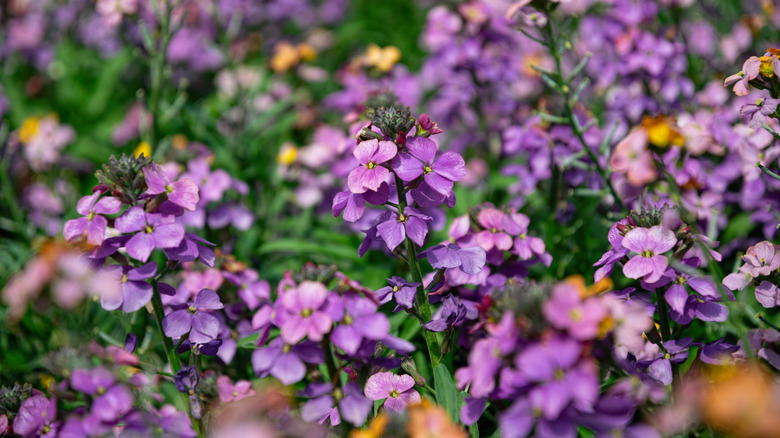
'Bowles's Mauve' wallflower (Erysimum 'Bowles's Mauve') is a purple perennial wallflower that'll bring hummingbirds and butterflies to your yard. Four-petalled blooms slowly open on racemes in mid-spring and continue blooming into autumn. Although perennial in zones 6 to 9, it can grow straggly with age, requiring replacement. However, through regular pruning, you may be able to restore vigor and extend its life. Alternatively, you can save some seeds and sow them in a sunny, well-draining site for new flowers. Due to its free-growing habit, 'Bowles's Mauve' looks great spilling over containers and rock walls.
Mexican heather
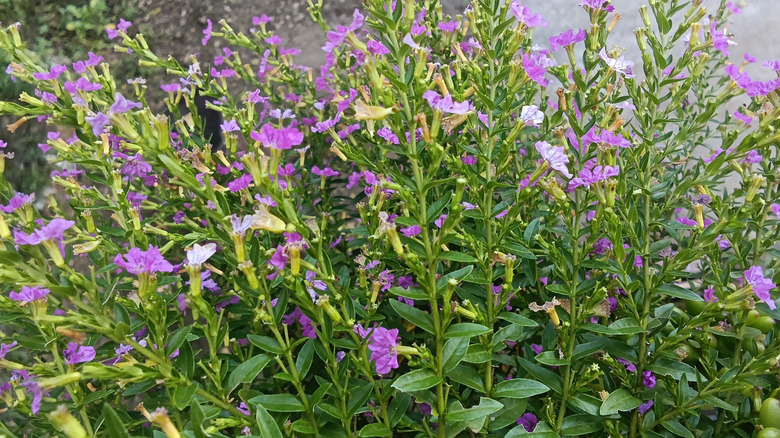
Even though Mexican heather (Cuphea hyssopifolia) produces smaller blooms compared to some other Cuphea favorites, like bat-faced cuphea and hummingbird's lunch, its electric purple petals enjoy quite the traction with hummers. Evergreen in zones 9 to 11, it's grown as an annual elsewhere or overwintered indoors if potted up. It flowers unceasingly even through the dog days of summer, until frost puts it out of business. While it can handle light dry spells, watering it consistently is advised to maintain a steady display. You may grow it as a groundcover or pop it in patio or deck planters.
Wild petunia
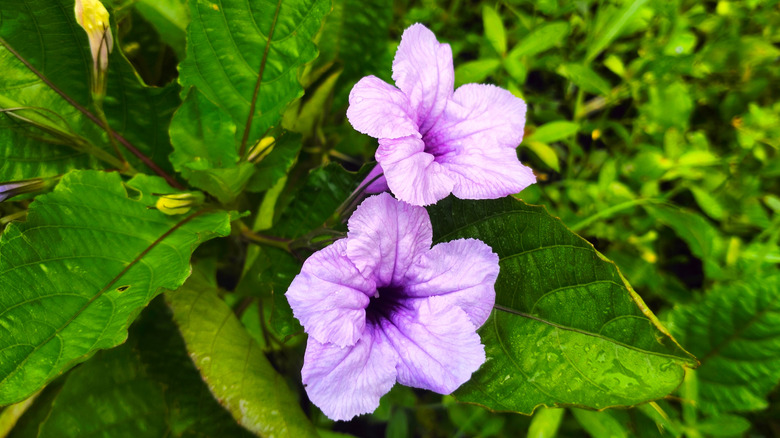
Also called prairie petunia and fringeleaf wild petunia (despite not being in the petunia family), wild petunia (Ruellia humilis) is a low-growing U.S. native you can plant as a perennial in zones 4 through 8. Bell-shaped, lilac-hued flowers dance over a sea of olive green leaves from late spring through fall, drawing in pretty hummingbirds, moths, and bees. You may also spot caterpillars of buckeye and wood nymph butterflies feeding on its foliage. Be careful about self-seeding, as new seedlings can turn up 10 feet away from the parent plant. Use in borders to deter deer or rabbits.
'Purple Haze' giant hyssop
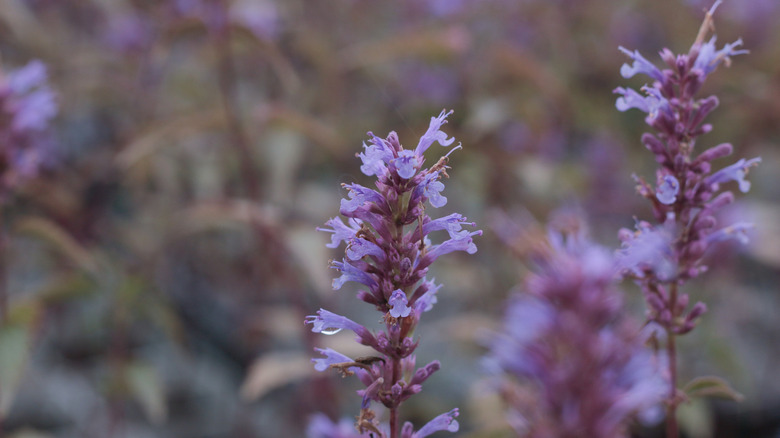
Justifying its name, 'Purple Haze' giant hyssop (Agastache 'Purple Haze') creates a gorgeous haze of tubular, blue-tinged, purple flowers throughout summer and autumn, bringing itself to the attention of hummingbirds, bees, and butterflies. The seeds that follow the flowers draw in goldfinches, making it an excellent wildlife-friendly choice. Its leaves smell like anise, which deer find unpleasant (not us, though). It can grow up to 3 feet tall and 2 feet wide. It can survive the winters in zones 6 to 9, with good drainage and full sun.
Anise hyssop
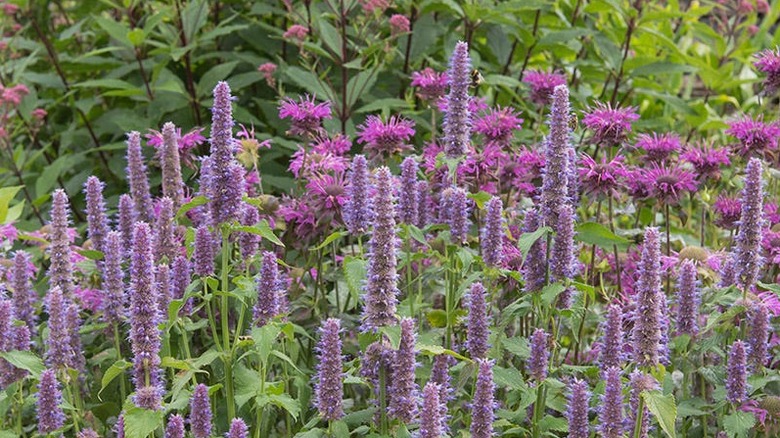
Around June, anise hyssop (Agastache foeniculum) kicks into flowering mode and produces pretty whorls of cylindrical lavender flowers, which hummingbirds find attractive. The show lasts into late autumn if the season is amenable and you deadhead regularly, with plenty of action from beneficial bugs like syrphid flies and bees. Letting the last flush develop seeds will bring in goldfinches, and they're edible too, perfect for cookies and cakes. To ensure that the plant successfully survives winter — possible in zones 4 to 8 — retain the dead growth, cleaning up once spring arrives. Since it's short-lived, you may need to replace it every few years.
'Black Adder' giant hyssop
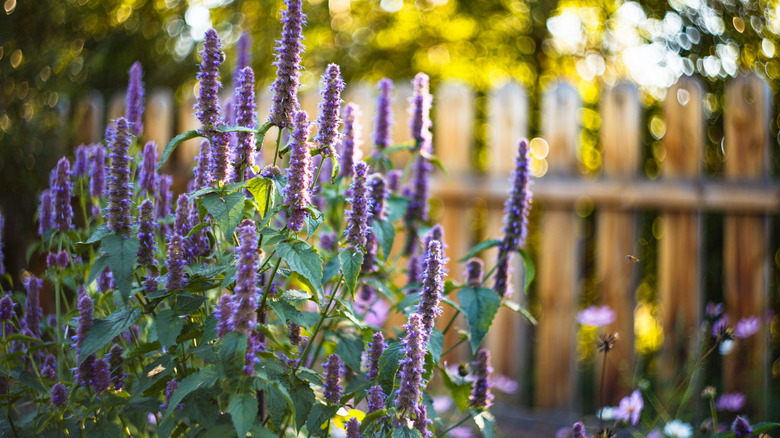
'Black Adder' giant hyssop (Agastache 'Black Adder') features red-tinged, purple flowers that pollinators, including hummingbirds and butterflies, can't help but probe. Removing faded blooms prolongs the season into fall. In a sunny or lightly-shaded site, you can grow it as a perennial in zones 6 through 9. 'Black Adder' requires lean, fast-draining soil, making it ideal for rocky sites. This also means that you should stick to gravel for mulch. After establishment, it can withstand dry spells and is resistant to deer and rabbits. It grows about 3 feet up and across.
'Miss Violet' butterfly bush
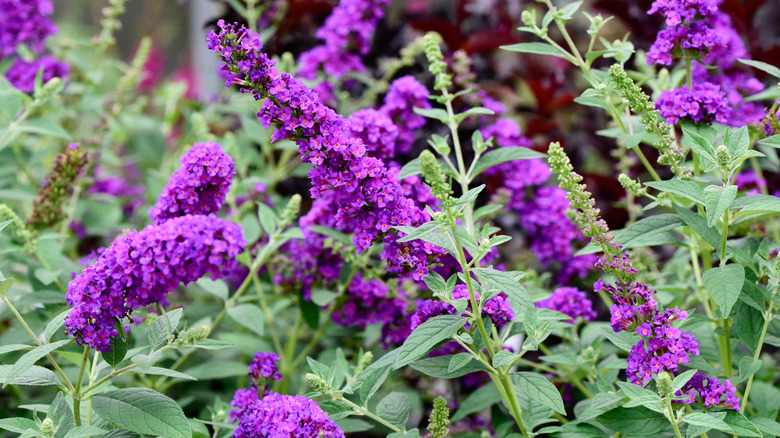
Since butterfly bush (Buddleja davidii) has become invasive in many states, North Carolina State University developed a non-invasive hybrid variety, Buddleja 'Miss Violet', which is practically pollen- and seed-less. From summer into fall, it explodes into reams of fragrant, tubular purple flowers that might remind you of grape jelly. They're highly popular with hummingbirds and other pollinators. It's one of those plants you shouldn't bother mulching, especially right around the stems, as the retained moisture can promote rot. It requires full sun and is cold-hardy in zones 5 through 9.
'Walker's Low' catmint
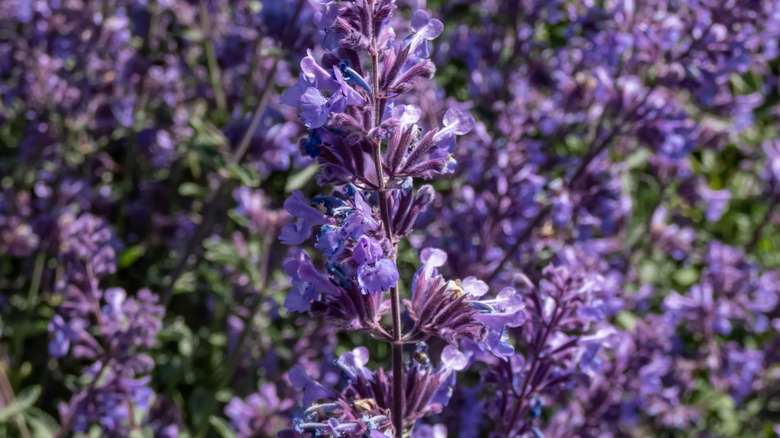
Got dry or rocky soils with plenty of sun to boot? Grow 'Walker's Low' catmint (Nepeta x faassenii 'Walker's Low'). During summer, silky sprays of lavender flowers emerge from depths of silvery-gray leaves, luring in hummingbirds along with butterflies and bees. With deadheading, you can extend this display into autumn. Despite being a member of the mint family, 'Walker's Low' is fairly well-behaved and will not take over the garden, as it doesn't produce seeds. Deer and rabbits avoid its foliage, though your cat may still be interested. It's hardy in zones 3 through 8.
Hyacinth bean
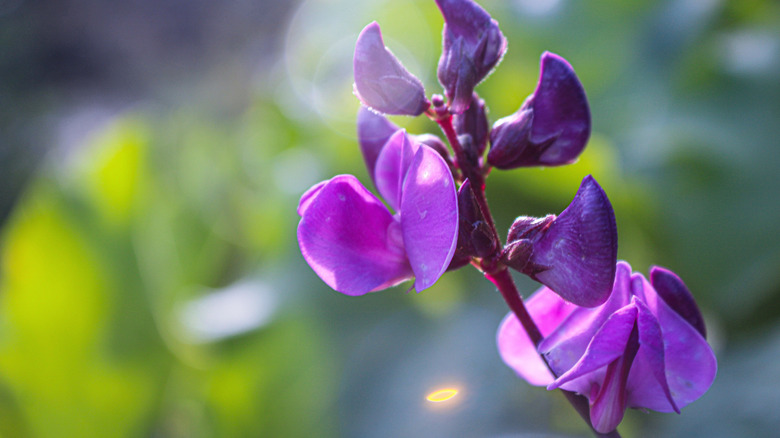
In hot, humid locations (zones 10 to 11), you can grow hyacinth bean (Lablab purpureus) to attract hummingbirds. From summer through fall (or first frost, as the weather permits), purplish stems support pea-like, lavender blooms, which are soon followed by purple beans. As it's a twining vine, you'll have to train it up a trellis. Unpruned, it can grow over 25 feet long and 6 feet wide and can be utilized as a living screen. Although the bean pods are edible, the seeds are toxic, so be sure to rinse and fully cook them before consuming.
Lemon beebalm
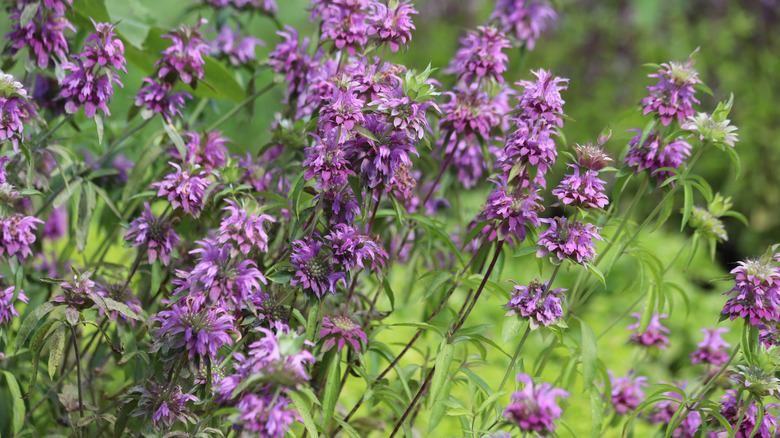
Native to the southern U.S., lemon beebalm (Monarda citriodora) is another attractive ornamental that you can mass plant to encourage visits from ruby-throated hummingbirds. Towards the end of spring, it bursts with tubular lavender-pink flowers, and it maintains the display through mid-summer or sometimes even fall, if you keep it well-watered. Both the flowers and leaves emit a citrusy scent, which tantalizes human senses but keeps deer and rabbits away. You can even harvest the leaves to flavor beverages. Avoid growing it in highly fertile soils, as it may grow floppy. Lemon beebalm can self-seed, so deadhead regularly to control its spread.
'Amistad' salvia
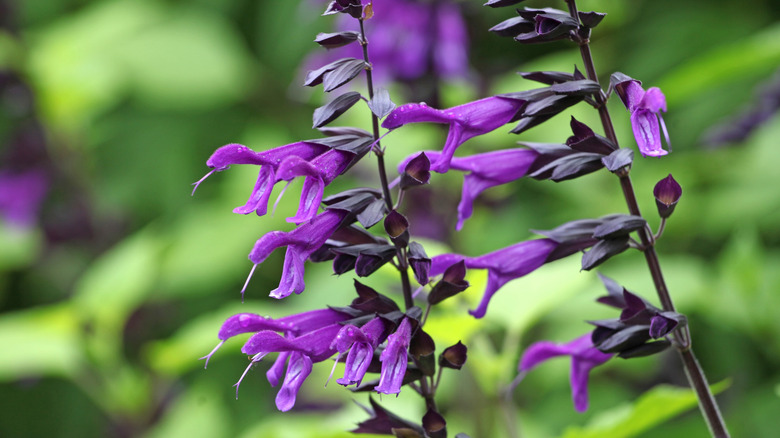
Also known as friendship sage, 'Amistad' salvia (Salvia 'Amistad') will make your garden hum with pollinator activity. As soon as the royal purple flowers appear in spring, expect flashes of hungry hummingbirds and persistent revisits throughout the summer and fall. You might also spot carpenter and small bees stealing the nectar. 'Amistad' can grow up to 5 feet tall and wide, so it looks best in the middle of a border or in front of shrubbery. Alternatively, you can containerize it to spruce up your pool or patio area. Except in zones 8 to 10, it's grown as an annual.
Rosemary
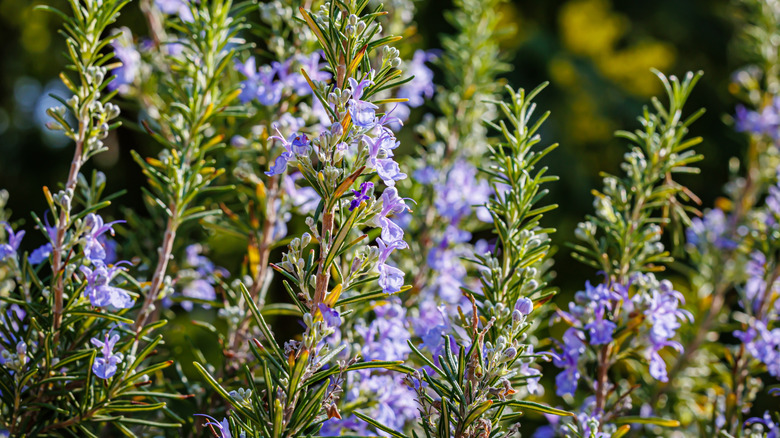
Most prized for its culinary uses, rosemary (Salvia rosmarinus) can also help you create a hummingbird paradise. It attracts these flashy birds with its two-lipped, pale purple flowers in the spring and summer. After the last flowers fade, it draws in birds of another kind: seed-eaters like goldfinches. However, you've got to be careful about location. Rosemary can't handle wet, humid climates or heavy soils like clay and is susceptible to powdery mildew, rot, or botrytis in such conditions. Ideally, choose a sunny site with lean soil. It's cold-hardy in zones 8 to 10.
'Supertunia Royal Velvet II' petunia
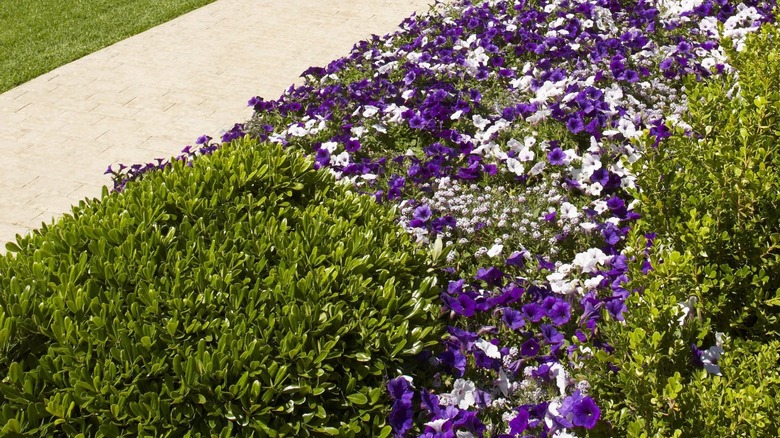
Be it the original hybrid or its improved version, 'Supertunia Royal Velvet II' petunia (Petunia 'Supertunia Royal Velvet II') promises a steady display of highly fragrant, majestic purple blooms from planting until frost. Courtesy of this feature, expect to see exciting flashes of the iridescent feathers of hummingbirds and butterflies in your garden. The best part, though? You don't have to bother with deadheading. What you do need to be careful about is watering: Keep the soil moist, or it'll wilt dramatically. Also, fertilize weekly.
'Indigo Spires' salvia
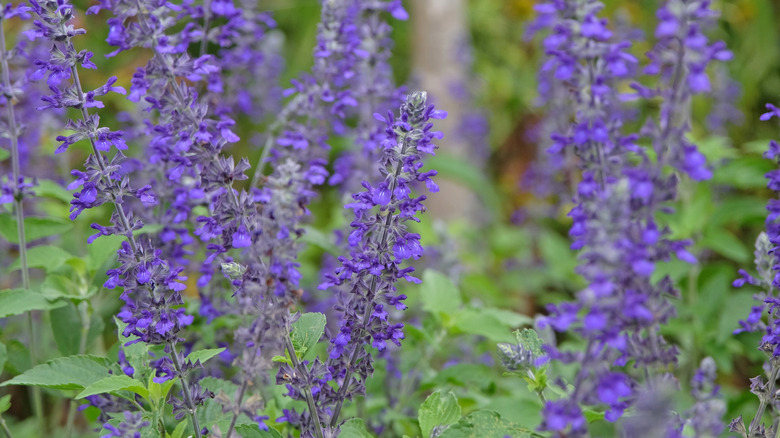
To create a dramatic display that catches the eye of gardeners and hummingbirds alike, try 'Indigo Spires' salvia (Salvia 'Indigo Spires'). It sprouts 15-inch-long spikes that remain covered with violet blooms unceasingly from summer through frost. But you must pinch the stems early in the season and deadhead diligently. It also needs good drainage and airflow; without them, it may develop mildew. Keep the beds heavily mulched during winter, especially in zone 7 where it's only marginally hardy; its typical hardiness range covers zones 8 to 10, though it can also grow as an annual.
'Meteor Shower' verbena
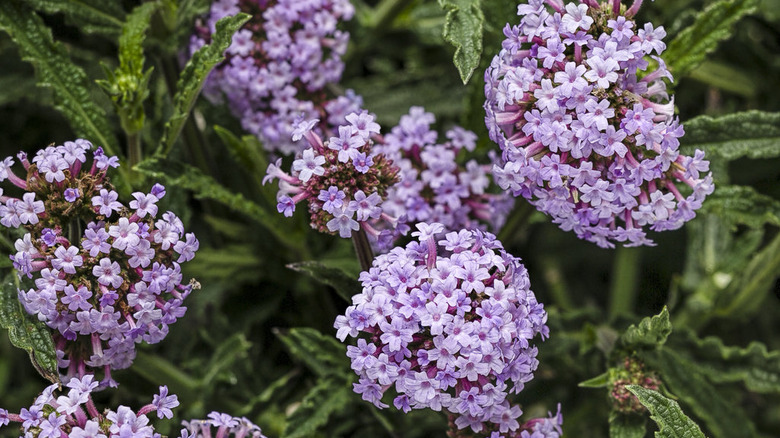
Looking for tiny plants to squeeze around your beds and boost pollinator activity? Give 'Meteor Shower' verbena (Verbena bonariensis 'Meteor Shower') a chance. Atop sturdy stems, it produces ball-like flowerheads full of tubular, violet-lilac blooms that hummingbirds and butterflies love to drink from. The show continues through hot summers, too! It's heat- and drought-tolerant. You may grow it as a perennial in zones 7 to 11 and as a summer annual elsewhere. 'Meteor Shower' doesn't produce many seeds and is unlikely to become weedy in the landscape. Deadheading may help neaten it up, but isn't essential for reblooming.
'Summer Wave Trailing Large Violet' wishbone flower
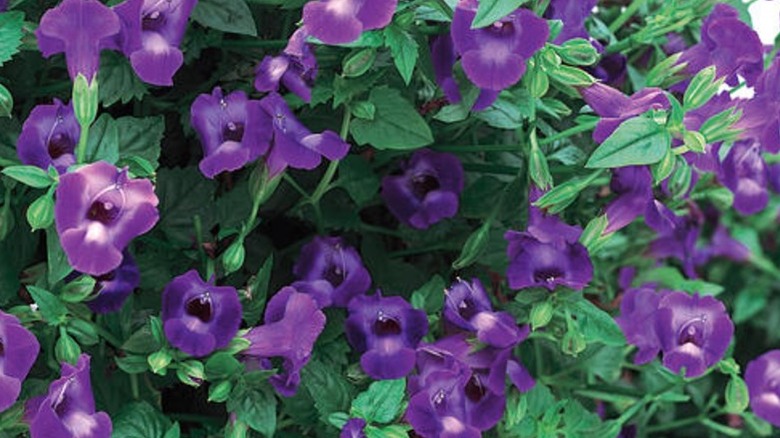
Don't we all love when plants elegantly cascade over hanging baskets and containers, while hummingbirds cutely hover around, zipping from one flower to the next, relishing sweet nectar? With 'Summer Wave Trailing Large Violet' wishbone flower (Torenia 'Sunrenilamu'), you can achieve just that. Hardy in zones 10 and 11, it's typically grown as an annual. The 3-foot-long trails of green leaves are dotted with brilliant purple flowers throughout the growing season until the first frost, without requiring any deadheading. Although heat-tolerant, it performs best in filtered light. Regular fertilization is essential for repeat blooms.
'Rock Steady' chastetree
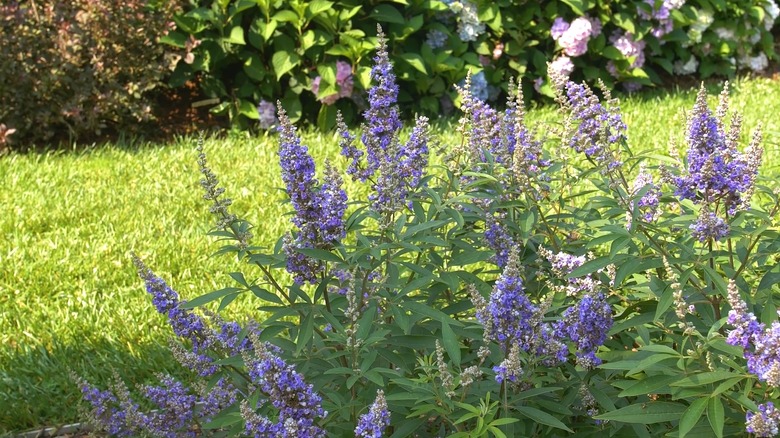
Hardy in zones 5 through 9, 'Rock Steady' chastetree (Vitex agnus-castus 'Rock Steady') is ideal for gardens where spring frosts or winter freezes can potentially damage plants. Since it develops flower buds on new wood, aka during the current season, it reliably blooms during the growing season and through fall. Purple flowers shaped like candelabras lure in hummingbirds and bees, becoming a hot spot for pollinators. Chastetree doesn't ask much of gardeners, given that it thrives in average soil, but you must offer it full sun.
Rainbow Rhythm 'Storm Shelter' daylily
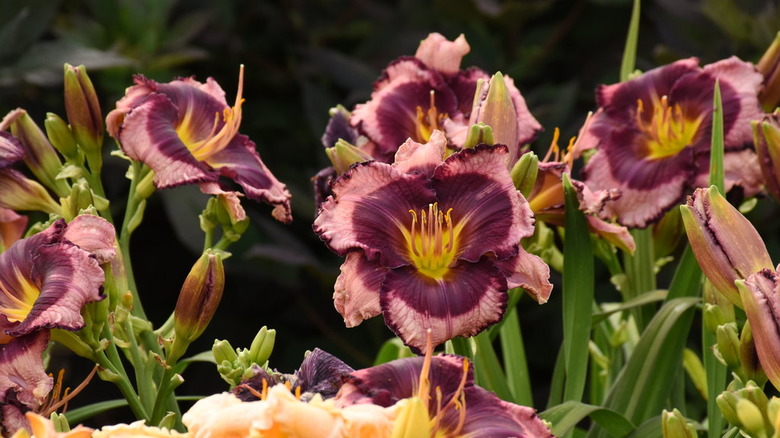
Truly bold, Rainbow Rhythm 'Storm Shelter' daylily (Hemerocallis 'Storm Shelter') boasts a color scheme rarely seen in the species and is worth planting for that alone — but its popularity with hummingbirds is another advantage. Eggplant purple hues mark the large eye and the tips of the flowers, with mauve covering the remaining area. It blooms during the summer and prefers full sun. Do note that some gardeners find the color to vary slightly based on growing conditions. It's reliably hardy in zones 3 to 9.