

How To Reduce Ticks In Your Yard With A Pretty White Flower
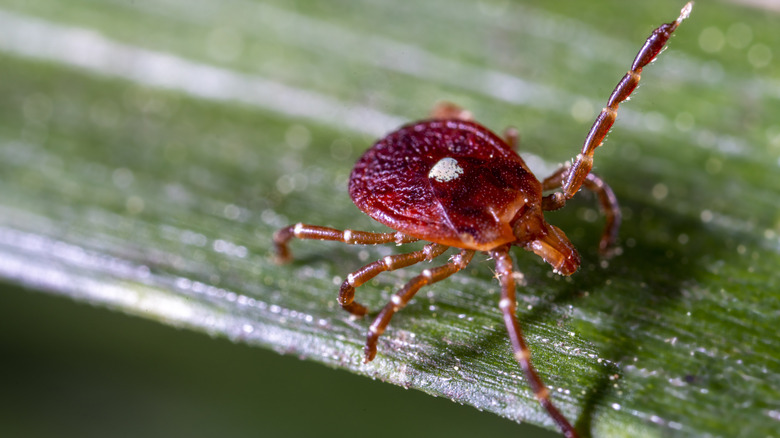
When you're seeking ways to tick-proof your lawn without nasty chemicals, don't overlook the power of plants! They can truly offer more than meets the eye. In particular, consider growing an unassuming plant with cheerful, white-and-yellow, daisy-like flowers, natural insecticidal properties, and a long history of cultivation dating back to ancient China. The pyrethrum daisy, also known as the Dalmatian daisy (Tanacetum cinerariifolium), has been used a as a medicinal insecticide for over 200 years and is full of surprises — not least the fact that you can turn the blooms into a spray that may help to repel ticks.
According to an article published by the Centers for Disease Control and Prevention (CDC) in 2016, certain chrysanthemums have insecticidal and insect-repelling properties, and the pyrethrum daisy is an important source of the natural insecticide pyrethrum. (Yup, it's right there in the common name.) Pyrethrum is actually a mixture of six closely related compounds called pyrethrins. These chemicals have natural, non-selective insecticidal properties — they kill insects, including ticks, by disrupting their central nervous system.
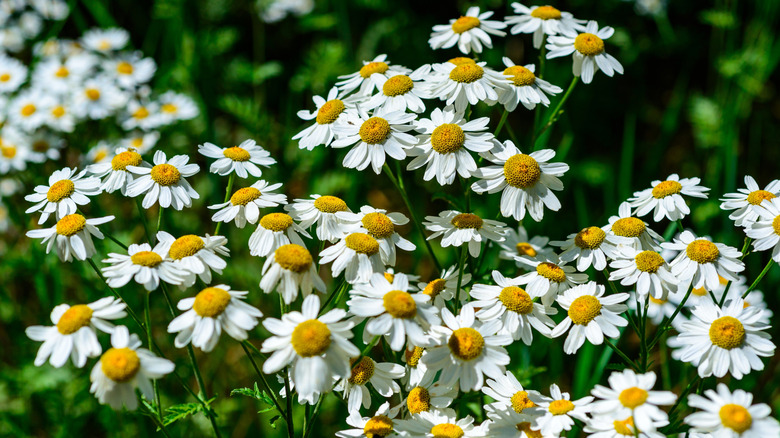
Happily, the pyrethrum daisy is as ornamental as it is useful. It possesses all of the charm inherent to cheerfully nodding daisies. The white petals surround a yellow, button-like center. The plants produce sunny clusters of flowers for several months each year, typically starting in May. Each pyrethrum daisy grows up to 20 inches tall and 30 inches wide. Its foliage is fernlike and silvery, and all parts of the plant are fragrant. This pretty perennial thrives in USDA Plant Hardiness Zones 4 to 10.
Growing and using pyrethrum daisies in your yard
While the pyrethrum daisy's compounds are commercially extracted for insecticides, evidence that the live plant effectively repels or kills ticks is largely anecdotal. If you'd still like to make a DIY insecticide from the plant, despite the lack of evidence that it will help in your battle against ticks, you'll first need to dry and powder the flowers. Use mostly the yellow, disc-like centers, which contain the highest concentrations of pyrethrum. Toss two handfuls of the dried, powdered flowers into freshly boiled water. Leave the mixture to steep, then strain the flowers from the water. When the concoction has cooled, decant it into a spray bottle and use it to soak the vegetation in tick-infested areas.
Growing pyrethrum daisies throughout your yard may also help to repel ticks, though again, this approach should never be your only defense against these disease-carrying insects. To grow this plant that keeps ticks out of the garden, choose well-draining sites with full sun and space the seeds or seedlings about 2 feet apart. Working the garden bed before planting will improve soil texture and reduce weed growth, but it's not necessary.
These low-maintenance flowers aren't fussy about pH levels or soil types. All they ask for is a little extra water during dry spells. Since pyrethrum daisies prefer their garden beds and borders on the drier side, plant them with other drought-resistant plants that will thrive without much water. Good companions include Russian sage (Perovskia atriplicifolia), California poppy (Eschscholzia californica), yarrow (Achillea spp.), and lavender (Lavandula spp.), as long as you choose a species, cultivar, or variety that suits your climate.