

Everyone Had Them In The '60s — Now They're Thrift Store Gems We're On The Hunt For
We may receive a commission on purchases made from links.
That little jolt of joy you get when you're browsing the shelves at the thrift store and you stumble upon a mid-century gem is awesome. The thrill of the hunt is always fabulous, because you never quite know what you're going to find, but it doesn't match the excitement of when you do actually find something wonderful. Thrift stores are full of things from the 1960s that people have gotten rid of because they've fallen out of fashion, but many of those items are trending again, and collectors and vintage enthusiasts are snapping up these finds.
The '60s is a particularly interesting decade, too, as it's a wonderfully eclectic mixture of sleek Danish-inspired furniture, shiny space-age chrome, and brightly colored plastic — plus, of course, some unapologetically wonderful kitschy decorative pieces. Because of the resurgence in popularity, there are also lots of modern reproductions designed to look just like those mid-century pieces. And some of them look pretty convincing, so you do need to make sure you're getting a genuine '60s gem.
Lucite flower wall plaques
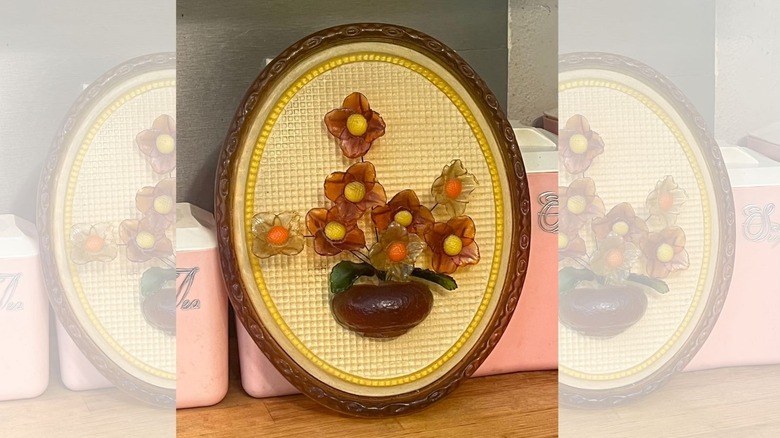
These strangely cheerful three-dimensional acrylic flowers, made from lucite, were a staple in kitchens and living rooms through the '60s, to accompany the lucite flower bouquets on the sideboard. Often the frame would be green and the little 3D flowers would be orange, amber, and yellow. They are incredibly kitsch and really quite ridiculous, which is why people love them. Wondermold Industries and New Designs Inc. are both popular collectible brands to watch out for.
Lucite is a translucent acrylic and it looks particularly attractive as it catches the light. So, to get the most from your lucite flower wall plaque, you'd want to place it near a window. Just make sure that the individual petals and leaves aren't excessively chipped or cracked, as they're not easily repaired. Because lucite is an acrylic, it may have some surface scratching, however, that is pretty normal for something of this age.
Original paint-by-number artwork

It might seem a little strange to say that there is a big collector's market for original paint-by-number artwork from the mid-century, but there genuinely is. While these kits were never supposed to be masterpieces, they made painting accessible for anybody, and there is something undeniably charming about the slightly wonky trees and strangely proportioned animals in the finished pieces. Even though the kits were mass-produced, no two completed pieces are exactly the same, as everybody's brushstrokes, use of color, and ability to stay firmly inside the lines are different. Paint-by-number kits were ridiculously popular.
Whatever your preferred subject matter, you can usually find a paint-by-number from this period, ready to frame and hang on your wall. In many thrift stores, they're even adequately framed already and only a few dollars apiece. There are landscapes, flowers, and still lifes, as well as quaint cottages, horses, and more exotic animals. While you're not buying a great work of art, you are buying something that an ordinary person sunk hours of their time and creativity into. Bear in mind that the imperfections, like slightly wonky painting outside of the prescribed lines, are part of what makes these pieces characterful, interesting, and collectible. Just avoid any that show signs of moisture damage, mold, flaky paint, and warped boards.
C. Jeré metal wall sculptures
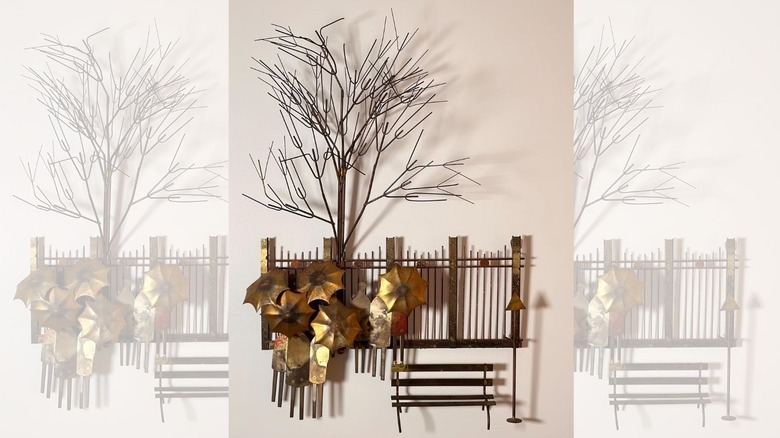
If you spot a large elaborate metal wall sculpture at the thrift store, you may have stumbled upon something extremely collectible, especially if it's made from brass, copper, or mixed metal. C. Jeré wall sculptures are very collectible mid-century decorative art and they are expensive to buy on the collector's market. They vary a lot, from abstract geometric sculptures to bold brutalist pieces, to vintage automobiles, birds and trees, the world, and other elaborate decorative designs.
If you're lucky you'll find one that's incised or painted with C. Jeré signature, sometimes even with a date included, but not every authentic piece was signed. They made so many different designs that it's difficult to be 100% certain that you're looking at the real deal, as there were also lots of other manufacturers during the same period that jumped on the trend and made their own metal wall art. If, however, you really like a piece and it's in good condition, then it doesn't really matter if it's a C. Jeré original or not.
Starburst clocks
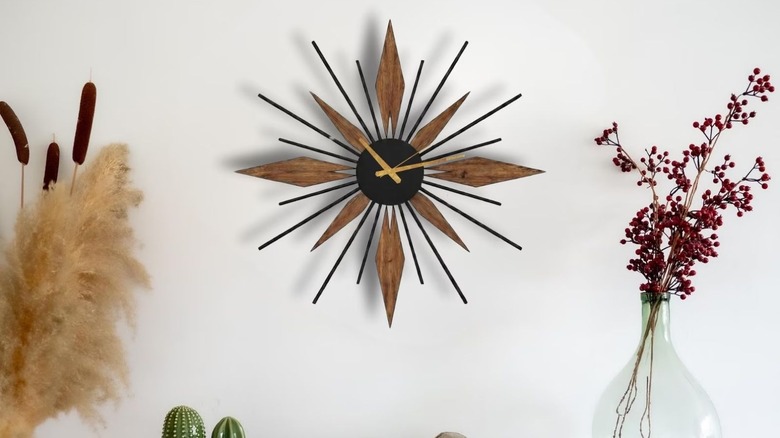
Starburst clocks never truly went out of fashion, and you'll find plenty of modern examples that are still reminiscent of the mid-century classics. However, there is definitely something a bit extra special about original starburst clocks from the '50s and '60s. They generally have long spokes with a small central face and are a mixture of wood and metal or lucite or plastic. Some are small and restrained, while others are huge and can easily take up a whole wall. Of the many iconic clocks produced by George Nelson and the Howard Miller Clock Company, one of the most distinctive is the ball clock that was first designed in 1948. Because starburst clocks were so popular, you'll find models from all kinds of brands.
If it is a mid-century find that you love, take a look at the movement and make sure it works, and examine those long delicate spokes for damage that isn't easily repairable. It's also a good idea to be wary of anything advertised as Nelson, George Nelson, or Howard Miller clock designs, unless they are verified and authenticated, as there are a lot of unauthorized copies and reproductions.
Lane Acclaim tables
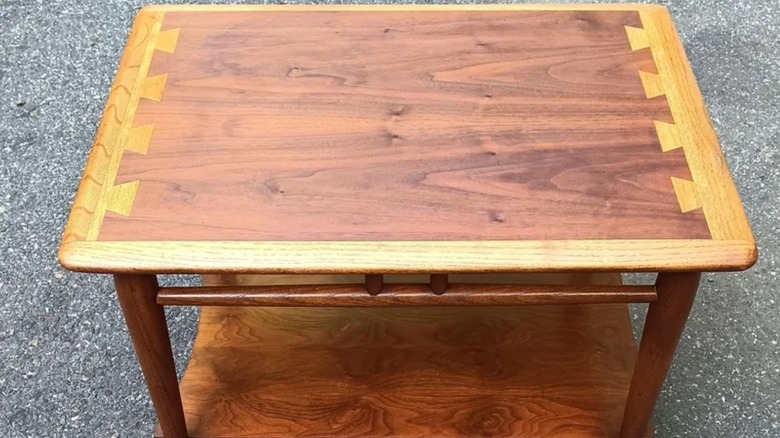
Designed by Andre Busch for Lane Furniture from 1958, Acclaim tables are very distinctive, and if they've survived in good condition, they are lovely. These tables are built with contrasting wood tops, usually with a darker wood forming the main tabletop and the edges in a lighter wood, with what look like dovetail joints all around the edge. The valuable vintage tables you're most likely to find in reasonable condition at thrift stores are coffee tables and end tables, although other larger tables are available, as are other furniture pieces in the same range. You want the ones that are wood or veneer, rather than the later Acclaim II range, which were laminate instead of wood.
Check underneath the tabletop for Lane markings and serial numbers, and make sure you pay attention to the edges and the legs for chips. You should expect to see a few scratches and general wear and tear on a table that's been in use since the '60s, but not extensive veneer loss or badly damaged corners, as these are much harder to restore.
Broyhill Brasilia furniture
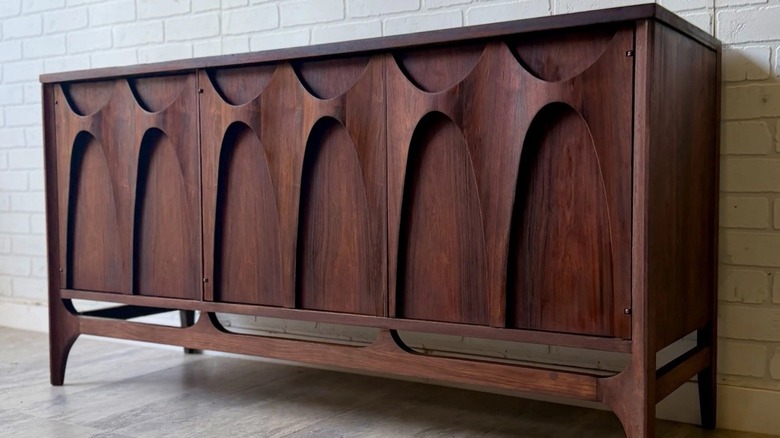
Broyhill Brasilia furniture, first produced in 1962, is a mid-century furniture brand well known for its furniture with dramatic curving arches. These designs are representative of Brazil's modern architecture. They have that wonderfully quirky, immediately recognizable mid-century look, combining curves and arches with straight lines and squares. That interesting interplay of shapes makes this wooden furniture still remarkably on-trend today, and a Broyhill Brasilia highboy or long dresser looks perfectly at home in a deliberately retro room or a trendy contemporary one.
Look for Broyhill labels and maker markings, particularly inside drawers, as these can help you confirm exactly what you've found. There were many manufacturers who produced furniture inspired by the Broyhill Brasilia range. Even if you are lucky enough to have found a genuine Broyhill Brasilia piece at the thrift store, you still need to check the carved details, the veneer, and whether there are missing or replaced handles, or damaged decorative arches.
Danish teak sideboards
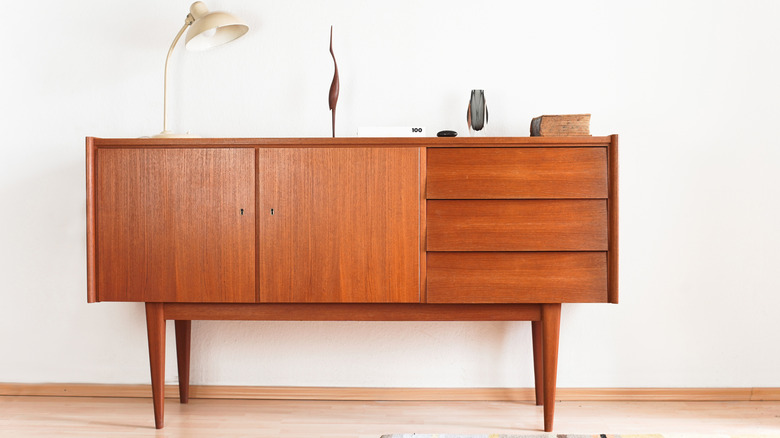
A good teak sideboard from the '60s is just as practical and well-proportioned today as it was then. If you go for something with a clean, elegant Danish design, it will suit a modern room perfectly. These long, low cabinets feature lots of storage hidden behind sliding doors and neat banks of drawers, so they give you lots of space to store anything from craft supplies to tableware. Genuine Danish examples, such as those from designers like Arne Vodder, are plentiful, but there are plenty of British, American, and other European pieces from the period, too.
If you are focused on a Danish piece, then be sure you look for maker labels, stamped markings, and the Danish furniture makers' control mark, which was first introduced in 1959 and used voluntarily by manufacturers who participated in a quality control scheme. More important than the maker and its country of origin are its overall appearance and how much storage space it has. If these two things fit your space and storage needs, then take a look at the condition. Many of these were veneer, rather than solid wood, so you need to check and make sure the veneer isn't lifting and doesn't show any signs of swollen edges.
Chrome and formica dinette sets
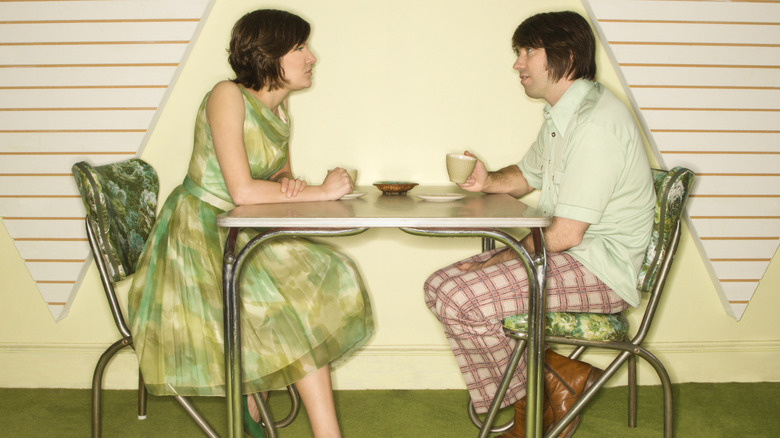
Not many people can resist a shiny chrome kitchen table with brightly colored tops and matching vinyl chairs if they find them at the thrift store at a good price. They are unashamedly retro, but still supremely practical. While many people prefer the plain-colored sets, there are plenty who appreciate those sets with patterned laminate tabletops. Formica tables were familiar fixtures in many American kitchens during the mid-century, and many family favorite TV shows kept them current or made them iconic during later decades. Today they are a nod to the past, but still brilliantly bright and cheerful and not at all out of place in a modern kitchen.
Formica is notoriously difficult to repair, though, so you'll need to check for deep burns and warping, as well as peeling corners and swelling. If you're lucky enough to find a complete set, including the chairs, check them because the vinyl upholstery might be brittle or badly worn. If you're not into reupholstering for fun, you may want to pass on anything that needs extensive work.
Eames lounge chairs
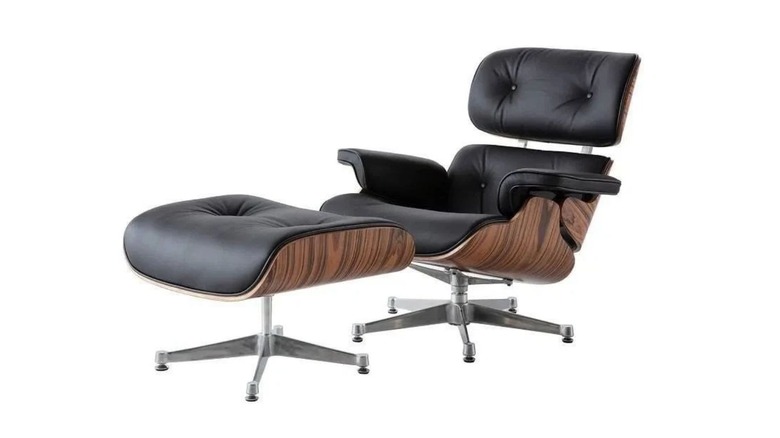
Finding a real '60s Eames lounge chair at the thrift store would be like striking gold. It would be a remarkable discovery, especially if it was in good condition and came with the matching ottoman. These chairs were designed by Charles and Ray Eames in 1956 and they are arguably one of the most iconic furniture designs of the mid-century period. The chairs have beautifully curved, molded plywood shells, leather cushions, and distinctive bases.
If you think you've found a genuine Eames chair, then look at the manufacturing labels, as Eames chairs are all marked. Even if it's not Eames, if it's a well-made reproduction that's in good condition, it'll still be a lovely chair at a good thrift store price. You do, however, need to check that the cushion adjustments and the wooden shelves are in good condition. If there are cracks around structural elements and fixtures, then these are not really repairable. If the wood veneer is swelling, peeling, or lifting, this is also not an easy fix.
Ceramic TV lamps
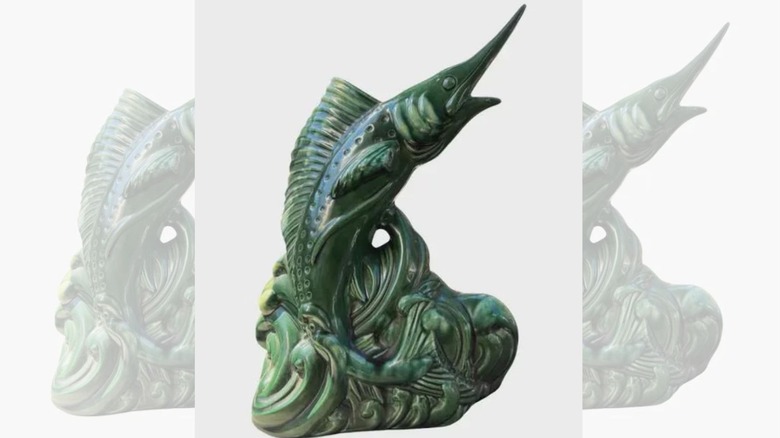
Some of the most brilliantly kitsch mid-century home decor has to be the wonderfully strange ceramic TV lamps. They came in exotic shapes like panthers, horses, Siamese cats, fish, and birds, making the TV lamp an exciting thrift store find. These quirky lamps were particularly popular during the '50s and '60s, partly because it was believed that watching television in an otherwise dark room was bad for your eyes. Rather than producing the bright direct light of a traditional lamp, these strange TV-top lamps provided a gentler background glow.
Because they were so wildly popular, there are endless designs from countless manufacturers, so there's a good chance that you could find one of these. You'll want to check the glaze for cracks, repairs, and missing bits, though, and if you're planning to actually use the lamp as a lamp, I would have the electrical cable replaced first for safety. They look fabulous, though, even before you get the light working.
Tension pole lamps
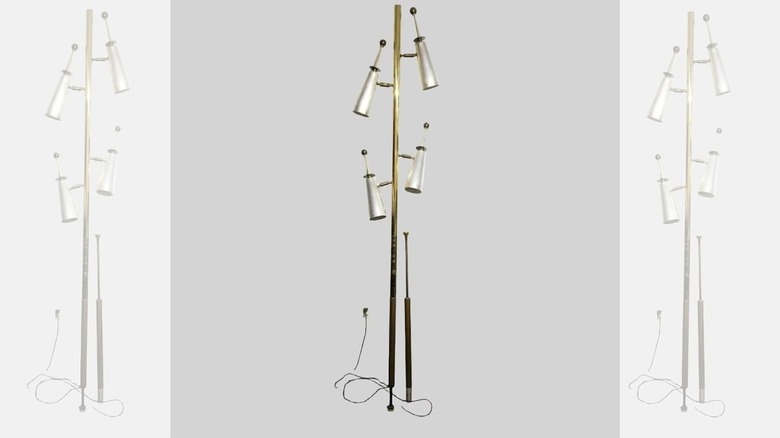
Tension pole lamps were just really clever pieces of furniture. Instead of having a wide heavy conventional pedestal base, tension pole lamps sit between the floor and the ceiling and are held in place by spring pressure. They have two or three adjustable lights anchored on the pole, so that you can direct the light wherever you need it. These were a great invention for smaller homes where a traditional standard lamp would take up too much floor space.
For a '60s original, you're looking for a slim metal pole, sometimes with wood veneer accents, and round or conical lamp heads — again generally metal, but sometimes with wood veneer features. What's key when shopping for one is that the pole mechanism is complete, that the spring still has adequate tension, and that the upper and lower contact pads haven't perished or disappeared. Of course, as this is another electrical item, just like the TV lamps, you should get the electrical components checked for safety or replaced before use.
Swag lamps
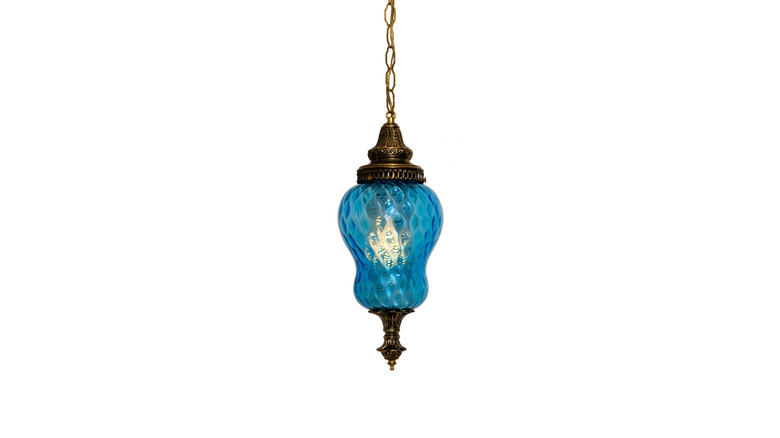
Another wonderfully practical mid-century lighting design is the swag lamp. These hang from hooks in the ceiling and have a length of decorative chain and electrical cable running across a wall to an outlet. Their introduction meant that homeowners could enjoy overhead lighting without having to install a conventional ceiling fixture. Swag lamps are a great choice in rented homes and rooms where existing lighting isn't well positioned.
You'll find swag lamps from the '60s in all sorts of shapes and materials, ranging from glass globes to elaborate metal cages and plastic shades, including lucite and spun acrylic. Some were understated and restrained, while others were large, colorful, and theatrical. While some swag lamps stuck to more conventional styles, other designers played with form, material, and color as part of the modernist movement. With glass and acrylic shades, obviously look for cracks, but also check the rims for chips. If the upper rim has some minor damage, but you really love the lamp and it's sold at a good price, it could still be worth getting, as you won't see that upper rim once the lamp is hanging.
Vintage mushroom lamps
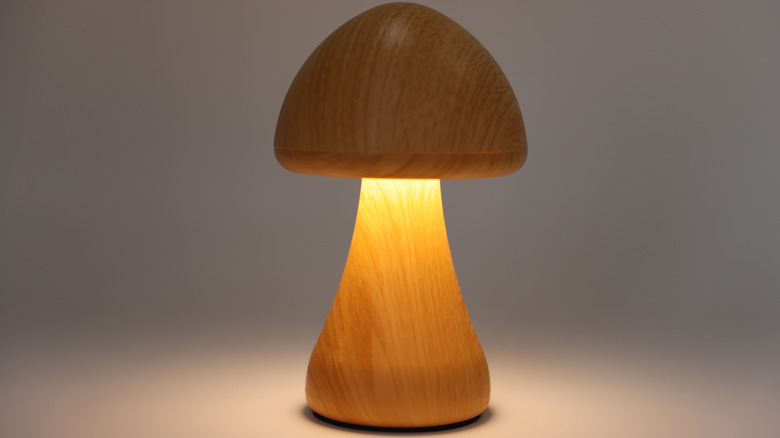
Mushroom lamps are back in fashion. They were hugely popular during the '60s and '70s, after which they mostly fell out of favor, but now they are once again highly collectible and very on-trend. You'll even find one of these in the Museum of Modern Art. This particular one is an Artemide Nesso original from 1965 and it's a perfect example of space-age design, with a broad round shade and dramatically flared base. Some of the earliest pieces were made from fiberglass-reinforced polyester resin, but later ones were made from molded plastic or metal and glass instead.
And they really do look exactly like mushrooms. Some have flared bases, others have a flat pedestal, a slim pole, and a lovely mushroom cap. Some look like regular domed mushrooms, while others look more like toadstools. There's a huge range of colors, from simple white and cream to vibrant green and orange, and a great deal of variation in shape and size. These are really lovely little lamps that are a great representation of the modernist design period.
Lava lamps

Nothing says the '60s quite as loudly as the lava lamp. These weren't really practical as lighting, but they were the epitome of modernist space-age style. Watching those blobs slowly rise and fall is still strangely soothing and mesmerizing. The original Astro lamp was released first in Britain in 1963, having been developed by Edward Craven Walker. This lamp and other original designs have remained in production in various forms ever since. Lava lamps never really went away, but there's a big collector's market for original 1960s designs.
Make sure you check that the glass bottle is intact and that the liquid hasn't leaked or become badly cloudy. Remember not to shake a lava lamp to see if it works, though, as moving or shaking one while it's warm can turn the liquid permanently cloudy. Also check that you can still find replacement bulbs suitable for that particular model of lamp, as the correct heat output is critical to make these lamps function.
Stereo consoles
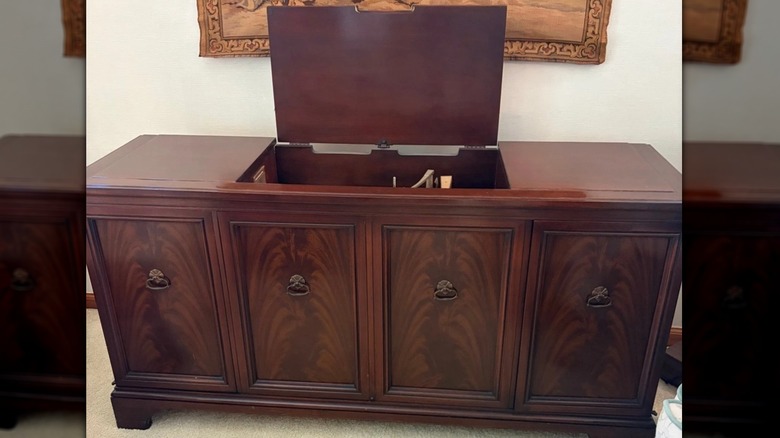
For younger generations, the idea of music only being available as physical media seems archaic, but up until the turn of the century, most people had substantial music collections, whether that was in vinyl, cassette, or CD form. During the '60s, of course, cassettes and CDs weren't available. During this time, the stereo console was incredibly modern and was something of a status symbol. These cabinets housed complete stereo systems with speakers, amplifiers, record players, and a radio, all sitting on shelves inside one large piece of furniture. There was also often storage for vinyl records.
During the earlier portion of the decade, these cabinets were more like traditional furniture, but during the latter half, stereo consoles became sleek and very modernist. Companies like Zenith, Magnavox, Motorola, Grundig, and Fisher all produced some beautiful stereo consoles. Because physical media fell out of fashion over the last few decades, you can often find the cabinets at the thrift store for relatively inexpensive. However, one of the most interesting recent trends is the shift away from streaming and back toward physical media. People are experiencing streaming fatigue, and there's an increasing interest in having physical copies of music and video, making stereo consoles relevant once again in their original function. These consoles are also good for general storage, whether that's for tidying away craft supplies or kids' toys.