

A Household Staple In The '60s — Now You'd Be Thrilled To Find It At The Thrift Store
We may receive a commission on purchases made from links.
After years of Marie Kondo–fueled minimalism, farmhouse aesthetics, and neutral hues (looking at you, Millennial gray) ruling home design, many are embracing some dopamine-inducing kitsch. Perhaps no decade nailed this delicate balance quite like the 1960s, where sleek-lined Midcentury Modern furniture was paired with oversized bookshelves full of curiosities, Pop Art, and whimsical accessories — notably, the TV lamp.
Thanks to new materials, such as plastic and fiberglass, and advancements in manufacturing techniques, the '60s saw a wide range of new lamp designs. The TV lamp, in particular, embraced sculpture and self-expression like never before. If your mother has ever told you not to stare into a bright screen in a dark room, this idea emerged with the birth of the television in the 1950s and '60s, when it was thought that watching TV in low light could damage your eyesight. TV lamps were introduced to add a soft glow that would lessen the harshness of the screen without interrupting the show.
Made from ceramic or plaster, these delightful accessories are crafted to look like animals, natural elements, boats, people, or avant-garde sculptures. Their shadeless design allows the bulb's light to filter dimly through the lamp (like through the eyes of a pair of cats, for example). Finding one that suits your taste is like a choose-your-own adventure story, offering a fun way to show off your unique style without taking up much real estate. And unlike the one retro '60s thrift store find that isn't worth it, TV lamps are relatively affordable, easy to find, and always worth the splurge.
How to identify and style a '60s TV lamp
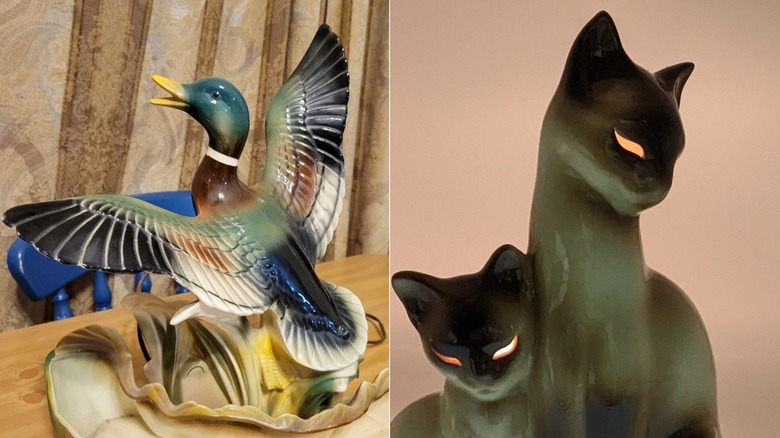
Once a dime-store item, these designs can now be found on auction sites and in antique stores for $20 to over $100 (and up to the thousands for rarer styles on high-end sites like 1stdibs). But those with a keen eye — and a bit of luck — can find them in thrift shops. These styles were made for about a decade by dozens of manufacturers; however, later models were reproduced from ceramic molds, so it's important to examine your find closely.
First, look for fine lines or cracking in the glaze, known as crazing. This imperfection can be a tell as to your lamp's age and authenticity, as well as any maker's marks from vintage brands that are always worth buying at thrift stores. Ceramic models are more valuable than their plaster counterparts, and brands like Royal Haeger, Ball Art Pottery, Maddux of California, Kron, Gilner, and Jacqueline Fine Vitrified China add legitimacy.
Most thrift shops will allow you to check that the lamp is in working order, but even designs that no longer operate can be styled on bookshelves or even as planters, in some cases. The options for how to style this common thrift store item in your home are limitless. Display your lamp as it was intended — aside your television — or change it up as a kitschy desk accessory, or even a children's night light.