

Skip The Basic Vinegar Treatment: Kill Grass Between Pavers With Another Pantry Staple
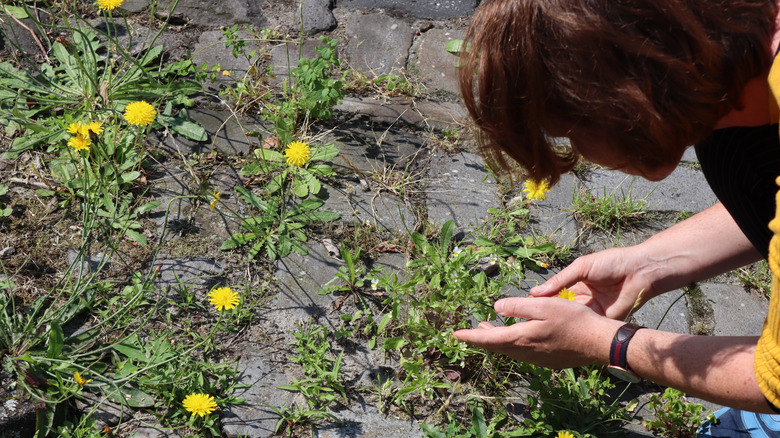
When you're trying to stop weeds from growing between pavers with a natural solution, obvious ingredients like white vinegar may come to mind. But while vinegar is often the go-to natural weed killer for organic gardeners, it generally only damages above-ground plant parts and may not prevent weeds and grass from returning. Instead, turn to another pantry staple, baking soda, that's not only up to the task, but may prove even more effective!
In fact, baking soda can bridge the gap between harmful chemicals and less-effective natural ingredients. When baking soda makes contact with the leaves and stems of weeds, they become too dehydrated to survive or regrow. Likewise, the versatile home product makes the soil inhospitable to plant life in the targeted areas. That's why baking soda is perfect for areas in which you don't want anything to grow at all, like the gaps between pavers or cracks in your driveway.
One thing that every gardener should know before using baking soda on plants, however, is that it should be used only in limited situations. While it's ideal for killing weeds that infiltrate your hardscaping elements like patios and parking areas, it's not the best solution for garden beds. That's because the sodium content of baking soda can add too much salt to the soil, making it hard for your ornamentals and edibles to thrive. It can also burn foliage if you accidentally spray your garden plants or lawn.
Use baking soda to wipe out grass and weeds in your pavers
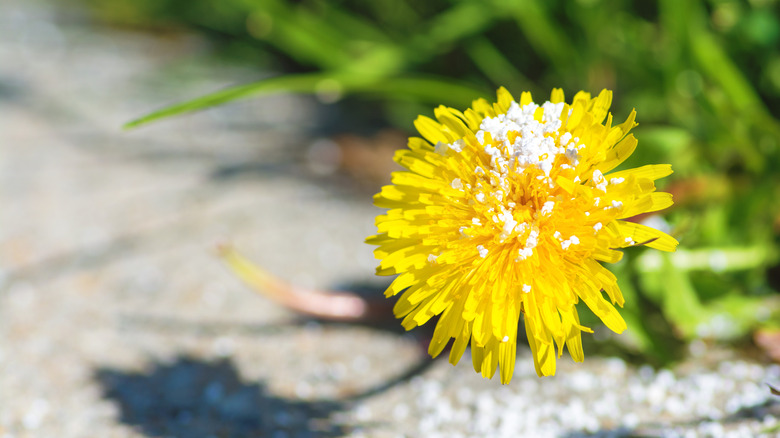
Which specific baking soda tricks prevent pesky weeds from growing between pavers? As with so many other things in life, the direct approach is often the best for handling those crevice-dwelling pests. Shaking baking soda directly from the box over the grass and weeds will be fast and effective. If you only have a few sprouts here and there to deal with, sift about one teaspoon of baking soda over the stems and leaves of each plant.
For more widespread grassy patches or weed outbreaks, scatter piles of baking soda right from the box over the areas where grass is coming up between pavers. One 8-ounce (225 gram) box should be enough to cover about 100 square feet of pavers in a layer of dust. After sprinkling the baking soda around, use a push broom to efficiently sweep the baking soda into the cracks, which will prevent new weeds from settling in that soil.
If you need to treat clusters along the edges of a patio, walkway, or driveway, a liquid spray containing baking soda can look tidier than baking soda dumped on the ground. Mix about 10 tablespoons of baking soda into 1 gallon of water, or scale down if you only need enough for one bottle's worth. The additional benefit of using this liquid formula is that the water wets the weeds, helping the "killer" baking soda stick to its prime target. Be careful to direct-spray only the undesired grass and weeds and not your lawn turf or garden, but if you make a mistake, follow up with plenty of water.