

Goodbye Overpriced Planters: 5 Good Reasons To Keep Growing Plants In Plastic Nursery Pots
We may receive a commission on purchases made from links.
Whether it's your first garden or your 100th, one thing that likely never changes is your desire to ensure your prized plants have the absolute best resources available. However, before you rush to your local garden store to purchase an arsenal of new containers for the plants you just picked up for this season, you may be pleased to learn that there are actually several benefits to reap by continuing to grow your plants in their plastic nursery pots. These benefits can be divided into three categories: investment, maintenance, and care.
The first category refers to the financial benefits of keeping your plants in plastic nursery pots, such as reducing the costs associated with buying other options. Meanwhile, maintenance refers to the pot itself, while care refers to how well these pots treat your plants. For example, plastic nursery pots are often more durable than other options, especially when it comes to the risk of shattering, and they can offer better moisture retention for your soil. Keep in mind that growing plants in plastic nursery pots doesn't require keeping the original pot they came in indefinitely. Potted plants typically need to be repotted eventually, and you may wish to choose an option that better fits the needs of your garden when it does come time to repot your favorite plant. Instead, continuing to grow your plants in these containers just means opting for plastic nursery pot containers over clay, ceramic, and other material options.
Budget-friendly cost
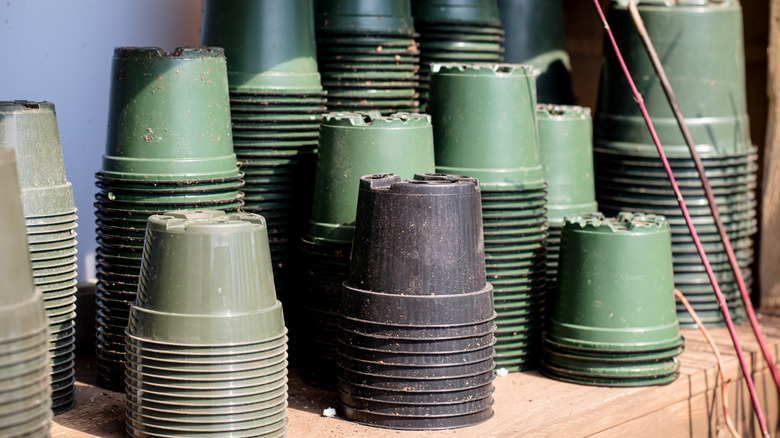
While there are some things that are worth indulging in, such as essential garden tools designed to hold up to regular wear and tear without needing frequent replacements, there are other areas you may choose to save on. And, because of their lower cost compared to decorative pots, nursery pots can be a great place to start. On the surface, decorative pots and nursery pots have a lot in common. Of course, there are times when you may find that a decorative, potentially overpriced planter is worth the splurge, especially when your plant's main job is to serve as interior decoration. However, if you're cultivating large-scale container gardens, buying a decorative or otherwise expensive planter can add up quickly, and you may not receive enough benefits to outweigh the expenses.
In many cases, when you buy a plant from a nursery or similar store rather than seeds, they will come in a plastic pot already as a part of the included price. However, as your plant grows and requires repotting, you can purchase larger sizes while still reaping that budget-friendly cost. For example, you can get a 50-pack of RooTrimmer 6-inch nursery planters for $27.99 on Amazon. If you keep your nursery planters after upgrading a plant, however, you may already have larger options on hand, reducing the need to buy a new option for the sake of repotting. Meanwhile, if you were to buy a 4-pack of Orceler 6-inch terracotta pots with plastic saucers on Amazon, you're looking at a price of $19.06.
Lightweight design
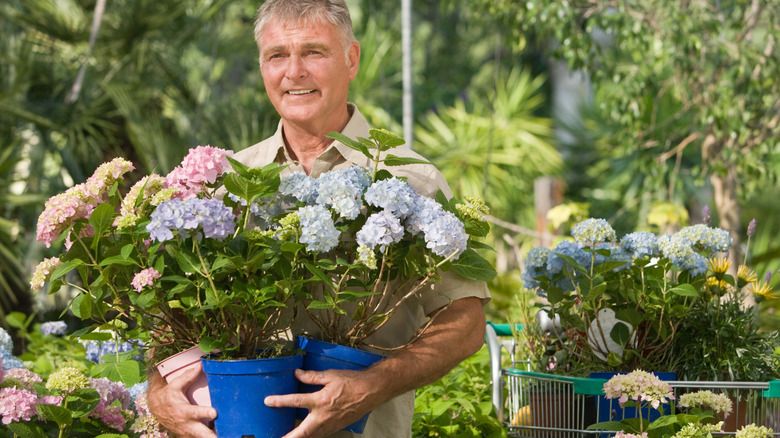
There are several reasons that you may need to eventually move your plant. If you're living outside of its hardy zones, you may need to relocate your prized plant indoors to overwinter. Or, perhaps, you might need to find a spot that better meets the sunlight requirements of your plant. Relocation may even become a simple necessity as your plant grows. Regardless of your reasoning, the last thing you want when it comes time to move your plant is to enlist the help of others or buy pricey tools to make moving easier.
While a plastic nursery pot won't eliminate the weight of your plant entirely — after all, you'll still have soil, any moisture, and the plant itself — their lightweight design can make them easier to move than ceramic, concrete, or similar options that add a significant amount of weight to the scale. As a result, you can easily tailor your garden to your needs, repositioning as necessary, or simply have an easier time adjusting your plants so that repotting and maintenance is possible.
Thin plastic nursery pots may also be more accessible to gardeners who struggle with lifting or other mobility-based tasks, a factor that makes it worthwhile to keep growing your plants in these containers. Just keep in mind that some people prefer a heavier planter to prevent their plants from tipping over if they live in a windier area, so if this is the case for you, you'll need to find other ways to secure your plastic nursery pots.A one-gallon plastic nursey pot can weigh less than a quarter of a pound. Meanwhile, a ceramic pot of a similar size can weigh up to a pound, making it over four times as heavy.
Easier maintenance
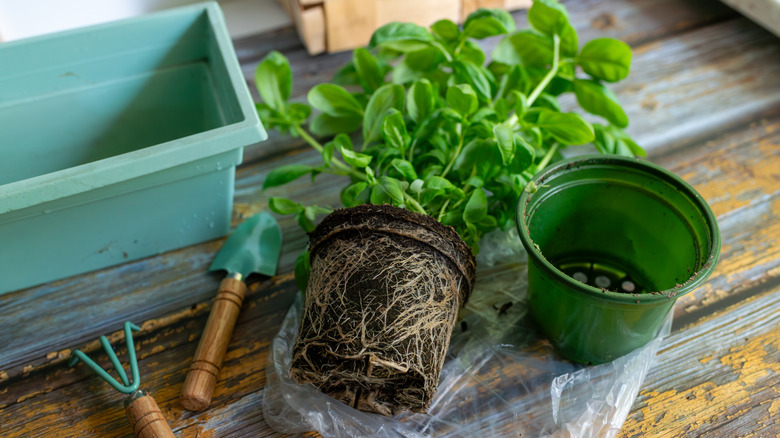
When you're thinking about your garden checklist, maintaining your planters themselves may not be the first thing that comes to mind. However, taking care of your planters, even plastic nursery pots, can help them look their best while also lasting longer. Even before you get into maintenance of the container garden itself — aspects like checking soil and redoing mulch when needed — you'll want to ensure that the planter itself is clean, undamaged, and still offering proper drainage. This is where material plays a large role.
Since nursery pots offer more portability, maneuvering them to clean and maintain can be a breeze. However, weight aside, plastic is overall easy to maintain on its own. When you opt for darker nursery pots rather than clear plastic, you don't need to worry about staining, and the material itself is easy to clean and keep clean. When it does come time to remove dirt and buildup or otherwise clean your flower pot, you can do so with a diluted bleach mixture since plastic is non-porous.Terracotta, on the other hand, can be more prone to staining since its porous, and it also often needs specific gentle cleaners due to that same fact. This is especially true if you opt for an unglazed or unsealed option that has no barrier to keep out moisture.
Notable durability
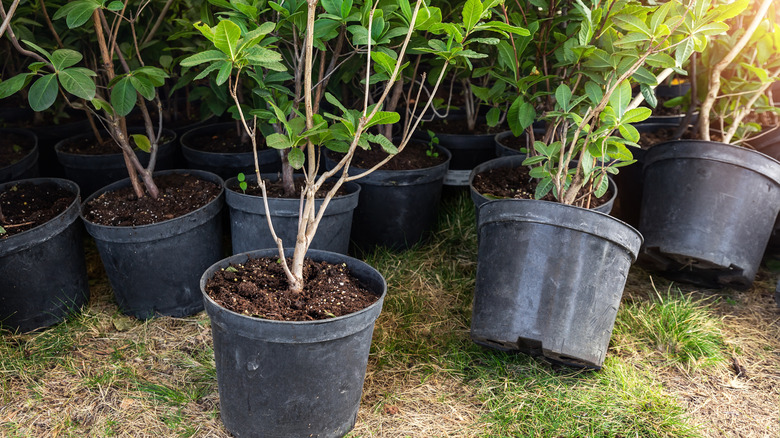
If you've been gardening for awhile, you know that accidents happen, and sometimes, these mistakes end up with pots shattered and soil spilled. Fortunately, those plastic nursery pots that your plants originally come in offer durability that helps them stand up to regular wear and tear in the garden. Plastic pots aren't indestructible. Cheaper nursery pots can crack and break, especially when left in the sun or subjected to continual reuse. However, in comparison to ceramic pots, commercial-grade injection molded resin pots can actually be more durable. They're not likely to crack as easily as clay options, and they also won't crack or shatter as easily. This makes them a good choice if you plan on displaying your plants in high-traffic areas or on crowded surfaces.
There's also the day-to-day durability that plastic nursery pots can offer. While it depends on the exact brand and makeup of your planter, many nursery pots are made with UV resistance in mind. This helps them hold up better to constant sunlight than cheaper thin, brittle black pots you find at many chain nurseries. Thicker planters made of high-quality plastic resin can also readily withstand temperature fluctuations, damage, and usage. As a result, when you opt for a plastic nursery pot, you can expect to get several growing seasons of use. Low- and mid-tier quality nursery pots can last anywhere from one to four growing seasons, while high-quality, commercial-grade options can last over a decade with the proper usage and care.
Moisture retention
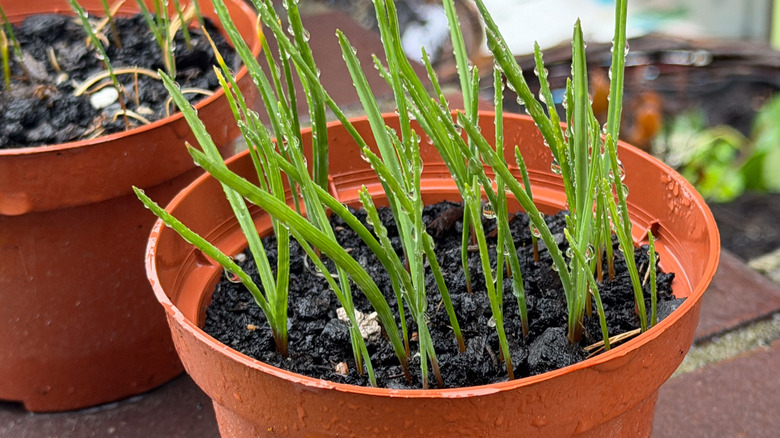
When you're growing a container garden versus sowing directly in your landscaping, there is one notable factor to keep in mind: Containers dry out faster than ground-level gardens do. This is due to the nature of a container garden itself. It has a limited, fixed amount of soil, and it has more exposure to the sun and weather due to being above ground. But the material of your plant can also play a role in how well your plant is able to maintain moisture for healthy growth. For example, porous pots, like terracotta, tend to dry out faster than non-porous options like plastic.
Because of this, one good reason to keep growing plants in plastic nursery pots is to help the soil retain water for longer, especially in outdoor gardens and in areas where your plants are regularly exposed to warmer temperatures and ample sunshine that can lend to higher rates of evaporation. Just keep in mind that material is only one factor. Darker pots can also hold higher temperatures, which increases evaporation, and smaller pots have less soil to begin with, which means less volume for maintaining moisture.