

How Long Can Weed Killer Last Before It Goes Bad?
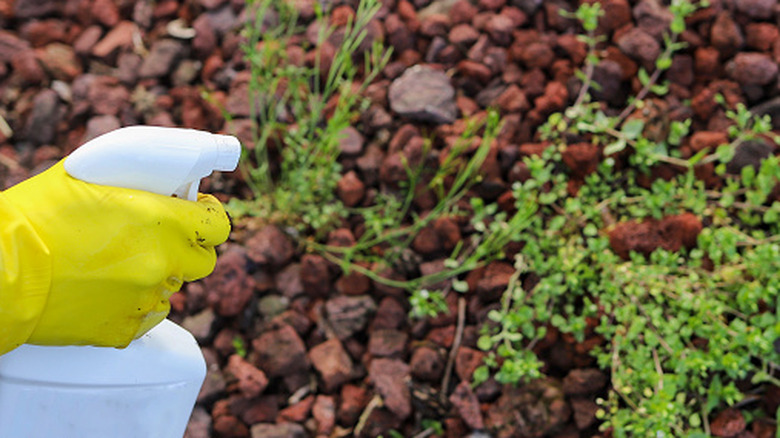
If you've ever used pesticides to remove a small patch of weeds in mulch, grass, or garden beds, you've probably still got that container lying around your shed or garage. And when more weeds start sprouting, you might be wondering: Is that old weed killer still good? The short answer is that it depends on a few factors, including the type of product, how long you've had it, and how you've stored it.
According to a report from the Purdue University Department of Agriculture, manufacturers often don't include expiration dates on pesticide packaging. That can make it tricky to figure out whether or not you can still use them. With that said, the report does note that the unofficial expiration date for these types of products — if they're sealed and still in their original containers — is two to three years. But if they're open and have been sitting around for a while, they are less likely to be effective. And in some cases, using old pesticides can even damage plants or crops, according to Michigan State University.
To make sure your pesticides work as they should, it's important to store them correctly. For example, Roundup provides specific information about how to store its 1-Gallon Weed Grass Killer4 with Sure Shot Wand, which is available at Lowe's. On the label, the brand says to keep the product stored in a dark location, not in direct sunlight, and to make sure the nozzle on the wand is completely closed. In addition, the brand instructs you to prevent the weed killer from freezing, since this can affect the product's effectiveness.
What to do if you think your weed killer has gone bad
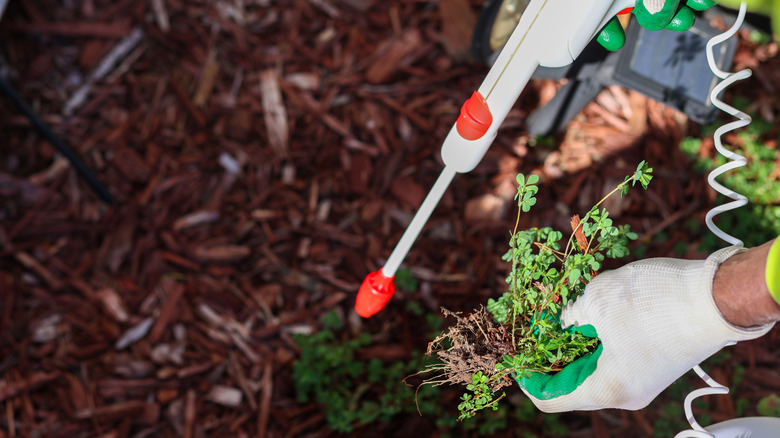
In the Purdue report, the researchers say that you can try applying your aging weed killer to a small section of your lawn to check if it still works as it should. If you notice that it isn't performing well, it's safest to get rid of it. Note that fungicides shouldn't be tested in this way. These kinds of products can only prevent disease — not treat it — so they won't work if your plants are already infected. To properly dispose of insecticides, herbicides, or pesticides, read through the instructions on the label. You should also contact your local waste management authority to see if there's a specific process you need to follow.
In the future, it may be helpful to write the date of purchase on the product after you bring it home. That way, you'll know exactly how long you have to use it before it starts going bad. If you've decided to throw out your old pesticides and need another solution quickly, there are several weed killer alternatives for treating your lawn or grass. One option is sprinkling baking soda or salt on the weeds and then watering them. You could also spray them with a mixture of rubbing alcohol, water, and soap.