

What Does It Mean When Hydrangea Flowers Turn Green?
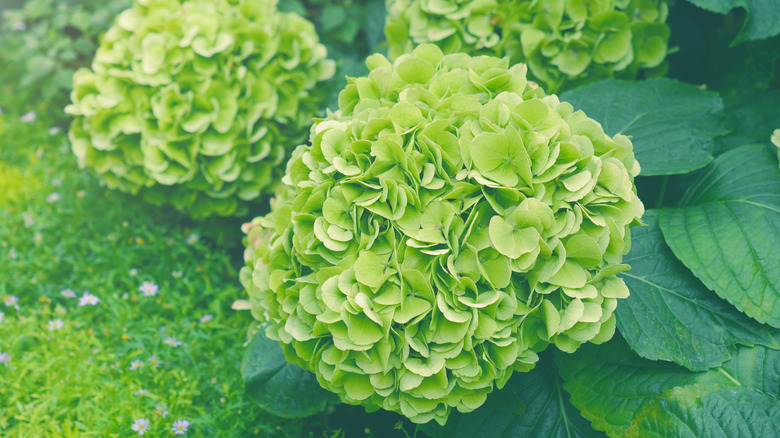
Hydrangeas are loved for their colorful blooms from late spring through autumn. In my work as a professional gardener, I've planted and cared for literally hundreds of hydrangeas in many gorgeous varieties. Depending on the type of hydrangea, the flowers may be shades of blue or pink (broadleaf/macrophylla) or creamy white (panicle/paniculata). Hydrangea blooms often display a range of colors as the season progresses, including green. But what does it mean when hydrangeas turn green? It turns out this is a very normal occurrence.
If you grow and care for hydrangeas, you may have noticed greenish hues in flowers at various times in the season, from spring through fall. But the timing for green blooms can often depend on the hydrangea type or cultivar. Most hydrangea flowers start out pale green in spring, and take on the colors the variety is known for later in the season. One characteristic of hydrangeas loved by many gardeners is their ever-changing kaleidoscope of colors through the seasons: for example, panicle and oakleaf (quercifolia) hydrangeas often shift from pale green in spring, to creamy white in summer, to rose pink in autumn.
Technically, it is not the flowers on hydrangeas that turn color, and that's also part of the reason for possible green tones. Hydrangea flowers are not composed of petals, but of sepals, which are more like leaves than flower petals. Like other leaves, they contain chlorophyll, which provides the green color of most plants. These sepals can produce a range of colors that are affected by the plant's genetic material, as well as soil, acidity, air and ground temperature, and other factors.
Which hydrangeas are more likely to produce green flowers?
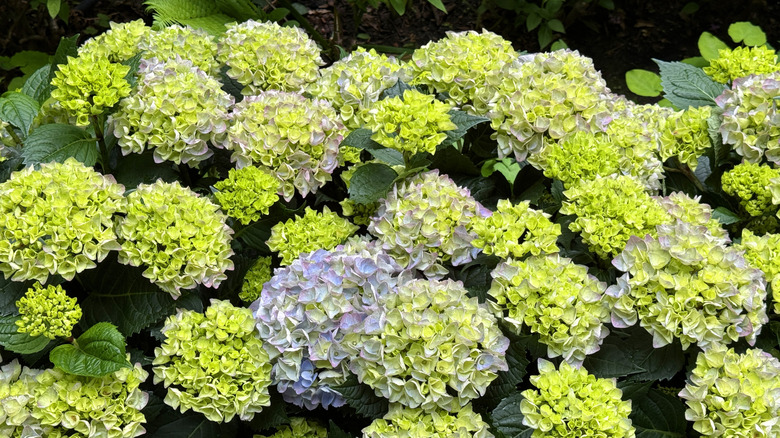
Since there are so many factors affecting hydrangea color, it can be hard to know which ones are more likely to provide green blooms. The most commonly grown hydrangea types, panicle and broadleaf, do produce green hues, but they may occur at different times. You can deadhead your hydrangeas as the flowers dry out; this keeps the plants looking neat and helps them stay healthy. But if the flowers are merely fading to green, keep them intact and enjoy the color show!
In my experience, panicle hydrangea flowers are more likely to take on green tones in the spring, especially certain cultivars such as 'Limelight' or 'Little Lime' which are named for their attractive pale green flowers. 'Limelight' is a popular cultivar that grows 6 to 8 feet tall, with massive columnar flowerheads. The creamy trusses of flowers retain green hues well into summer, then shift to dusky rose in fall. 'Little Lime' is a more compact hybrid (3 to 5 feet tall and wide) that takes on pale green tones accented with pale pink, a stunning color palette for the garden.
Broadleaf (macrophylla) hydrangeas seem more likely to take on green tones in the fall as their brighter colors start to fade, although some varieties progress from green through pinks/blues earlier in summer. This is especially true of the 'Endless Summer' reblooming cultivars which form new buds all season, like 'Summer Crush' or 'Bloomstruck.'