

How To Tell If Your Wicker Furniture Is Made From Natural Or Synthetic Materials

Wicker furniture is a great addition inside or outside your home. It brings in a connection to nature, brightens up an area, and fits many different decor themes. However, you need to make sure you choose the right kind of wicker for your space. There are a few options, but they generally fall into two categories: natural and synthetic. While they are similar enough that they can easily be confused for each other, that doesn't mean you don't want to know what you have. Thankfully, though they look pretty close in appearance, there are a few key differences to tell them apart, including the texture, shape, and ability to resist water.
Wicker is a weaving technique and not a material, so if a product is described this way, it can be made from materials such as bamboo, cane, willow, and reed, or various synthetics, including PVC, nylon, and high-density polyethylene (HDPE). Cheap synthetic wicker and natural wicker are usually easy to tell apart. The former often looks shiny and very much like plastic. However, there are certain kinds of man-made varieties that can be pretty hard to identify, such as HDPE.
Start by looking at the pattern. If the design looks perfectly even and organized, it's likely synthetic. Natural materials aren't the most obedient, and it's common to get uneven sizes, gaps, and patterns that don't quite line up. The strands themselves will also have irregular thicknesses, grains, and levels of smoothness.
More ways to test if your wicker furniture is synthetic or natural
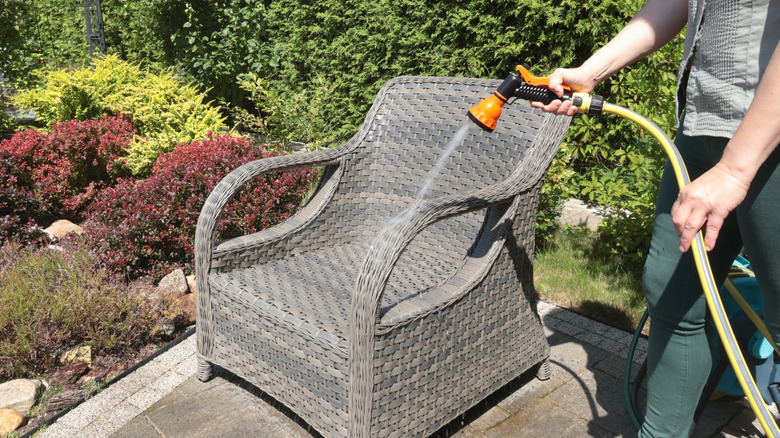
Consider how the furniture is being promoted as well. If the piece is meant to be an outdoor set, it's very likely synthetic. This, after all, is the best type of wicker for your patio furniture, and because of this, it's often seen when buying high-quality outdoor pieces. Natural wicker doesn't do well if left to battle the elements outside — one of the downsides to wicker furniture. If the furniture is used, you may be able to look at the wear. If the material has started to crack or dry out, especially if left in the sun or outdoors, there's a good chance it's natural.
Another option is to give it a little test. For example, synthetic material tends to stand up against water better. Natural pieces absorb some of it, or it does not wick away as easily. Unfortunately, because the differences are rather subtle, this is a tricky experiment unless you can compare the tested piece to a piece you already know is either synthetic or natural.
There are other tests you can find on the internet, such as burning or bending the individual strands, but these require you to damage a part of it. Instead, if you still aren't quite sure what kind of wicker you have, you can consider talking to someone who has experience repairing furniture. They should be able to tell the difference between natural and synthetic.
Is synthetic or natural wicker the better option for you?
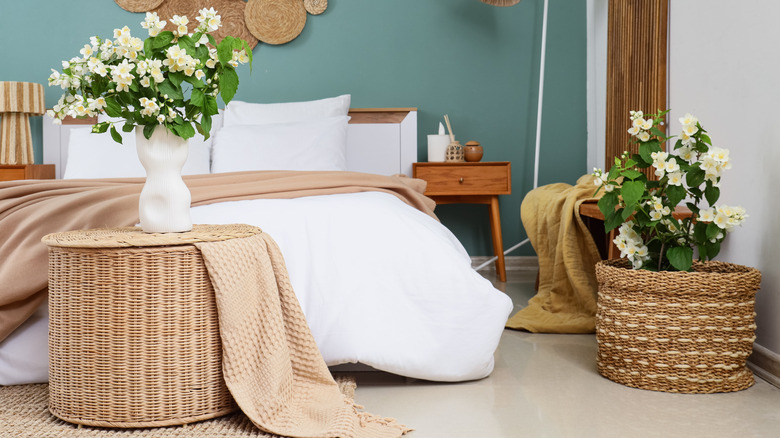
Now that you can easily tell the difference between natural and synthetic wicker furniture, you have to decide which one you actually want. While natural might seem like the obvious answer, there are reasons synthetic is so popular, and it's not just because of the cost. Each has its own set of pros and cons that may make one more ideal than another.
There are perks to both. For example, synthetic wicker furniture is good for the average homeowner. This wicker furniture is durable enough to last. It needs minimal maintenance and can be cleaned with soap and water. It can handle the outside elements without much of a problem at all. It will even stay sturdy when placed next to pools. If you want something that looks stunning and you can just rinse it off on occasion, synthetic materials are a solid choice.
Natural wicker is beautiful and has a high appeal. It tends to breathe better, which keeps the furniture a lot cooler, and it can feel softer and more comfortable. It can be classic and long-lived, but only when it gets the proper attention. One of the biggest downsides of natural wicker furniture is that it cannot handle sunlight and harsh elements as well as synthetics, which limits where around your home and outside it can be used. Natural wicker is best when placed inside and in covered areas.