

How To Reduce The Sheen Of Semi-Gloss Paint When It's Just Too Shiny

So, you painted yourself into a corner. You thought that choosing a semi-gloss paint for your space would make the whole place shimmer and possibly help the room feel larger. But now that you're staring at your pick, it feels just a bit too shiny. Not quite as intense as a high-gloss variety, but you'd still prefer something a bit more matte. Well, you've got options — and they're not solely limited to making another trip to the hardware store.
Admittedly, it may be easier to just cover the whole space with a few new coats of paint. You likely wouldn't need to dial the sheen all the way back to flat or even an eggshell finish. One of the most versatile and durable options, satin paint isn't quite as reflective as semi-gloss and has just a touch less luster, while still boasting a pearlescent sheen.
But if you'd rather not splash out for a fresh haul of paint, it's still possible to tone down the sheen with just a $7 pack of sandpaper and a fair amount of patience. And if you happen to catch your mistake before you bust out your brushes and rollers, adding a clear flattening paste to your paint can reduce the shininess. Just be sure to carefully follow the product's instructions to get your desired level of luster.
Test, adjust, or repaint to achieve your ideal paint finish
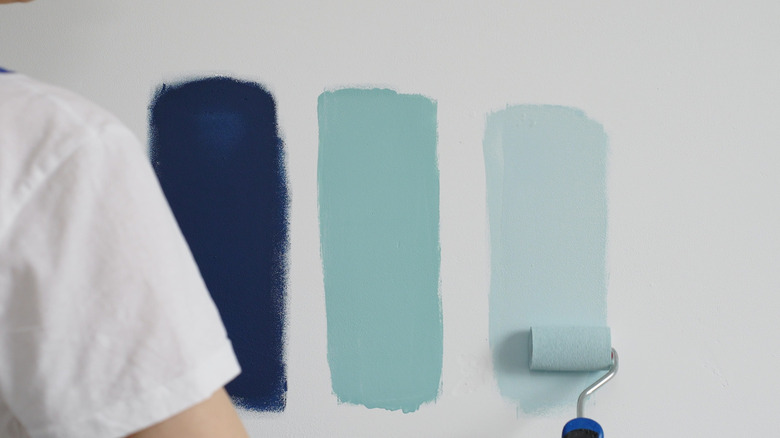
Of course, choosing the right finish of paint for your house can save even more time and money. To feel confident in your choice, try it out in a variety of lighting conditions. Make your test swatches sizable, at least 12 inches by 12 inches, and live with them for a bit. While semi-gloss and high-gloss options the easiest finishes to keep clean, they will also highlight every surface blemish. So, turning down the sheen level can help conceal some of your space's flaws.
If you'd rather avoid having to do a full repaint, you can lightly sand the area using very fine sandpaper. Opt for either 400- or 600-grit and apply a gentle touch as you work. This will ever so slightly scratch the paint's surface, reducing the overall shininess. Follow that up with a damp microfiber cloth or sponge to remove any dust. Keep in mind that this could be a time-consuming process in a larger space, so it might be better suited to a smaller wall or trim.
If you're looking at reworking an entire room or even a sizable feature wall, it could be best to opt for a full do-over. You'll want to sand the walls first using a pole sander and 220- or 320-grit sandpaper or a paint deglosser that functions as a liquid sander. Then, layer on two coats of your finish of choice and enjoy the new view.