

The Simple Rule Painters Follow When Painting A Homes Exterior
We may receive a commission on purchases made from links.
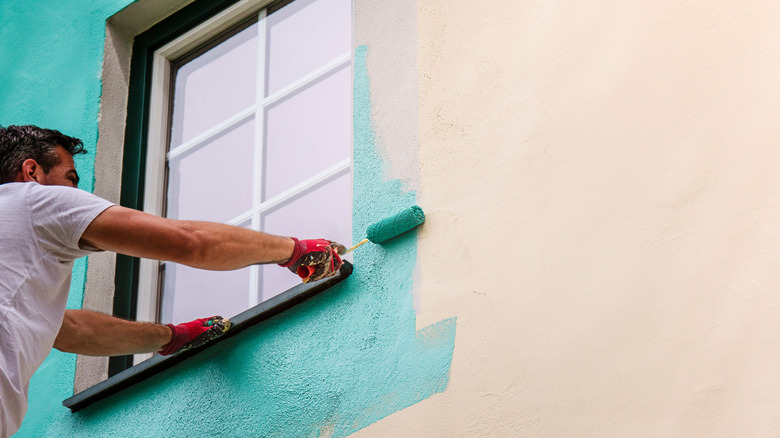
Re-coloring your house's exterior might seem like a relatively simple job, but if you want to paint your home like a professional, the process requires plenty of time, patience, and precision. Most understand how challenging it can be to narrow down the correct color or cut in edges for a crisp finish, but when it comes to exterior paint jobs, there's another major consideration: weather. Humidity, temperature, and sunlight can all impact how paint dries, so as a general rule of thumb, professional painters wait to tackle exterior surfaces until they are at least 5 degrees Fahrenheit above the dew point.
Understanding dew point is a bit tricky if you're not well-versed in meteorology, but we'll attempt to give it a shot. Essentially, this temperature, often displayed alongside the actual and "feels like" measurement on your weather app, shows how cool it needs to get to result in a relative humidity of 100%. If the air outside cools to and below this temperature, the moisture in the air condenses into liquid. This is the driving force behind fog and rain, but it can also result in condensation, hence the "dew" moniker.
So why does this matter when it comes to painting your exterior walls? If liquid condenses on the surface you're working on, or you have to face off against a sudden bout of rain, it could result in slower dry times, improper adhesion, streaks, or bubbles in the paint. This house painting rule helps to give you the perfect exterior look by instituting a 5-degree-minimum cushion.
How to ensure conditions are ideal for exterior painting
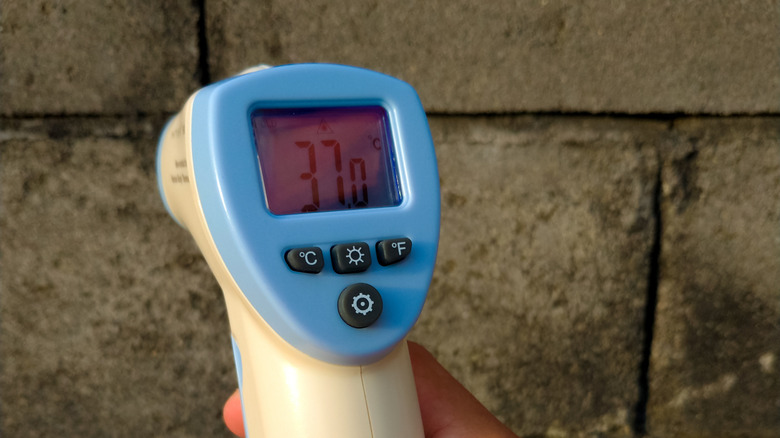
While all you need to do to learn the current dew point is to take a look at your weather app, determining the temperature of the surfaces you're planning to paint requires a bit more of a hands-on approach. An infrared thermometer is the perfect tool for the task — it will give you an accurate reading in a few seconds that you can check throughout the day. A tool like the Etekcity Infrared Thermometer Laser Temperature Gun can be picked up for under $20 and will come in handy for plenty of other uses around the home, from testing that your pizza stone is properly heated to detecting drafts.
While the 5-degree rule is a good baseline, there are upper limits to ideal temperature, too. Trying to paint an excessively hot surface can result in wrinkles, peeling, and improper flow, so if you're attempting to knock out your home maintenance on a particularly toasty day, it's still important to use your infrared thermometer to get a read.
The ideal temperature range is between 35 degrees and 100 degrees Fahrenheit for most paints, factoring in dew point and humidity, but be sure to check the instructions and limitations included on the label of the specific product you've chosen. The best time of year to paint your home's exterior is when the humidity is low and the weather is temperate to warm, usually during spring or fall, but if you follow these rules, you might be able to find a time outside of the ideal season when you'll still be able to enjoy smooth and flawless results.