

Why Your Core Aerator Isn't Pulling Plugs
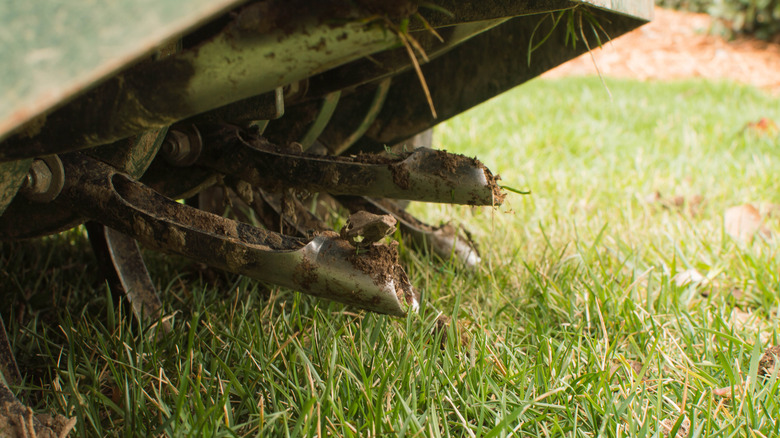
Renting or buying a core aerator is the satisfying end to a lawn care weekend, but there's nothing more disappointing than a large machine gliding over the grass and leaving not one plug of thatch and soil behind. Instead of poking nicely spaced holes and removing cores of compacted dirt to let grass roots drink in water and nutrients, the aeration machine's tines may be skidding uselessly over the compacted turf or making shallow, ineffective indentations in the lawn. Either way, you're wasting time and missing out on a precious opportunity to get moisture, air, and fertilizer to the roots of your turf.
The good news is that a core aerator that won't pull plugs is almost always the result of a mechanical or environmental problem that can be easily diagnosed and remedied. Whether the underlying cause is that the grass has been compacted into the consistency of concrete, the hollow tines are clogged with mud and thatch, or the aerator doesn't have enough downward pressure to penetrate the thatch, identifying the culprit will put you back on the road to healthy, plug-pulling aeration. Before giving up and abandoning aeration or spending money on new equipment, take time to learn about some of the most common causes of an unproductive core aerator and some possible solutions.
Soil condition
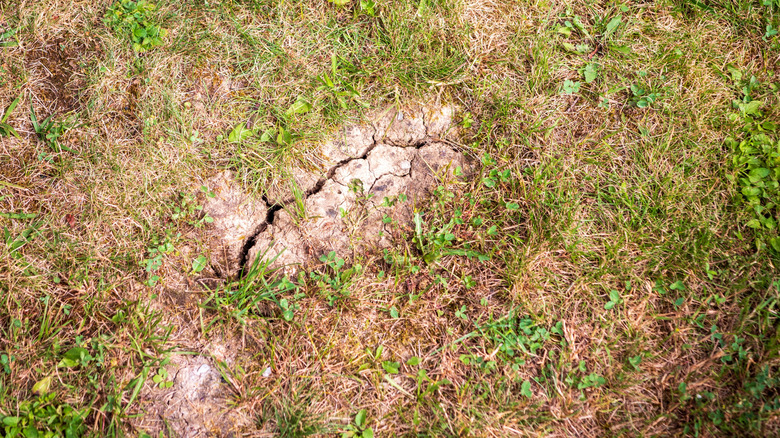
When a core aerator fails to extract plugs, it's typically an issue of the soil condition. Lawns that experience heavy foot traffic, vehicle parking, or years of neglect result in a solid, rocky mass that conventional aerators can barely penetrate. If your yard is bone-dry and baked hard by a summer drought, the steel tines will struggle to penetrate the crust, often bouncing off the surface or only scratching the top layer instead of slicing clean cylinders. On the other end of the spectrum, if the ground is overly wet and malleable from days of rain or overwatering, it won't hold its shape, becoming thick, sticky clay. Overall, wet soil will refuse to release a plug from the hollow tines of the aerator, while dry ground will produce little to no plugs at all.
The good news is that both scenarios are easily avoidable. If it has been particularly dry, saturate the ground with water a day or two before aerating so that the top several inches are sufficiently moist. This will make the ground easier to cut and allow the core aerator to extract plugs with minimal effort. If the ground is too wet, on the other hand, wait a day or two for it to dry out a bit before cutting. Planning around weather and seasonal grass growth ensures you are working during the best time to aerate your lawn, making it much easier to achieve a balance in ground consistency that facilitates smooth core removal.
Clogged hollow tines
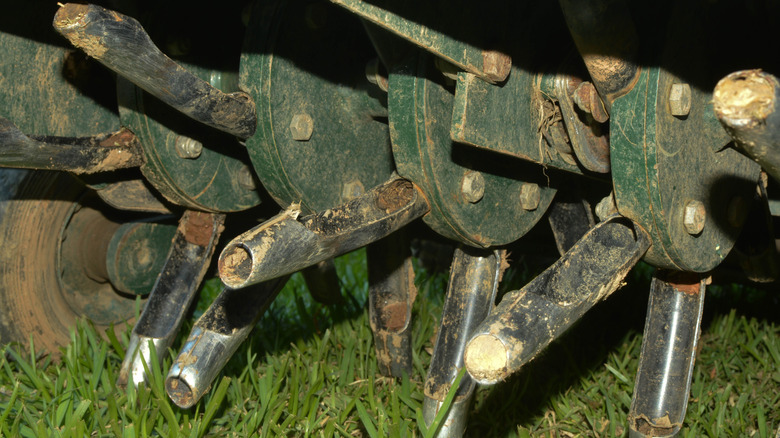
One of the easiest ways to cause your aerator to stop pulling plugs effectively is to leave a simple buildup of debris inside the hollow tines themselves. With each rotation, the machine pulls up soil and thatch with it and forces it up and into the metal tubes. If your lawn has heavy thatch, or certain areas of damp clay, these materials will quickly become packed together inside the hollow inner chamber of the tine.
Once this initial packing of the tine reaches the top or middle of the inner tube, it creates a solid blockage. The next time the tine enters the soil, the new earth cannot push upward through the tube. Instead of cycling soil up through the top opening of the tine and dropping a clean core onto the lawn, the blocked tine compresses incoming dirt against the blockage.
To prevent and remedy this common issue, you want to be sure to frequently stop and clear out any blockages in the business end of the machine. Keeping a screwdriver, thin piece of wood, or specialized cleaning tool nearby will let you quickly clear any clogged tines of packed dirt. If you find that you continuously pack the tines with mud after a few passes, you may need to wait for your soil to dry out a bit before returning to work. Clearing these blockages not only restores your aerator's ability to properly pull up plugs of grass, but it will also reduce unneeded stress on the machine's frame and axles, letting your aerator work at its best from start to finish.
Insufficient downward pressure
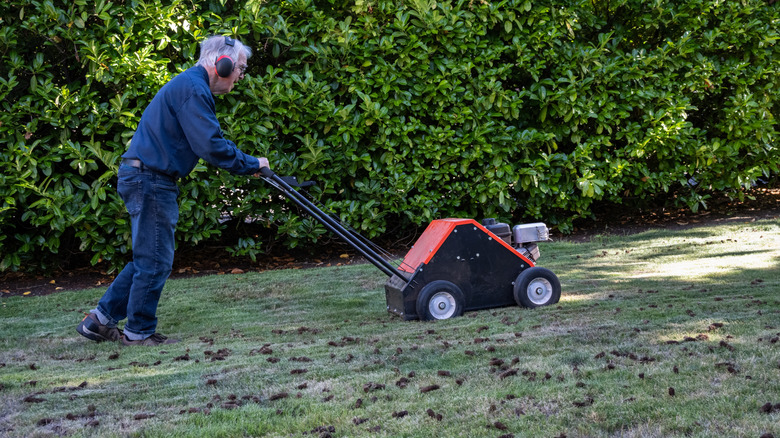
A core aerator relies on gravity and downward force to drive its hollow tines deep into the turf. If the machine is too light, it will only skim the surface of the lawn and will leave unsatisfactory shallow plugs of sod. This problem is most frequent with smaller tow-behind aerators that use a riding lawnmower or small garden tractor for power.
Even with sharp tines and optimal soil moisture, a light core aerator will struggle to penetrate the root zone and compacted subsoil without additional weight on it. Adding weight to the machine is one of the most efficient ways to get deeper plugs with any core aerator. Most manufacturers make a special tray or mounting platform for the aerator where you can mount concrete patio blocks, sandbags, or other heavy objects to add weight to the machine. Tying some heavy pavers to the tray of the aerator will put the machine's center of gravity low and deep to add force to the tines and get them to penetrate the hard surface.
The owner's manual for your specific model should mention the recommended or max weight capacity for the weight mounts or trays. Once you have added the recommended amount of weight, you should notice the change in performance as the aerator begins to create deeper plugs rather than just shallow impressions in the sod. If persistent issues with machine weight or tough terrain make DIY troubleshooting overly difficult, it may be time to evaluate when you should call the pros to help aerate your lawn.
Dull, bent, or wrong tines
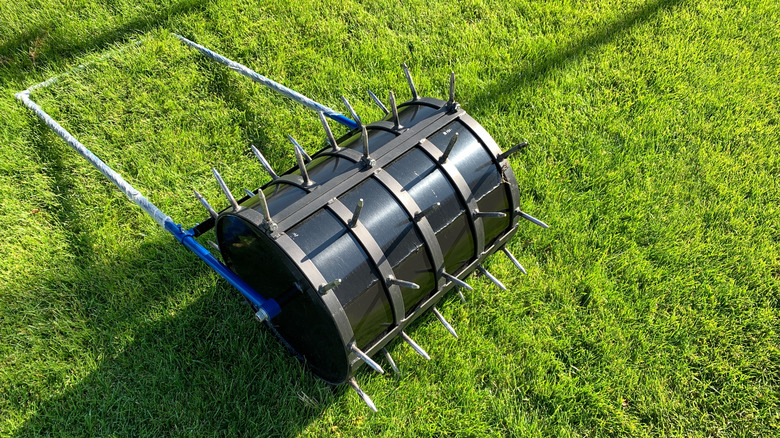
The condition of the tines greatly affects the aerator's ability to form plugs. As the core aerator is used over rough ground and around roots and rocks, its hollow tines become dull along their cutting edges. A dull edge cannot penetrate the turf and soil in a manner that will produce a clean plug, but rather slices or tears a strip of grass. If you strike an object such as a buried sprinkler head or a large rock while aerating, you may also damage some of your tines, causing them to bend out of shape.
It is also entirely possible that you are using the wrong type of tines for your specific landscaping needs. Aeration equipment generally falls into two categories: core aerators with hollow tines designed to pull actual soil plugs, and spike aerators with solid tines meant only to punch holes. If you rented a spike aerator thinking it would pull plugs, you will inevitably be disappointed, as solid spikes only displace dirt sideways and actually increase compaction around the hole walls. Learning how to know you're renting the right kind of aerator for your yard will save you from bringing home equipment that simply isn't designed to pull true cores.
Check your tines closely to see if they are worn down, nicked, or bent out of alignment, and replace them with fresh parts before your next lawn care project. It cannot be stressed enough the importance of sharp, correctly oriented hollow tines on your machine. This will allow the equipment to cut through the turf easily, removing healthy, uniform plugs each time.
Ground speed is too fast
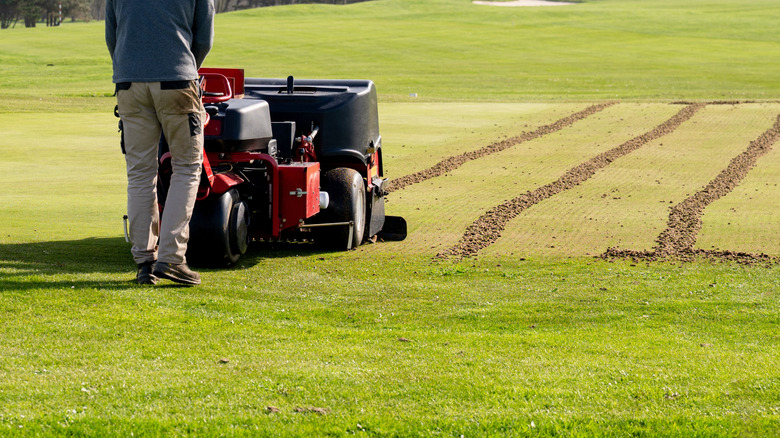
When you are eager to finish a tedious lawn chore like aeration, it is tempting to speed up and get it over with as quickly as possible. However, driving your riding mower or pushing a motorized aerator too fast is a surefire way to stop the machine from pulling proper plugs.
Aerator tines need time to sink into the soil, carve out a clean cylinder of earth, and rotate out of the ground as the machine moves forward. If you are cruising across the yard at a high rate of speed, the tines spend very little time stationary in the dirt. Instead of sinking straight down and pulling a deep plug, they slice through the soil at an angle, tearing the turf, skipping across hard spots, and leaving shallow, jagged indents instead of effective core holes.
To get the best possible results, you need to slow down and let the machine work at a deliberate, steady pace. If you are pulling a tow-behind unit with a riding mower, drop down into your lowest gear or maintain a slow, walking pace. When using a walk-behind motorized unit, do not be tempted to increase speed. Go slowly so that the rotating tines can penetrate the ground and extract a healthy amount of soil before depositing it onto the lawn. Taking your time prevents you from having to go over the same spot of grass multiple times and also ensures that your lawn gets the thorough, professional-grade aeration that it needs to thrive.