

They Transform A Simple Wood Frame Into An Impressive Greenhouse Using Glass Jars
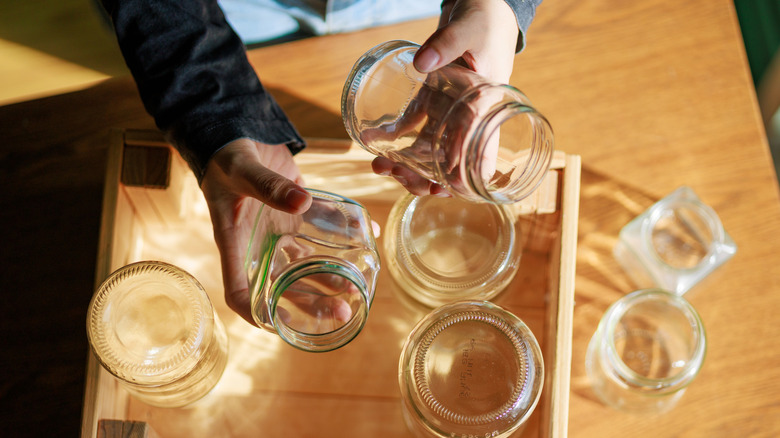
It started as a pandemic project in a backyard in Duvall, Washington. The resulting one-of-a-kind greenhouse ended up inspiring gardeners across the country. All this unique idea needed were some two-by-fours and thousands of glass jars — 4,516 jars, to be exact, according to DIYer Axton Burton in an interview with King5 News. In January 2020, Burton's studio apartment was running out of space for his indoor tropical plant collection. He decided to build a greenhouse out of upcycled materials, and his parents agreed to let the project take shape on their rural property.
Burton's father even constructed the wood frame, while Burton and his partner, James Weber, sourced all sorts of jars, glass decor blocks, and even nail polish bottles from online marketplaces for the windows of the greenhouse. Originally, Burton wanted to use recycled glass windows, but soon realized both the material costs and the time required to find correctly-sized options would be prohibitive. When Burton instead reached out online for glass donations, the response was enormous. The greenhouse project attracted not only local donations, but also positive interest from as far away as New York.
More than 4,000 jars and a year and a half later, Burton's greenhouse was done, mostly. "I don't know when it will be ever truly finished," he told Le Jardinet. He continues to experiment with various types of grow lights and water systems to care for the plants housed inside, including Buddha's hand, finger limes, and an ice cream banana tree.
Building an eco-friendly, budget-friendly DIY greenhouse
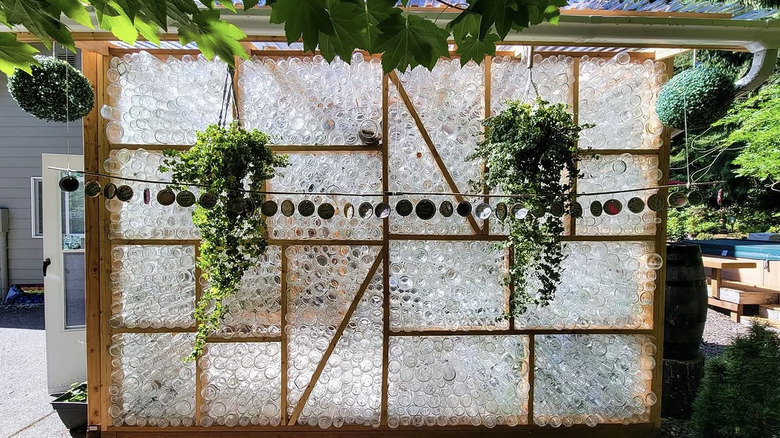
Once the wood frame was complete, glass jars were painstakingly placed to cover the empty spaces. Nail polish bottles helped fill in gaps between larger jars, while corks in the door frame and moss between the jars sealed up and insulated the interior. Since moss is widely available in cool, moist climates like the Pacific Northwest, it has a long history of use as insulation. When moss gets wet, it absorbs water and expands, so even in bad weather it helps prevent leaks and continues to retain heat.
To decorate the greenhouse, Axton Burton and James Weber used cat food cans to house small candles, added colorful glass marbles to some of the window jars, and installed a salvaged fountain. For flooring, Burton placed tiles surrounded by ground-cover plants, which will eventually fill in to form a soft, organic walkway. Locals who donated jars to the project decorated the lids with remnants from the nail polish bottles and wrote notes on them, saving not just the lids from a landfill, but also making creative use of leftover nail polish. The decorated lids strung up around the greenhouse give an attractive pop of color and pay tribute to the community involvement.
Outside the greenhouse, a rain barrel provides water for the interior's misting system. Some of the upcycled jars were also installed with the openings facing out so they could provide habitat solutions for bees and other local pollinators.
Other ways to reuse glass jars in your garden
Axton Burton estimates the upcycled greenhouse cost somewhere around $3,500. Comparable commercial sheds or greenhouses made with real wood and glass can cost more than twice that much. Plus, the DIY greenhouse allowed Burton to customize the dimensions to accommodate the ice cream banana tree, a species that can grow 10 to 20 feet high. If you want to give a large houseplant room to grow, or if your collection has outgrown your house, Burton's method can help create a greenhouse that's exactly the right size for your plants and your yard (though there are other DIY greenhouse ideas that can transform your backyard just as well).
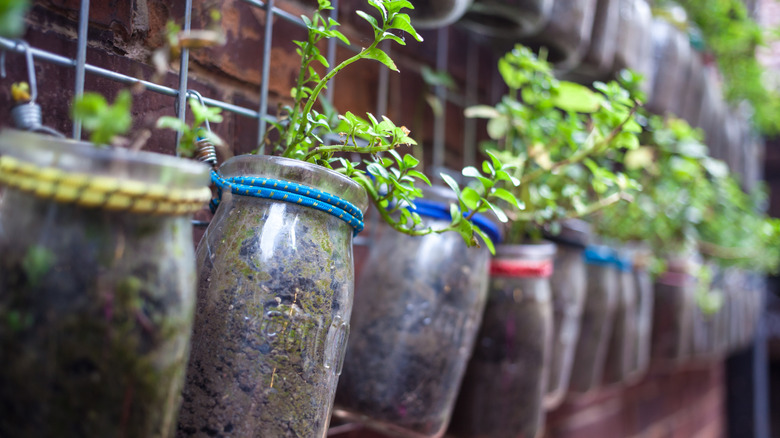
Even if constructing a similar greenhouse isn't feasible for you, don't give up on all those glass jars just yet — there are lots of other ways old jars can level up your gardening game, both for houseplants and garden plots. With a few salvaged jars and a careful snip, many houseplants are easy to propagate in water, including pothos, monstera, and philodendrons. Outdoors, upcycled glass jars can also be used as cloches, which serve as mini greenhouses for individual plants. They can also protect small plants from foraging squirrels and deer.