

Why Do Painters Leave Rollers In Paint Cans
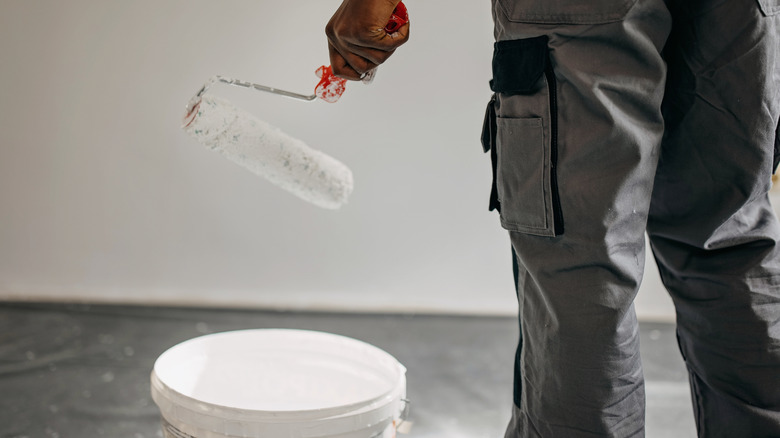
If you've ever hired a painter to refresh the walls in your home, you've likely noticed a few of their habits. Most homeowners are left in awe of the skillful way they cut in edges or create a streak-free finish when they catch a glimpse of the work being done, but if you run into the pros at the end of their day, you might have noticed something that left you scratching your head. Rather than cleaning off the paint roller cover and taking it with them, they simply left it in the bucket. While it might seem wasteful or unnecessarily messy, this step is actually a way to minimize negative environmental impacts, make the touch-up process easier, and prevent a roller cover from drying out.
It can be incredibly difficult to get paint out of heavily saturated roller covers — after all, they're designed to soak it up and evenly dispense it on the wall — and it's even harder to restore paint brushes and rollers after they've dried. Some professionals decide to bypass this process entirely and simply dump the roller cover in the can when they're done. If they need to use it the next day, it's already ready to go, no cleaning or additional materials required.
This also becomes particularly important in professional settings where workers are painting a large number of walls day in and day out, as paint and paint-tainted water should not be dumped down the drain. The proper cleaning and disposal process can take multiple days, so it's much easier to just leave the roller cover in the can.
Is leaving the roller in the bucket the right approach for your situation?
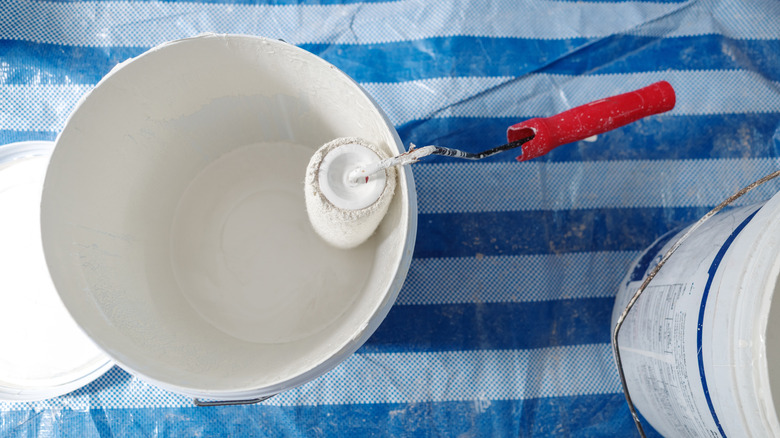
While this might be a somewhat common practice with professional painters, it's not universal. For most of the pros, this approach makes more sense when there's a short break between painting sessions, or they're working with a frequently used bucket, like primer or a ceiling shade. Since they're going to crack it open and use it again soon, keeping the roller cover saturated is a much more convenient approach than washing it. Opinions are mixed on long-term storage — some view leaving the roller cover in the leftover bucket after a finished job as a bit of a lazy practice, noting that there's potential for it to shed or create clumps in the paint over time.
Full submersion isn't the only way to save a roller cover for touchups — many pros and homeowners choose to keep a paint roller from drying out overnight with a layer of plastic wrap or a plastic bag. This is a great option if you want to avoid having to fish the roller cover out of the bucket, you're using a tray, or you don't have enough paint left in the bucket to completely coat the roller.
If you're fully done painting, it's a better idea to bite the bullet and completely wash your roller cover for long-term storage. Scrape off any excess paint back into the can, rinse the rollers in a bucket of water, allow the paint to settle to the bottom, and pour off the clean water from the top. After the paint sediment is fully dry, rip it up and toss it in the trash.