

Trap Carpenter Bees More Efficiently With A Simple Solution From Home Depot
We may receive a commission on purchases made from links.
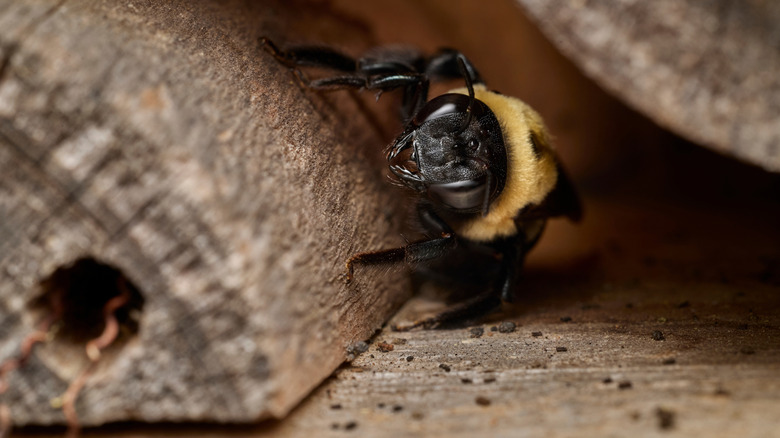
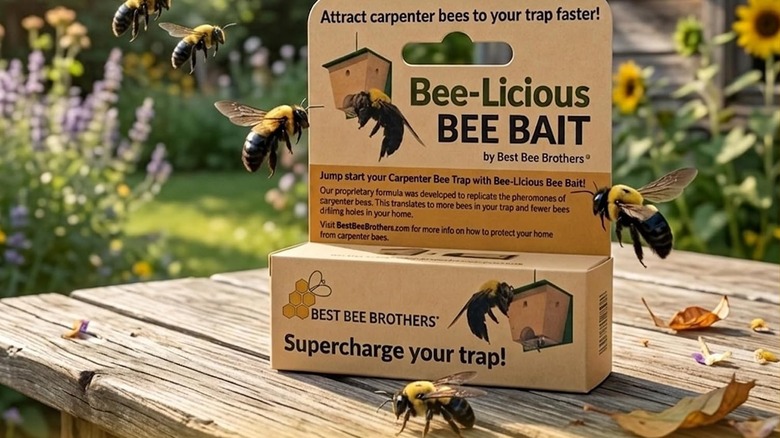
While there are plenty of beneficial bees you'll want in your garden, the same reverence isn't usually extended to carpenter bees who have found their way to your space. While they're still important pollinators, these bugs have a nasty habit of burrowing into wood, making a complete mess of siding, porch railings, patio furniture, and a number of other man-made structures. Getting rid of them once they've set up shop isn't easy, but this Best Bee Brothers Bee-Licious Bee Bait can make the task a bit easier.
The best way to get rid of a colony of carpenter bees is to set up a trap, but in many cases, they take a bit of coaxing to fly in. Carpenter bees can smell each others' pheromones — it's one of their primary communication methods — and they often gather in areas where other bees have already visited and set up a colony. The smell of a dead bee, in particular, signals that a new area is worth checking out. There, they might find pre-drilled tunnels that they can nest in, minimizing the amount of work necessary to create a comfortable home. This bee bait mimics those pheromones, drawing the bees into a tunnel that they'll soon realize they can't escape.
While this product will help to kickstart the trapping process, it's not intended to be used alone. The bait doesn't actually kill the bees, it's just used to lure them into a pre-built trap that they'll become stuck in. Thankfully, these are fairly affordable to buy and easy to build yourself, so getting rid of carpenter bees shouldn't be a particularly expensive or involved process.
How to use the Best Bee Brothers Bee-Licious Bee Bait in a trap
Before you use your bait, you'll need a trap. The same company sells several traps, including the $26.99 Best Bee Brothers Ultimate Carpenter Bee Trap, but you can also find more affordable options online with a similar design. Most traps feature a piece of wood with some channels drilled into it that connect to a clear jar — DIYing your own carpenter bee trap will obviously be the more affordable route if you already have what you need on hand, but either way, this pest removal method isn't going to break the bank.
Once you have everything set up, you'll need to apply a dime-sized dollop of bait into the receptacle on the trap — either the clear plastic portion where the bees get stuck, or the jar you've attached to the wood. It doesn't take much, but this little glob should be just what you need to get the bees to visit. After a bee or two has flown in and died, you should notice quite a few others following suit. There's no need to reapply once the ball starts rolling.
While the bait will already give your trap a boost, proper placement can greatly increase your chances of success. If there's already a colony going to town on your porch or siding, plug the existing holes and place the trap in the same area to increase the chances of visitors. If this is a preventative measure, sunny, warm areas and roof peaks are hotspots where carpenter bees naturally congregate.