

Prettier Than Concrete: The Mighty And Eco-Friendly Stone For Retaining Walls
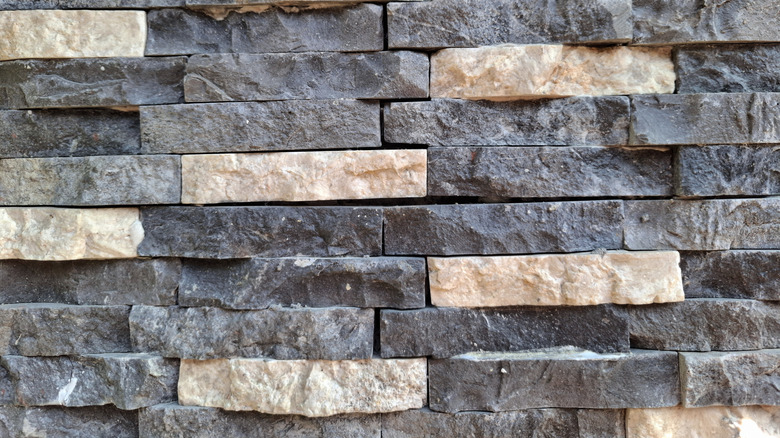
If you have a sloped yard, a retaining wall is a must-have for protecting against soil erosion. You have a lot of materials to choose from, though, from wood to brick. Concrete is another popular choice, favored for its strength and versatility. But let's face it: Concrete isn't always the most aesthetically pleasing option. If you want the strength of a stone retaining wall but would prefer something that lends more visual appeal to your property than concrete blocks, there's a lesser-known rock that's worth a look: andesite.
Andesite is a volcanic rock useful for many projects. Even if you haven't used it yourself, you've probably seen it without realizing it. Its density and durability make it a versatile building stone, and it works well for siding, fireplaces, driveways, walkways, cladding, and — you guessed it — retaining walls. It's also an eco-friendly alternative to concrete, and it looks much prettier. Although typically gray, andesite can take on other shades as well, from light browns to rusty reds.
Tips for building a gorgeous, long-lasting andesite retaining wall
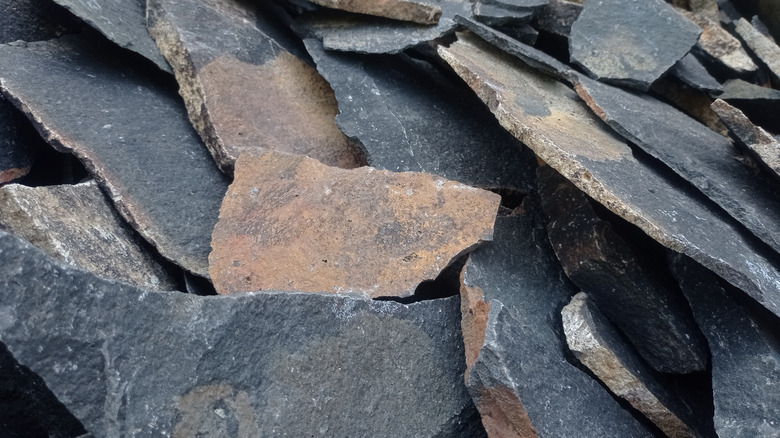
With high density and compressive strength, andesite is an excellent material for building retaining walls. It's less absorbent than concrete, giving it added weather resistance without additional waterproofing. Andesite also lends itself well to dry-stack stone walls. However, unlike cinder blocks, andesite is a dense and heavy rock, so building a retaining wall with it is not an easy DIY project. It's best to consult with local builders in your area for sourcing and construction. Check local regulations when planning your build. Most jurisdictions require a permit if you're building a retaining wall exceeding 4 feet in height.
Andesite is very resistant to weather and moisture, but your retaining wall still needs proper drainage. Without it, water can build up and exert lateral pressure on the wall, leading to structural damage and even collapse. Build your retaining wall with a perforated drain pipe running along the base underneath the backfill layer. The backfill should be at least 12 inches wide and filled with gravel or pebbles to allow water to drain down to ground level and into the drain pipe. If your wall is more than 4 feet tall, consider adding weep holes along the base, especially if you live in an area that receives heavy rain. A properly constructed andesite retaining wall with a good drainage system should stand strong (and look great) for many years.