

Move Over, Hardwood Mulch: The Long-Lasting Solution For Flower Beds
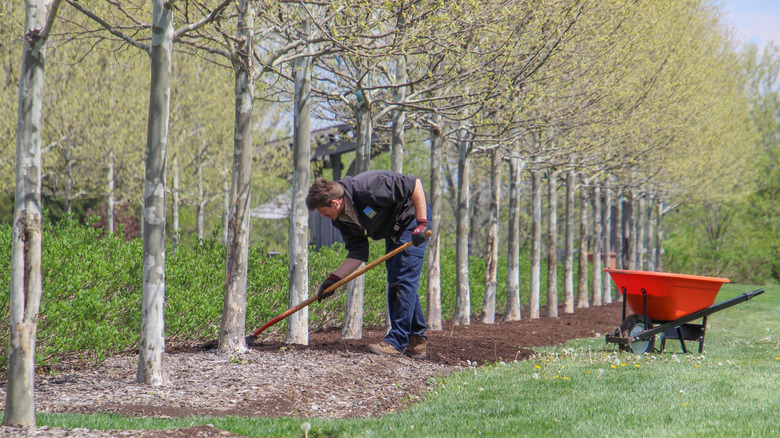
While you may have a manual barrier to prevent grass from growing in your favorite flower beds, keeping the beds mulched is also beneficial. Mulch helps reduce water loss through evaporation and keeps weeds under control. Plus, a well-mulched bed always looks neat, creating a beautiful aesthetic that shows you care about your garden. There are many types of mulches you can use, with wood mulch being one of the most easily accessible options. If there's lots of tree pruning going on in your area, you might be able to score free mulch for your yard. However, you don't always know what type of wood this mulch is made from or how long it may last before it needs topping up. For these reasons, there is a particular type of wood mulch you may want to consider that's fairly long-lasting and ideal for flower beds: cypress mulch.
Typically, cypress mulch contains both bark and wood. It's often a byproduct of milled cypress timber used for furniture and building materials, but it can also be made from felled cypress trees. How long different mulches last in the garden depends on a variety of factors, such as climate, rainfall, depth of application, and sunshine exposure. As a very general guide, shredded hardwood mulch can last as little as one year. Often, hardwood mulches made from oak, ash, or pecan trees need topping up at least once every 16 months to keep your flower beds protected and looking tidy. Cypress mulch usually needs refreshing after two to three years, making it a moderately longer-lasting option.
Other benefits of cypress mulch and considerations for home gardeners
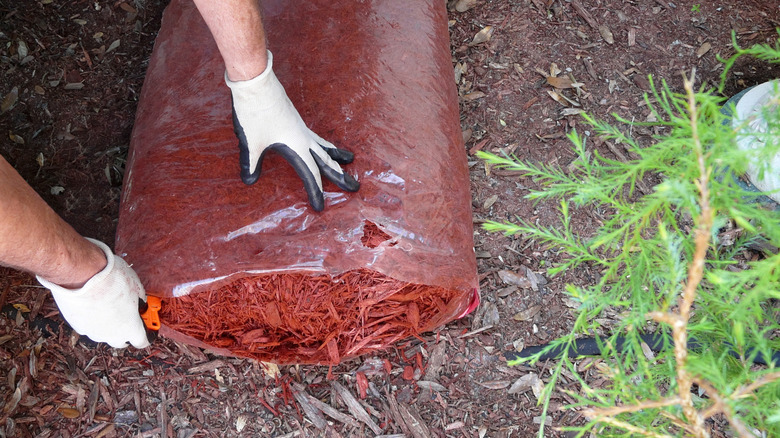
Cypress mulch contains an oil called cypressene that may protect plants against insect and fungal diseases, making it the best type of mulch to use if you want to keep bugs away. It's one of the reasons why cypress mulch is widely considered to be termite-resistant. Cypressene is also a natural preservative, helping the material resist decay. The oil takes many years to build up in the wood of cypress trees, meaning old-growth trees have much more of it. On top of the presence of this naturally occurring oil, fibrous cypress mulch interlocks, so it will stay where you put it; it shouldn't wash away in heavy rain. To ensure you're buying the highest quality cypress mulch, look for products certified by the Mulch and Soil Council: hardwood and cypress blends from Amerigrow Recycling, Florida Mulch Inc., and Garick Corporation, and the pure cypress mulch from Ohio Mulch Supply.
While there are numerous benefits to using cypress mulch in the garden, there is a major consideration you should be aware of. It can be difficult to determine the origins of a batch of mulch, especially if you're buying it in bags from a garden center or online. You want to know whether the mulch you're putting on your flower bed is produced sustainably as a byproduct of the timber industry rather than coming from mature trees felled solely for mulching in the wetlands and swamps of Louisiana, Florida, Alabama, Georgia, and Mississippi. For this reason, some extension office programs, like the Florida-Friendly Landscaping Program at the University of Florida, do not recommend that gardeners use cypress mulch at all.