

Skip The Basic Curtain Rods: Add A Sleek Industrial Touch With Steel
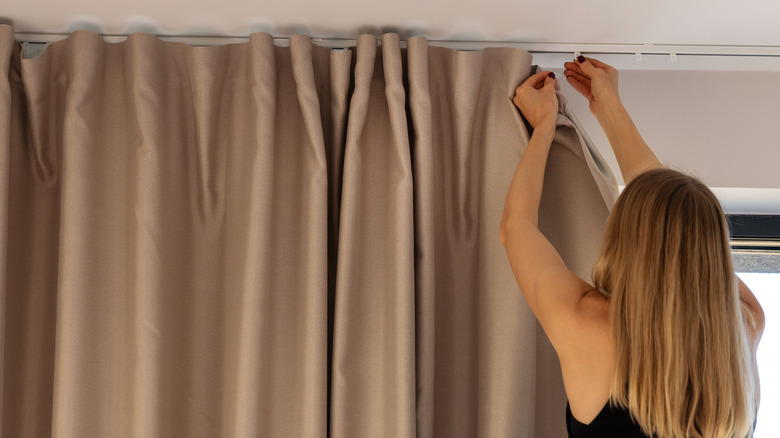
If you want to say goodbye to traditional curtain rods, you have multiple options. Using branches or driftwood from trees can contribute to a rustic home's design. For a kid who's a sports fan, you might use a hockey stick. Some people even choose to hang curtains without using a rod.
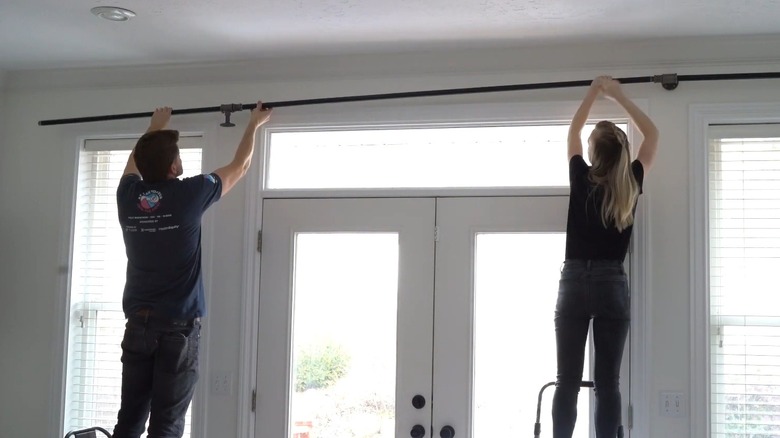
If you want to promote an industrial feel in your home when designing a unique way to hang curtains, you could visit the local hardware store and purchase galvanized or black steel plumbing pipes. These pipes are available in multiple diameters, are relatively affordable by the linear foot, and can support substantial weight when properly sized and installed. Even better, you can also connect multiple sections of steel plumbing pipe to create a longer curtain rod, although the number and spacing of supports will depend on the pipe diameter, curtain weight, and wall construction. YouTube creator Do It Yourself Divas created an industrial-style black steel pipe curtain rod that spanned 15 feet by using only three sections of pipe supported at four points along the wall. Standard curtain rods that you'd buy in a store are rarely this long.
Threaded plumbing pipes work well for long curtain rods because they have compatible pieces that simplify installation. You can attach threaded pipe fittings to wall-mounted flanges, which provide attachment points for securing the rod assembly. Matching threaded nipples, tees, and elbows make it easier to connect the pipe sections while maintaining a consistent industrial appearance.
How to create an industrial steel plumbing pipe curtain rod
Start by measuring the space you want to span with the steel curtain rod. Many hardware stores offer pipe-cutting and threading services, allowing you to customize the lengths for your project. This means you don't have to worry about rounding the measurement to a common length.
Purchase enough flanges to support both ends of the rod, along with additional mounting points as needed for the pipe's length, diameter, and anticipated curtain weight. Purchase two matching elbows for the ends, along with the appropriate threaded nipples, couplings, or tees for connecting the pipe sections and attaching them to the wall supports. (A tee can connect two horizontal pipe sections to a central wall support, while a coupling can join sections where no wall support is needed.) Always pick pipes and fittings of the same diameter.
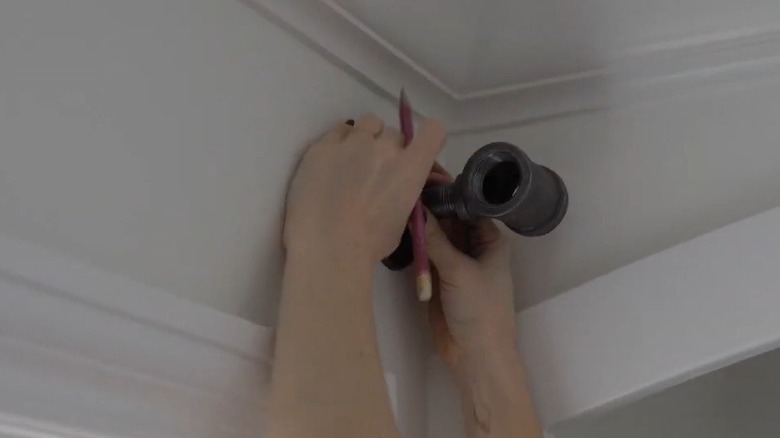
Clean the pipes and fittings to remove oil and grime, and carefully smooth any sharp burrs or rough edges that could snag the curtains. This can be a messy process, so you may want to work outdoors. After cleaning, secure the first flange to a wall stud or suitable structural backing whenever possible. If mounting into drywall alone, use anchors specifically rated for the anticipated load and installation conditions. Attach the elbow and then screw one of the lengths of pipe into the elbow. Have a helper support the weight of the pipe. Continue adding sections, flanges, nipple connectors, and T-connectors as you work your way along the wall. Use a bubble level at every step to ensure a straight installation. Once the assembly is secure and level, add your curtains, making sure their rings or other hanging hardware can move past the fittings as intended.
ow a DIY steel curtain rod's cost compares to a standard rod
Larger-diameter steel plumbing pipes generally cost more, but such pipes can support more weight with less sagging over a long span. A 1/2-inch diameter galvanized steel pipe costs about $2.90 per linear foot, while a 1-inch pipe costs about $4.30 per linear foot. Black steel pipe costs a little more per foot than galvanized steel, but the difference is usually less than 10%. Some hardware stores will charge a small fee of a few dollars for their pipe cutting service, which often includes threading the pipe after cutting it. Others will do the work for free.
Fittings for galvanized steel aren't exceedingly expensive, either. Flanges with a 1-inch diameter cost about $4.50 apiece, while a T-connector will cost about $4. Expect to pay about $2.50 for an elbow fitting. A small nipple connector costs about $2.25.
If you have a 15-foot span to cover with a 1-inch diameter galvanized pipe, you'll probably need four flanges, two tees, two elbows, and several short threaded nipples, along with suitable mounting hardware. The total estimated cost would be around $95. You'd pay about $33 for a silver extra-long curtain rod with a 1-inch diameter. Such rods use a telescopic design and can only hold up to 35 pounds of weight, though, meaning you'll need to figure out whether the curtains you want to use are too heavy before installation. Additionally, these silver curtain rods have a modern design, rather than the industrial design that you'd receive by doing a DIY job with galvanized steel pipes.