

What's The Easiest Way To Remove Tree Roots?
We may receive a commission on purchases made from links.
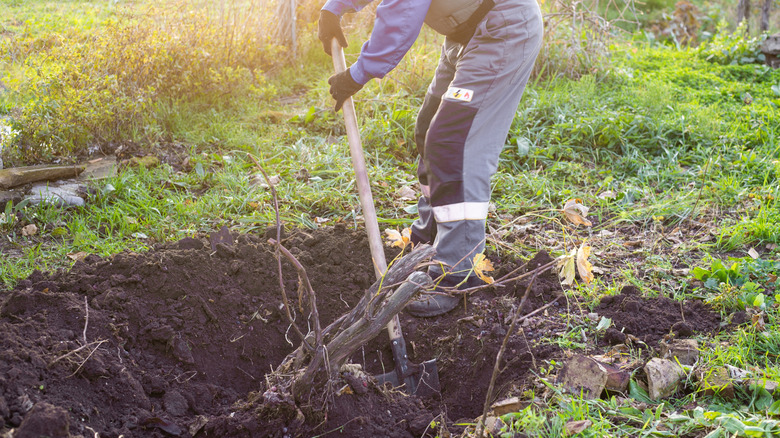
Cutting down a tree might seem like a challenging task, but the real struggle comes when it's time to clean up what's left over. Whether you're dealing with a massive oak tree or a tiny crape myrtle, those roots run deep — pulling them up is difficult enough that many homeowners simply opt to turn the entire dead tree trunk into a backyard essential like a tabletop. Tree root removal is never easy, but we reached out to an expert for advice on how to minimize the amount of work you'll have to put in. According to Jon Sneider, owner of Jon Sneider Lawn Care and Tree Service, DIYers can most easily complete the task themselves with the help of a shovel and a jigsaw, some loppers, or a pruning saw.
During his exclusive interview with House Digest, however, Sneider cautioned heavily against taking on too big of a job without professional help. "If you're dealing with large roots, roots close to a house or underground utilities, or roots that are still connected to a living tree, I'd recommend calling a professional before cutting anything yourself," he shared. Hiring an arborist for the job can cost between $150 and $1,500 depending on the scale and complexity of the task at hand, but you'll be left with the confidence that you're in good hands. Messing up your home's foundation, damaging a utility line, or killing a tree you intended to keep are potentially massive mistakes that could leave you with a much bigger bill down the line.
How to remove smaller tree roots yourself
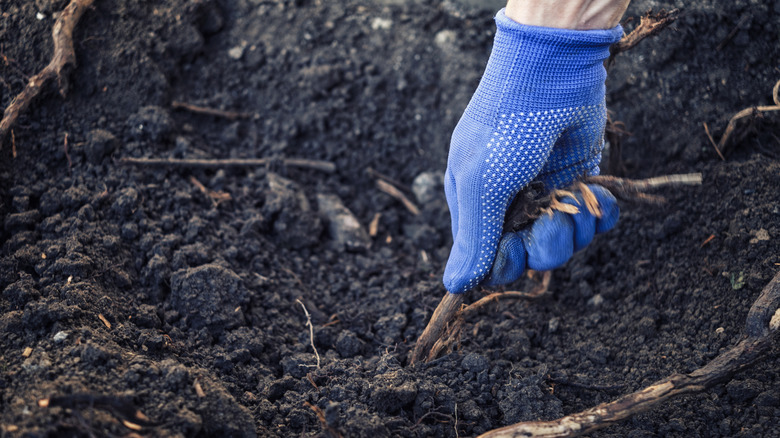
Dealing with smaller roots left behind after a tree has been removed isn't all that complex of a process, but it is tedious. In his chat with House Digest, Sneider laid out two main tools you'll need: a shovel for digging around the roots, and something to cut them with. The second tool you go for will depend on how big the roots are, but loppers, a pruning saw, or a jigsaw can all work. If you don't already have one of these in your gardening tool collection, there are plenty of Harbor Freight pruning tools that make cutting a breeze and are relatively affordable. Alternatively, you can often rent jigsaws and pruning saws from stores like Home Depot.
Essentially, you'll use your shovel to dig out the area around the root, leaving it fully exposed. Once you have a section ready to go, you'll use your cutting tool of choice to break it down into more easily removable pieces. Most standard bypass loppers are equipped to cut roots that are up to 2 inches in diameter, but after that, you'll want to pull out the power tools. If you're having trouble removing the cut root sections by hand, you can use your shovel or something like this Gutser Flooring Demo Bar for more leverage. After the root is gone, fill the area in with soil.
"It's an inexpensive solution that doesn't require renting heavy equipment and gives you full control over exactly what you're removing," Sneider noted. Of course, there are limits to this approach. If you find that the job is getting too big, you might need a professional assessment.
When to call a pro for help instead, and why
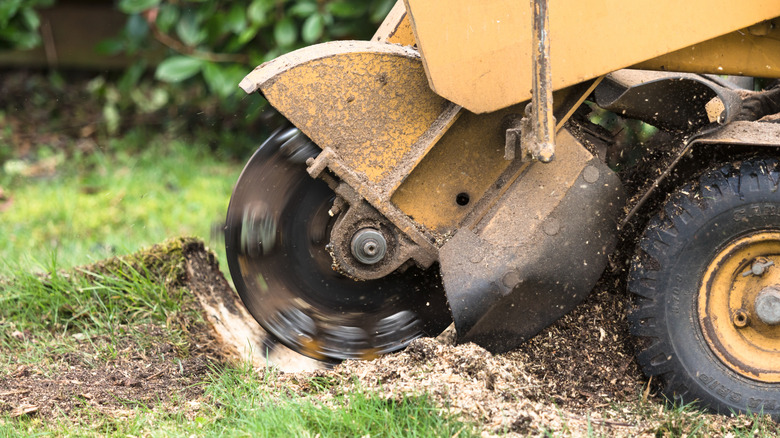
Pruning saws and jigsaws pack more of a punch than hand tools, but they can still only handle so much material at once. If your roots are too big to tackle with common tools, Sneider told House Digest that it's a better idea to skip the DIYs. "If you're dealing with larger roots or an extensive root system, it's usually easier to bring in a professional with a stump grinder," he shared. "Just be aware that grinding can damage some parts of the lawn, can potentially damage an irrigation system and it will make a mess."
A leaky sprinkler system and torn up lawn are a frustrating price to pay for a root-free space, but these fixable side effects are nothing compared to the potential damage of taking on a project that you're not equipped to handle. "Removing roots without professional guidance can ... damage underground pipes or other utilities, turning a relatively simple landscaping project into an expensive repair," Sneider explained. Your home's foundation and utility lines aren't something you want to play fast and loose with.
Similarly, still-living trees require very careful and precise root management to minimize the risk of damage, as "cutting the wrong ones can cause sections of the tree to die, kill the tree entirely, or even make it unstable enough to fall over," Sneider cautioned. In this case, an assessment from a pro is always going to be the safer move.