

Battery-Powered Lawn Mowers: What Are The Disadvantages?

We may receive a commission on purchases made from links.
If you're trying to decide if a battery-powered lawn mower is worth investing in, then you may already be familiar with the various advantages these electric alternatives have over traditional gas-powered lawn mowers. However, given their typically higher price tags, you'll want to ensure that a battery-powered mower is the right choice for you prior to handing over that hard-won cash. And that means familiarizing yourself with the disadvantages of these lawn tools, too — whether we're talking battery life, charge times, up-front and ongoing costs, or cutting power.
On the surface, things look great. Battery-powered mowers are more eco-friendly and quieter than their gas counterparts, making them an alluring choice for anyone wanting to purchase a new lawn mower. However, no single piece of lawn care equipment is perfect, and for all their advantages, battery-powered lawn mowers have some distinct downsides. Many models have limited runtimes and come with batteries that take a long time to reach full charge. They can also cost more upfront than traditional gas-powered lawn mowers or hand-powered models and, in some cases, perform less efficiently than what you may be used to.
Battery-powered lawn mowers have a limited runtime
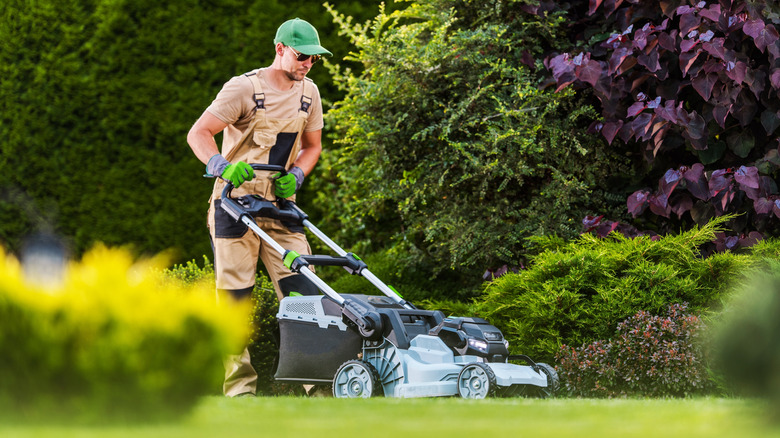
Because both gas-powered and battery-powered lawn mowers rely on a stored energy source, rather than a continuous power supply like corded lawn mowers, both machines have limited runtimes. While there are limitations to either option, gas-powered lawn mowers tend to sport a longer runtime than their battery-powered counterparts. Plus, if you do happen to run out of fuel for your gas-powered model, refueling is as simple as topping off the tank. As you'll learn below, battery-powered lawn mowers can require careful scheduling and prior planning to ensure they have the charge they needs when it comes time to cut your grass.
If you have a small yard, a shorter runtime may not pose a large problem. While the exact runtime is model- and battery-dependent, many battery-powered lawn mowers have a runtime ranging from 30 to 60 minutes — that's potentially up to an hour of uninterrupted cutting. If you purchase a battery-powered riding mower, you should have enough time to cut up to one acre of turfgrass. You'll likely need more time to cover the same area with a push or automatic battery-powered mower and thus potentially need additional charges. One Consumer Reports-approved tip to make your battery mower run longer is to keep the blades sharp.
Upfront costs for a battery-powered mower can be higher

If you're investigating the disadvantages of battery-powered lawn mowers because you're shopping for a new lawn mower, then you're probably already crunching the numbers. There are many factors that impact how much landscaping equipment costs — not just at the store but also over its lifetime. This includes key considerations such as the initial investment and the ongoing costs related to maintenance.
If you were to only look at the cost of purchase, battery-powered lawn mowers tend to be more expensive than their gas-powered counterparts. For some people, this may make battery-powered lawn mowers immediately less accessible, despite their many potential benefits. Take the Ryobi 40V HP Cordless Push Mower as an example. This mower has a 20-inch deck and is described as being more powerful than a 150cc gas-powered mower. At the time of writing, it costs $359 at The Home Depot. Meanwhile, the Baotree Push Mower at Walmart also sports a 20-inch deck and a 150cc engine, and it's listed for $189 at the time of writing. Of course, when comparing product prices, it's also important to consider factors such as brand, full product specifications, and customer support.
If you compare the ongoing costs of gas and electric lawn mowers, one option might cost you more in the long run. The answer, which surprises many people, is that the latter may be more budget-friendly. Battery-powered lawn mowers don't require you to constantly purchase gasoline, and their maintenance, aside from replacement batteries, is typically less costly.
Some models may have less cutting power than gas-powered lawn mowers

When discussing the power of a battery-powered lawn mower, it's important to keep in mind that there are hundreds of models on the market today. Just as they vary greatly in purchase price, they also vary greatly in cutting power. However, comparing battery-powered mowers against their gas-powered counterparts is a different story. In many instances, the former simply can't compete. While you can almost always adequately maintain a standard, manicured lawn with a battery-powered mower, you may find it doesn't have the necessary power to cut through thick overgrowth or tackle expansive, brush-filled terrain.
If you have a large yard or a lawn with thicker grass, you may find that lower-voltage battery mowers don't provide a clean cut or, worse, require more labor on your part to accomplish the same job. However, opting for a higher-voltage model, such as an 80-volt mower rather than a 40-volt one, can help remedy this gap.
Long charge times can impede your lawn care routine
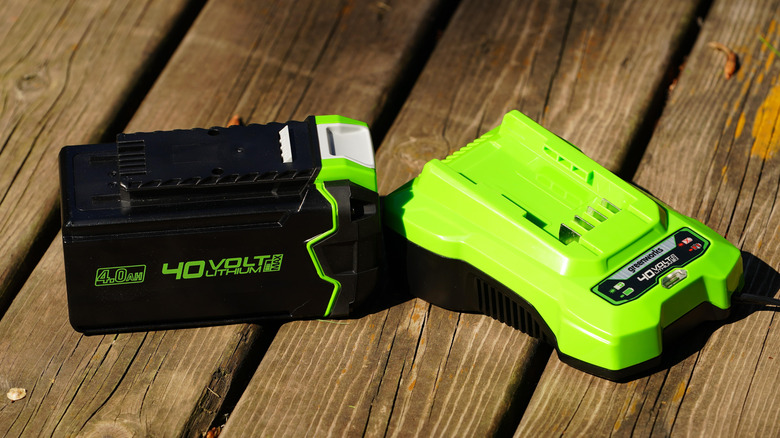
One of the benefits of choosing a gas-powered or corded mower is that there are fewer interruptions to your lawn care routine. If you run out of fuel in a gas-powered mower, getting back to mowing is as simple as topping up the tank. With a corded model, this isn't a concern at all — all you need is access to a safe, connected outlet. However, as mentioned, a battery-powered lawn mower will eventually need charging, and a long charge time can put a damper on your Saturday yard chores.
One battery charge in an electric lawn mower can last anywhere from less than an hour to four hours, depending on the model and battery type. If you've forgotten to fully charge the battery before starting your lawn care routine, you may find yourself having to delay the day's lawn mowing. Or, if you're using a battery-powered mower to cut a large lawn, you may not be able to accomplish the task on a single charge, leaving you waiting for hours before you can finish mowing.
While long charging times are a well-known disadvantage to battery-powered lawn mowers, there is a workaround that requires just a little more planning and investment: having a spare battery on hand. If you have two batteries for your lawn mower, you can use one while the other charges, reducing downtime while tending to your lawn. However, that leads to another downside to battery-powered mowers: the batteries themselves can be expensive.
Replacement batteries for lawn mowers can be pricey

With a gas-powered lawn mower, you're typically looking at $100 or less for a new battery if the existing battery begins to fail. Unfortunately, when it comes to battery-powered mowers, replacement battery prices aren't always quite so modest. For mowers requiring a lithium-ion battery pack, prices can start above $100 and easily rise to over $300. However, if you have a premium electric lawn mower that requires a specific battery, such as a LiFePO4 battery, you may instead see prices exceeding $350. When it comes to replacing batteries in riding lawn mowers, you may see prices approaching or even exceeding $1,000.
Fortunately, there are ways to potentially reduce the cost of replacement batteries for battery-powered lawn mowers. You could, for example, choose a tool brand with batteries that are compatible across multiple devices. While you may still need the initial funds for the battery, you'll get more use out of it across your tool ecosystem, helping you spread the cost across more than just your mower.