

Gas Or Electric Lawn Mower: One Option Might Cost You More In The Long Run

If you're wondering which type of lawn mower is best to buy for your yard, there are pros and cons to both gas and electric ones. If you want the most powerful and precise cut, gasoline machines are the right call, but if you want a machine that needs very little maintenance and doesn't generate exhaust gases, a battery-operated machine is the better choice.
However, if you're concerned about one factor in particular — long-term operating costs – battery models usually have the advantage in the long run. When operating a gas-powered lawn mower, you not only have to pay for fuel that can have volatile prices from year to year, but you also have to perform oil changes, add a fuel stabilizer during idle periods, and replace parts like air filters and spark plugs. Battery-powered mowers have far fewer maintenance requirements, as they don't use any of the parts found in a gas engine, which keeps annual operational costs down.
That being said, battery-powered lawn mowers tend to have a higher upfront cost than gasoline-powered machines. For a walk-behind mower, you might pay $100 to $200 more for a battery machine. Riding mowers that run on batteries cost roughly $1,000 more than gas models. Because you're paying an upfront premium, it may take a little longer to recoup that extra cost through operational savings. However, understanding your long-term savings with a battery-powered mower can help you decide whether it's worth buying over a gas-powered model.
How much it costs to keep a gasoline lawn mower running
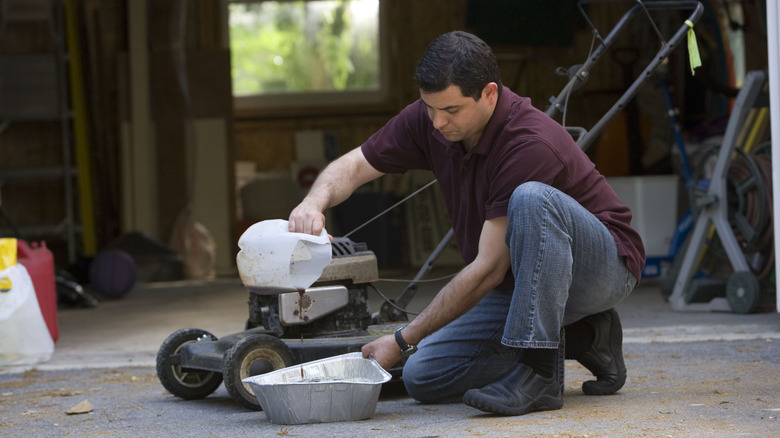
You should tune up a gas-powered mower annually or every 50 hours of use. If you're doing the job yourself, the annual maintenance costs for a gas mower will set you back $40 to $75, while having a professional do it will cost you between $100 and $225. Servicing a riding mower will cost far more than a walk-behind mower, too.
According to Greenpal, a push mower burns roughly a gallon of gas every 100 minutes of operation, while a riding mower burns almost a gallon every hour. Choosing the right gas for your lawn mower often involves using ethanol-free fuel, which protects the carburetor. However, ethanol-free gas can cost 20 cents to $1 more per gallon . Fuel prices are always fluctuating, but the average price in the United States was $3.10 per gallon of regular gas in 2025.
Let's say you mow your lawn 30 to 40 times per year, averaging an hour per run. If you are paying $3.70 per gallon for ethanol-free fuel, you could spend $111 to $148 annually in fuel to operate a riding mower, or $66 to $89 for a walk-behind model. Keep in mind, constantly mowing tall, thick grass burns more gas than thin grass. A poorly maintained machine will also burn more fuel because of inefficient operation.
Based on these numbers, combined annual fuel and maintenance costs for a gas-powered walk-behind lawn mower can be around $100 for someone who does their own maintenance and doesn't mow much. However, if you mow an average amount, use a pro for tune-ups, and have a riding model, you could pay close to $400 annually. For someone who mows multiple lawns each week, annual operational costs could be far higher.
How much it costs to run a battery lawn mower

The best battery-powered lawn mowers should give you a significantly lower operating cost than gas models. One estimate by Lawn Love places the cost to mow an acre with a gasoline walk-behind mower at about $3, while a battery-powered walk-behind mower costs an estimated 20 cents to mow an acre — 15 times less than with gas.
Keep in mind, you will have to buy new rechargeable batteries after a few years for the electric-powered machine, which is not necessary with a gas model. Most lawn mower batteries last about three to five years before needing replacement. The price of a replacement battery depends on its capacity, brand, and voltage rating. As a cost example, EGO is one of the most successful battery-powered mower brands. Its individual 56-volt batteries can range from $99 to $659, depending on capacity. Spread over three years, the replacement cost is roughly $33 to $220 per year and roughly $20 to $132 over five years. Some mowers ship with two batteries, which would effectively double the replacement cost.
Mowrator estimates the cost of electricity per mowing job for a battery-powered mower at 13.4 cents. Based on that number, if you mow 30 to 40 times per year, your price for electricity would only be about $4 to $5.50 per year. Battery-powered mowers do need blade sharpening two to three times per year, which usually costs $5 to $15 per blade. However, you won't have to spend money on air filters or oil changes. Between blade sharpening, battery lifespan, and electrical costs, your annual operational cost for this kind of mower could range from $34 to $270.