

What To Know Before Throwing Your Quilt In The Dryer
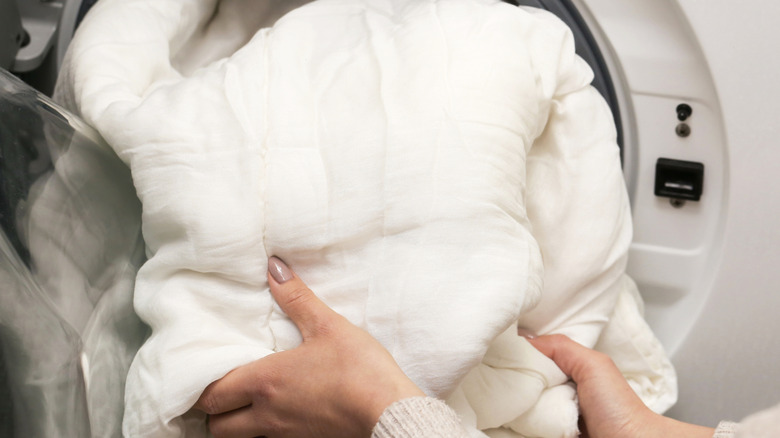
If you're lucky enough to score a valuable blanket full of history at the thrift store, you sure wouldn't want to ruin it by caring for it improperly. That's why it's important to know the best way to clean a quilt. And after taking it out of the washer (or hand washing it), ensure you check the care label before throwing it in your clothes dryer. This is crucial because if the label doesn't contain words like "machine dry" and "tumble dry low," this means it's not suitable for a dryer. And if you subject a quilt to high heat and a rough tumbling session, it might sustain irreversible damage.
To elaborate, the entire material might shrink and the batting will take a heavy beating. The outer fabric could also start looking worn and become a muted version, making it difficult for you to recall the striking colors you fell in love with when you first got it. It'll also likely come out sporting more wrinkles (which are risky to iron out) than it did when it went in. This will not only make it look shabby but also ruin any plans you had of hanging your favorite quilt for guests to admire. And if you took the plunge and invested in a handmade piece, be prepared for the stitches to come loose. The quilt may even come out covered in lint or pet hair, defeating the entire purpose of washing them in the first place.
So, always check the care instructions. And if you can't find them anywhere on your quilt, air dry — especially if its fill is made of bamboo, cotton, silk, or wool. Extend the same courtesy to any piece that's stitched by hand, sports embroidered details, has a lacey border, or falls in the antique category.
The dos and don'ts of putting a quilt in the dryer
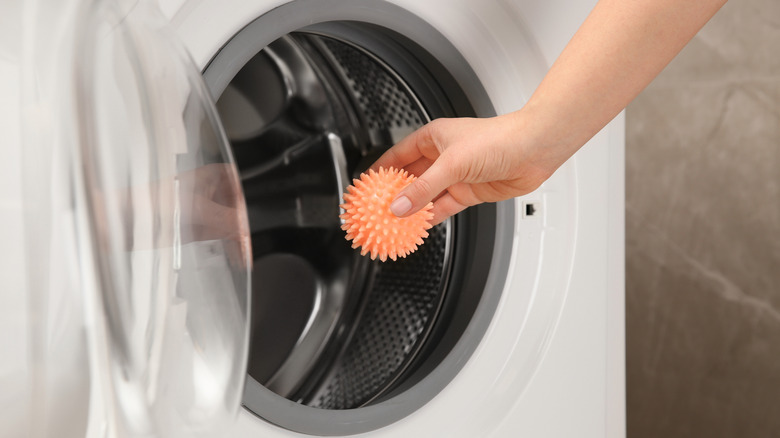
In case the care label mentions that your quilt is dryer-friendly or the filling is synthetic or consists of pre-shrunk batting, it can go in the dryer. But your appliance should be big enough to comfortably accommodate one. You don't want to force it in, as this can lead to the fill clumping. If your dryer has multiple settings, put it on "no-heat" (the "delicate" or "air-dry" modes works, too) or choose the lowest heat setting possible.
Avoid overloading your dryer too. You want to give your quilts enough room to tumble around freely. Otherwise, impeded airflow will cause them to dry unevenly and require longer lead times. Plus, the associated wrinkles will be a nightmare to deal with. To minimize these issues even when you're not overloading, add dryer or tennis balls in your dryer. This will fluff up your quilt and keep the fill from clumping. The improved airflow will also cut down on the drying time. You can even add a fresh towel (must be dry) to the mix if you'd like to speed up the drying process further. However, stay away from fabric softeners since they can leave behind residue and be irritating to the skin. Also, don't dry your quilt completely in the dryer. Take it out while it's still damp and spread it flat on fresh, dry towels (don't hang it since the batting might get clumped) and let it air dry. This will ensure it doesn't shrink and will keep the fill from getting bunched. Bonus advantage: Its vibrant hues won't fade prematurely.