

Spraying Walls With Lemon Juice: What It's For And Why Some People Don't Recommend It
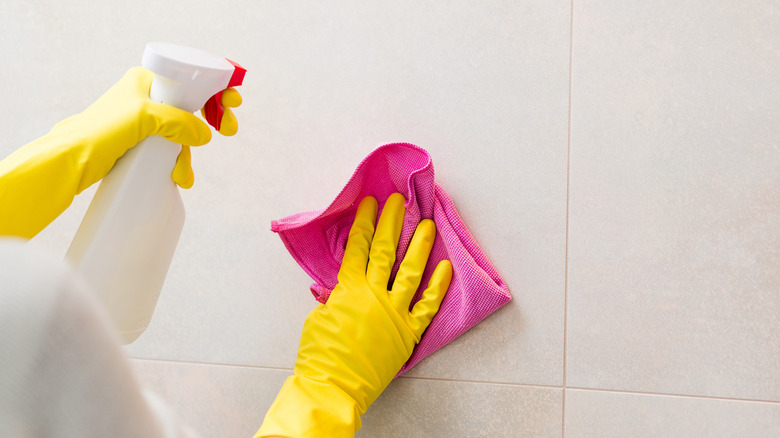
Homemade cleaning hacks are everywhere, and one natural cleaning ingredient that often pops up in recipes is lemons. They're not just a source of the fragrance that we've come to associate with sparkling surfaces — lemon juice is highly acidic, which makes it a powerful tool for removing limescale, grime, and hard water stains. Some also claim that, when mixed with equal parts water and sprayed on walls, it can be an effective degreaser. While the acidity can be somewhat useful for cutting through grease, we have a few qualms with this approach.
Let's start with the basics: What will happen if you actually spray your walls with lemon juice? Regardless of the amount of stuck-on grease you're able to remove, you could be left with a sticky, dust-attracting film on the dry down. While it might register as pure citric acid to our taste buds, lemon juice still contains natural sugars and pulp like other fruit juices, so if you're using a concentrated mix that you don't properly wipe off, you'll just be creating a new — albeit fresher-smelling — mess. Lemon juice could also damage the wall that you spray it on, depending on the material. Natural marble or limestone backsplashes or tiles should never be cleaned with something highly acidic, and you could end up with discoloration on painted walls. Additionally, lemon juice isn't recommended for use on wood, brass, copper, or stainless steel, so if you're wiping down a greasy wall in your kitchen, for example, you could end up inadvertently damaging the finish on nearby appliances, fixtures, countertops, or flooring.
Is lemon juice actually the most effective degreaser?
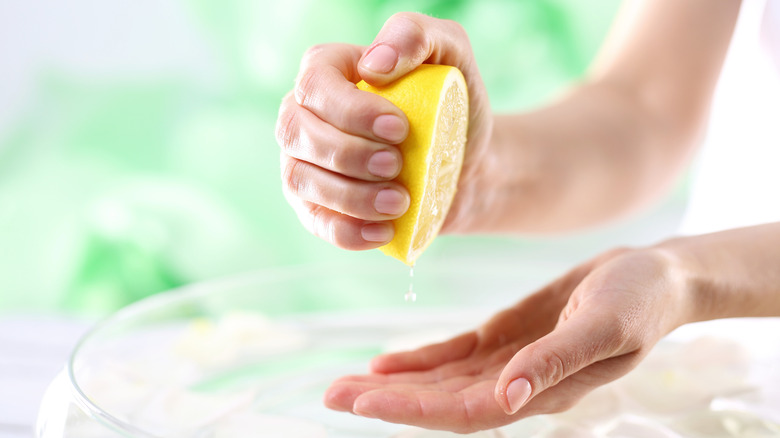
If you've heeded all of these warnings and have still decided to go ahead with making your own lemon juice degreasing spray, it can be beneficial to know what results you can actually expect from this natural cleaning solution. While citric acid, and by extension, lemon juice, has quite a bit of evidence to support its use as an effective limescale remover, its popularity as a grease-cutting agent is a bit overstated. This liquid has natural antibacterial properties, a fresh scent, and the ability to lighten or bleach materials, but only the peel contains D-limonene, a potential degreasing solvent. However, when making both homemade and commercial lemon juice, the peel is typically tossed out. So when you mix lemon juice and water, you're just making a somewhat acidic spray that doesn't have any properties that will make it specifically useful for degreasing.
Products on the other side of the pH scale are more frequently suggested for use in cutting through grease. Alkaline chemicals actually react with grease in a process called saponification, aptly named because it's the mechanism behind soap making. Soap means surfactants, and surfactants mean that the unwanted grease will get washed away without much struggle. Baking soda is a common DIY degreaser ingredient for this reason. Solvents and soaps are also popular options — Castile soap and dish soap can seriously improve the effectiveness of a degreasing spray, and D-limonene, the solvent found in citrus peels, can be added in the form of orange or lemon essential oils. You'll still get that delightful, clean citrus smell, but you won't have to work nearly as hard to eliminate the grease from your walls.
How to make a DIY degreaser that actually works on walls
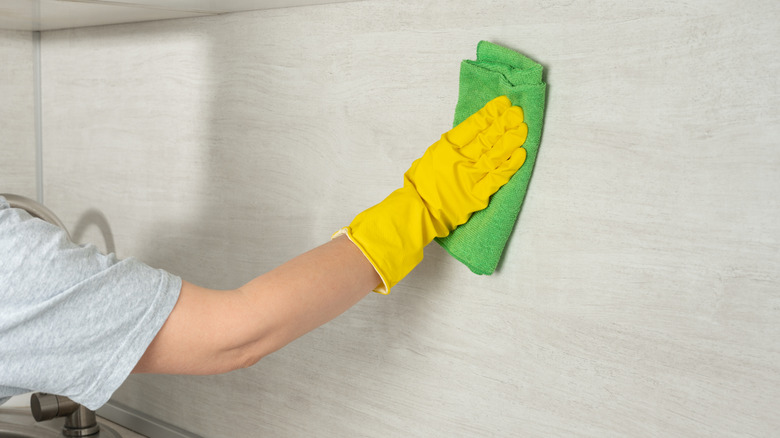
Exact degreaser mixtures will vary based on overall preferences and the items you have on hand, but most follow the same format. You'll want to fill a spray bottle with 2 cups of warm water, then mix in 2 tablespoons of baking soda, 2 teaspoons of Castile soap, and 20 drops of lemon essential oil. Give it a good shake, spray it on, wipe with a soft cloth or damp sponge, and watch as the grease stains start to melt away. While this is a fairly gentle mix, always make sure to do a spot test on an inconspicuous part of your wall before spraying down the entire thing.
Quite a few recipes online also include vinegar, but it's necessary to know that cleaning with a mixture of baking soda and vinegar renders both ineffective. After they fizz up and react, you're just left with water and sodium acetate, a salt. Stick to one at a time in your cleaning solutions if you actually want to enjoy their individual cleaning properties. For this same reason, you shouldn't add lemon juice to your baking soda degreaser, either — the acid and base will react and cancel each other out.