

How To Reduce Soil Compaction With The Help Of Compost
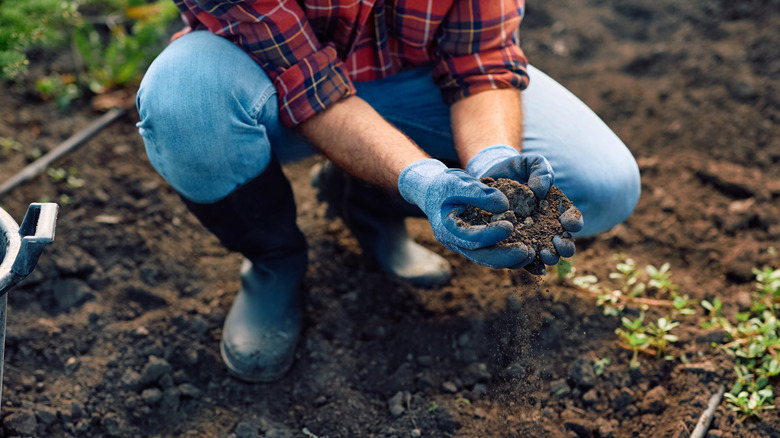
It's one thing to understand that the best kind of soil for avoiding a compacted yard or lawn is loamy. This ideal soil texture allows plants to get the moisture and nutrients they need while preventing compacted soil problems like water runoff and erosion. But it's another thing altogether to work out how to achieve that ideal, fluffy texture when your soil lacks the right balance of particle size and pore space in the first place. As is so often the case with soil issues, compost is the answer.
Soil compaction can result from working your garden beds too deeply or too often, walking too close to trees or crops, topsoil erosion, or the natural characteristics of your region's soil. That's where compost comes in! Compost is a garden amendment made from decomposed yard and food scraps. Whether you make your own or buy it, compost improves gardens in a number of ways. It contributes a range of crucial nutrients and, just as importantly, helps create pore space and improve soil structure by supporting beneficial organisms that aerate the soil.
One effective way to address soil compaction also happens to be the least labor-intensive. After weeding and raking the area to remove any unwanted vegetation, simply lay aged compost on top of your garden bed and work it into the soil. Over the next few months, natural decomposition and useful critters like earthworms will gradually incorporate the compost, helping to improve the soil's texture.
How you add compost to your soil depends on the level of compaction
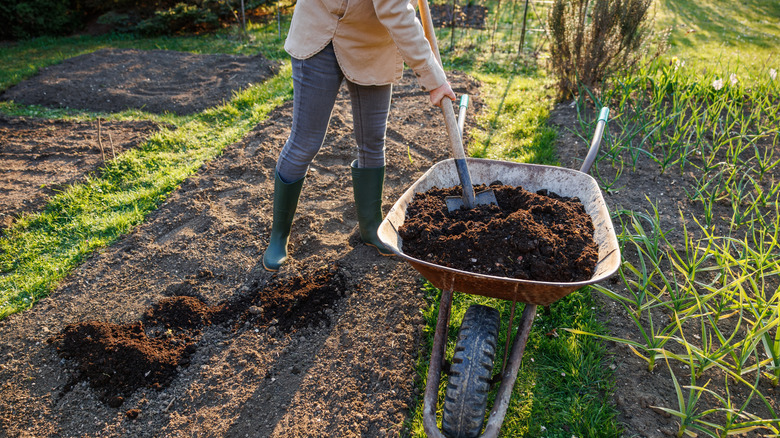
What is the exact amount of compost your soil needs, and why does it matter? The answers to these seemingly simple questions depend on many factors, including the level of soil compaction and how fast your planting season is approaching. If you need to improve dense soil quickly, you can speed things along by lightly working a couple of inches of compost into your existing soil. Use any garden tool that aerates the soil, such as a spading fork, broad fork, or garden rake. This method hastens the transition from compacted to loamy soil without upsetting the balance of soil microbes, a common side effect of excessive tilling.
The process of using compost to alleviate soil compaction becomes increasingly labor-intensive as the level of compaction rises. Normally, you might want to think twice before tilling your garden because too much tilling can increase compaction. However, gently tilling in some compost can still help address moderate to serious soil texture issues. As mentioned, in these cases, work the compost into the top 18 inches of soil.
For severely compacted soils in a residential yard, you may need to get professional help to amend with compost. That's because, in these cases, you need to add a lot of compost to the soil. For compacted sandy soil, you may need to incorporate compost equating to about one-quarter the weight of the soil. For compacted clay soil, you may need to up this to half the weight of the soil. A landscaper can not only supply the right amount of compost you need to improve your soil texture but also strategically drill holes in problem areas before filling them with compost.