

Plant This Evergreen Shrub To See Small Birds Flock To Your Yard In Winter
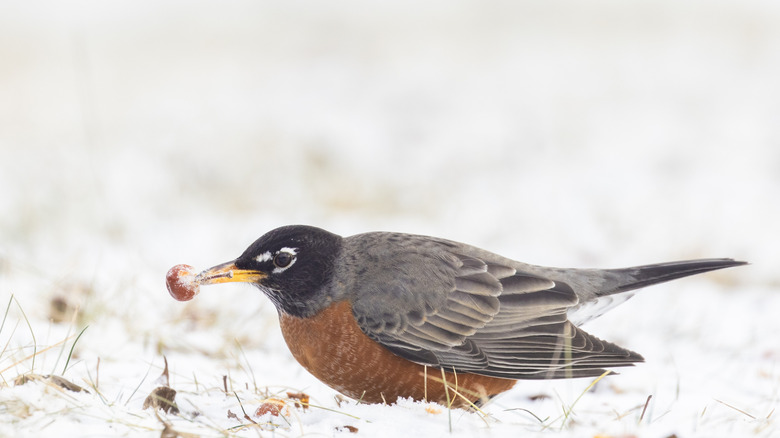
If you're looking to attract more birds to your yard, holly can be an excellent place to start. These eye-catching plants offer nearly everything your favorite feathered friends need during the winter, from shelter — thanks to their evergreen foliage — to berries during a season when food can otherwise be scarce. However, there are different varieties of holly to choose from, including one particularly delightful cultivar.
Burford holly (Ilex cornuta 'Burfordii') is an evergreen cultivar of Chinese holly that grows to an impressive size and sports fruit and flowers that wildlife love. The flowers bloom throughout spring and support various bee species, which makes this holly a useful choice when starting a pollinator garden, particularly if you're looking for a plant with year-round appeal. The flowers give way to showy, bright red fruit in fall and winter that is a big hit with birds. (The berries are slightly toxic to humans, though.) The Burford holly can grow up to 25 feet tall and 15 feet wide, though there is a dwarf variety.
Burford hollies are widely considered low-maintenance plants, cementing their place among the easiest plants to grow for beginner gardeners. They add functional and visual appeal to the garden without requiring a perfect green thumb or much time. You can grow this pretty shrub alone or in mass plantings, and it's hardy enough to stand up to deer, drought, and salt.
How to grow Burford holly to feed birds in winter
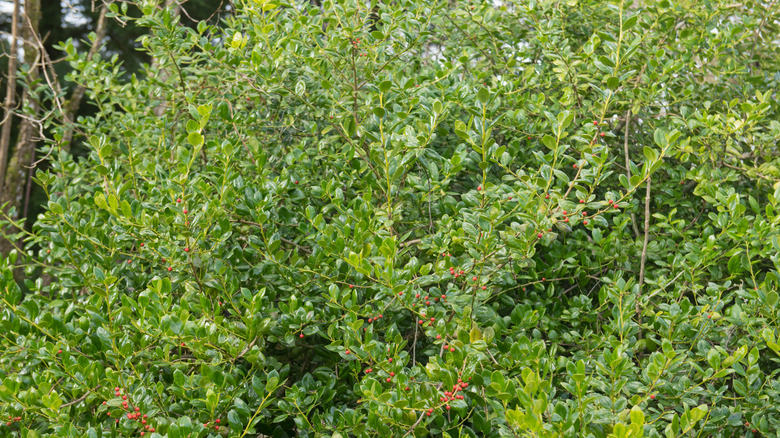
Are you considering planting a Burford holly or three in your backyard? If you want songbirds flocking to your garden in winter, start by learning about this shrub's preferred USDA growing zone and which one you are in. Though tough, this holly has a fairly limited range — it's winter hardy only in Zones 7 through 9. What that means is that in these areas, this perennial evergreen will be able to survive through the winter, providing visiting birds with dense foliage to shelter in and healthy clusters of berries to enjoy. Once you're sure Burford holly will survive in your yard, the next step is choosing the right spot for the shrub.
Since attracting more feathered friends with delicious morsels is your primary goal, consider establishing your new Burford holly near a bird feeder, birdbath, or other wildlife hotspot in your garden. However, when picking the right location, you can't use bird-friendliness as the only criterion. The spot needs to receive the right amount of sunlight, too. Burford hollies grow best in either full sun or partial shade, though the former will maximize blooms and berries. This vibrant shrub can also be a bit picky about its growing medium. While it will tolerate a variety of soil types, from clay to sand to rock, it prefers neutral or slightly acidic soil. It also needs moist soil with good drainage, although its tolerance to drought ensures it will survive brief dry spells.