

Here's What Will Happen To Your Lawn If You Don't Rake Leaves Before Winter

Fall's onset is truly special. Mums bloom in full strength, finches feed on coneflower seeds, pumpkin vines are ripe for harvest, and some trees glow a gorgeous red, purple, or bronze. But the magic starts to wear thin and turns into a chore fast when those stunning fall leaves sweep down, covering the lawn. Uh oh, do you really have to rake the dead leaves on your lawn? Well, it depends.
If you don't rake before winter, your lawn's health may be in jeopardy, especially when you're dealing with a large swathe of leaves. That's because they lay down a welcome mat for myriad fungal diseases. In areas where winter rains are common or humidity remains high year-round, they can trap moisture against the grassy blades, inviting in fungal microbes. Snow mold is fairly common during winters or early spring in lawns overwhelmed and matted down by leaf litter and may show variable symptoms, like gray or pink patches. Although incurable, lawns can recover from snow mold provided you rake the dead debris and improve airflow during spring, with some reseeding to cover the thinning patches.
One easy way to tell whether there are too many fallen leaves in your yard is to take stock of coverage. If leaf litter covers over 20% of the turf canopy, it's likely to cause problems. Besides fungal diseases, it may delay spring growth, multiply pest problems, or clog drainage. However, if you're only dealing with light sprinklings of healthy leaves, you may retain them, allowing them to decompose and return nutrients to the soil. Ensure your trees aren't diseased, as fungal spores can overwinter in fallen leaves and reattack new growth next year.
Not raking leaves can weaken grass
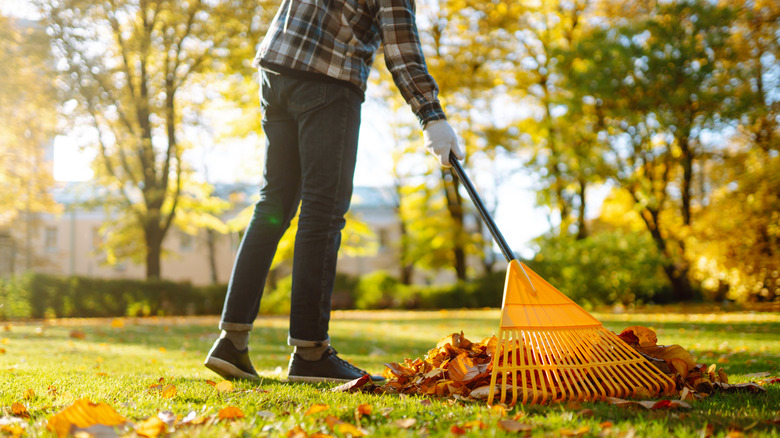
Aesthetically, turf strewn with leaf litter can signal tardiness in care, which can feel wrong if you're conditioned to growing a trim and proper, manicured lawn. Not to mention, your HOA or neighbors might not look kindly at it. Functionally, too, it can be problematic. A heavy foliage cover can smother the underlying grass, blocking access to sunlight and impeding adequate airflow. "Wet leaves suffocate grass and don't let the sunlight get to them, and that doesn't let those roots develop the way we want them to," Turf expert Jeff Fowler told CBS News. Warm season or stressed grasses seemingly bear the most brunt, as they're akin to growing in shade.
If the layers persist through spring, your turf may struggle to green up and grow weak in turn. This is especially precarious if the shed is from big-leaved trees like oaks that take much longer to fully decompose. Not raking dead leaves may lead to drainage issues, as they may block storm drains and gutters. Moreover, after a heavy downpour, they may float away into water sources. While the release of nitrogen and phosphorus is looked upon favorably in soil, this isn't the case for water sources. This is because it can cause algal blooms and harm aquatic life.
Leaf litter creates a pest habitat
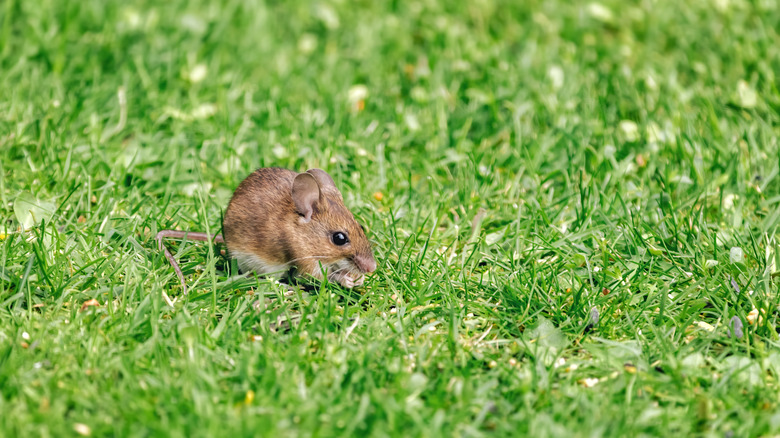
Another major drawback to not raking leaf shed is that it draws in pests. Take ticks, for instance. Vectors of Lyme disease, they seemingly thrive in cold, damp conditions created by leaf litter. And they can remain active year-round in several places. So, to protect your family and pets, it's essential to prevent leaves from accumulating on your turf. Other than ticks, you may also spot reptiles and nuisance animals, including mice and voles, hiding their tunnels underneath the leafy mass. Left alone to their devices, they might wreak havoc on your yard come spring.
Also, did we mention wet leaves are a slip hazard? Surely, breaking your back while you're refilling the bird bath is not how you'd like to spend your winter. Plus, leaves may track into your home, or at the very least, stain your pavement or deck. Apart from avoiding these drawbacks, raking leaves on your lawn can offer a major advantage: it can help dethatch your lawn since you'll also end up removing dead growth.