

Why Are Clay Gardening Pots Called Terracotta?
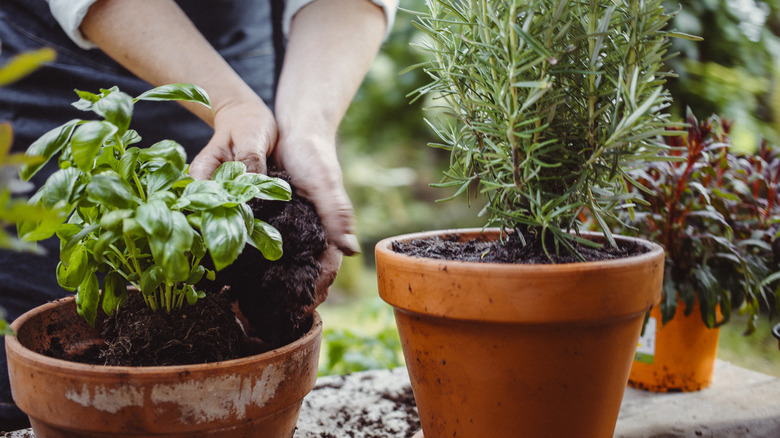
You probably have quite a few terracotta pots scattered around your yard and may have even turned pieces from broken ones into rustic plant labels for your garden beds, but have you ever wondered how these ubiquitous clay containers got their name? The word terracotta, which means "baked earth" in Italian, describes the pots themselves, and it's also sometimes used as a moniker for paints, wallpapers, and textiles in the familiar orange-red color.
Terracotta doesn't just denote the clay that is dug up to make the pots (the "earth" part of the name); it also describes the process of shaping and firing the clay (the "baked" part of the name) when making the planters. Even though the word itself is Italian, terracotta clay can be found on most continents and gets its distinctive color from the high amount of iron in the clay. These clay pots are fired at relatively low temperatures in either an oxidizing or reducing kiln atmosphere. In an oxidizing atmosphere, the iron in the clay oxidizes, turning it that lovely orange-red color we're all familiar with.
Terracotta has been used around the world for thousands of years to make pots, figurines, and building materials. Some of its earliest documented uses date to Neolithic China, and it was also a popular material in ancient Greece and Rome. Today, terracotta clay is still used to make a whole range of beautiful earthenware products.
The making of terracotta pots and their virtues
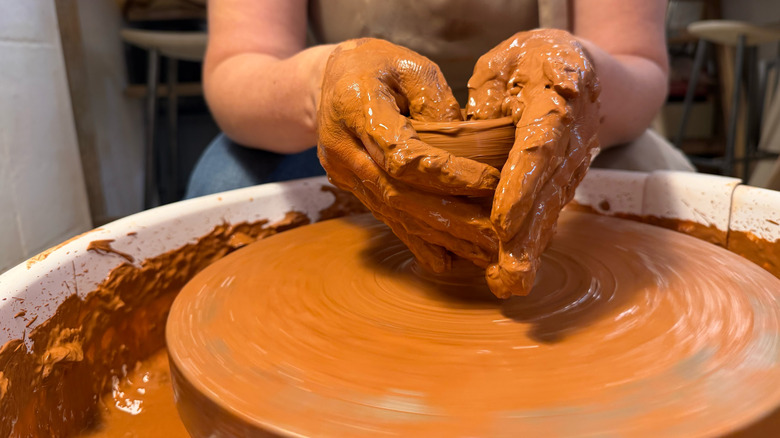
Traditionally, terracotta pots were all crafted by hand before being dried and placed in a kiln to be fired at the right temperature. While artisans worldwide still craft terracotta planters by hand, factories use molds and machinery to shape the pots, a process that takes far less time and produces more uniform results. Of course, firing conditions have also improved since ancient times. Modern kilns offer exact temperature control, helping produce more durable finished products. Apart from being highly functional, terracotta pots are arguably much more sustainable than their plastic counterparts. If you're crafty, you can probably think of any number of clever ways to reuse broken plant pots rather than tossing them in the trash.
One of the benefits of using simple terracotta pots in the garden is that they are relatively inexpensive. You can, of course, also find terracotta planters in enormous sizes and with unique designs — and likely with higher prices to match. Because they are fired at relatively low temperatures, unglazed terracotta pots remain porous, allowing air to circulate around plant roots. However, this also means that the soil dries out more quickly, so plants grown in terracotta pots usually require more frequent watering. The porosity of these clay pots makes them suitable for growing succulents, which like their soil on the drier side. However, if you grow plants that need consistent moisture, don't skip this one crucial step with your terracotta pots or your plants will suffer for it. Add a liner before filling the planter with soil to stop some of that moisture from being wicked away.