

Keep One Nasty Pest Off Your Eggplants Without Using Any Pesticides
We may receive a commission on purchases made from links.
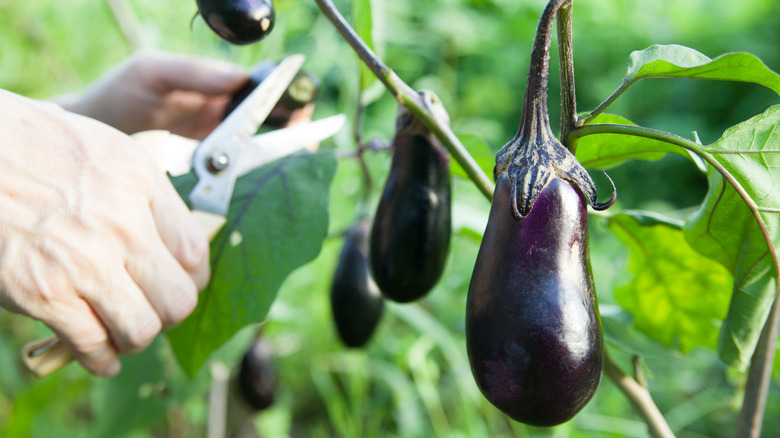
Starting your own organic garden can be challenging. Without relying on the quick fix pesticides offer, you have to find other ways to keep your crops safe from unwanted insects that could ruin them well before you have a chance to enjoy the fruits of your labor. Before you give up and turn back to chemical sprays that could potentially be carcinogenic, dysregulate your hormones, or cause harm to pollinators, consider this simple fix that fights bugs physically. Flea beetles are a particular risk to eggplants in the garden, but sticky tape will quite literally stop them in their tracks.
The term flea beetle encompasses a wide variety of species, but across the board, these insects are tiny jumpers that move from plant to plant chewing holes in the leaves and stems. They're the most active in early spring, and they love to feed on the foliage of plenty of different crops, including cabbage, broccoli, peppers, tomatoes, potatoes, and of course, eggplant. Unfortunately, their busy season coincides with when many of these plants are most vulnerable.
During this time of year, it's especially important to protect young seedlings from harm, so using a chemical-free control method can prevent your eggplants from dying before they become established. All you need for this pest-control method is something sticky — plain packing tape will work, but if you're looking for a hands-free approach, you can also install something like these Faicuk Dual-Sided Yellow Sticky Fly Traps.
How to use sticky tape to capture flea beetles
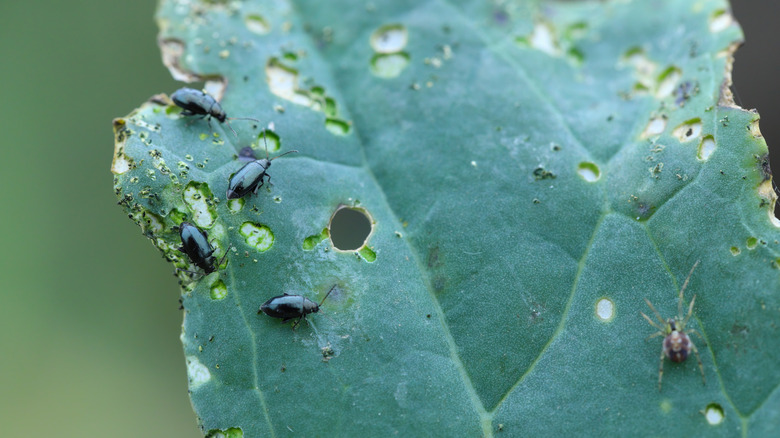
The sticky tape method is very simple. Flea beetles are tiny, so you can catch them without damaging your plants by placing a piece of clear packing tape adhesive side down on the leaves and then lifting it off again. The beetles will stick to the tape. This is a great approach for spot treatments, but it does require some effort to tackle every leaf on your eggplants. Sticky traps are also frequently recommended as a solution. You can place these traps next to your plants in an attempt to catch the flea beetles as they jump around. These traps are lower-maintenance, but they will have the unfortunate side effect of trapping desirable insects as well. Replace them once they're filled with bugs or have gotten dirty.
While both of these sticky methods give you the chance to tackle a flea beetle infestation immediately, they shouldn't be relied on as a standalone treatment. Keeping pesky flea beetles away from your garden plants requires both active treatment and prevention, so sticky traps should be used primarily as a diagnostic tool or a way to nip a very small problem in the bud. Install fine insect netting, rotate your crops, sprinkle some diatomaceous earth, or bring native nematodes into your garden for additional protection. The native braconid wasp Microctonus vittatae is also a natural predator of flea beetles. If you can encourage them to visit your garden with flowering crops, they might take care of the problem for you. The wasp is found throughout North America.