

DIYer Transforms A Simple Plastic Keg Into A Hive For Bees
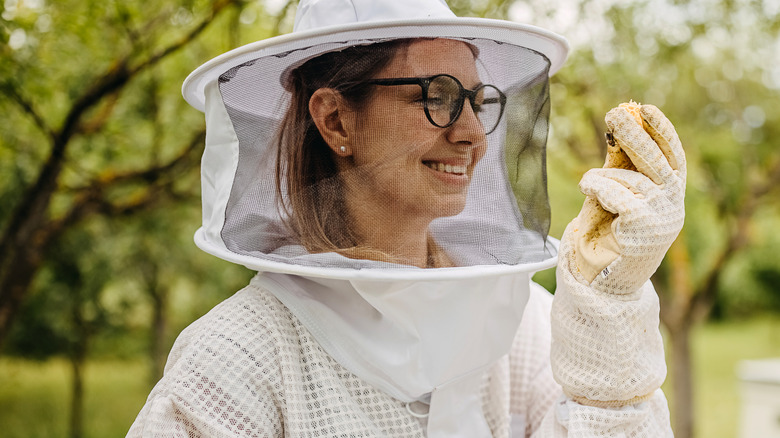
Do you ever find yourself wondering how to bring more bees into your garden? If so, you're not the only one. Gardeners across the country find themselves asking the same question, which often leads to layering their borders with bright and nectar-rich blooms. However, while that's a great way to encourage more of these enigmatic little insects into your yard, there are some out there for whom a few passing visits simply aren't enough. As an example, YouTuber @Advoko MAKES decided to create his very own beehive, not only as a way to encourage more bees, but also to harvest homemade honey. That, in itself, is impressive. What's even more impressive is what the hive is made from: recycled plastic bottles.
To do the same, you'll need a large plastic bottle for your hive, plus some spares that you'll cut down for parts. First, cut holes in the walls of your main hive and insert the necks from your spare bottles for ventilation and honey tapping. You'll also need some wooden skewers to criss-cross the interior and provide a frame for the bees to build on. Use self-adhesive construction foam insulation to protect the hive from extreme temperatures, and when you're ready, mount the whole ensemble securely on wooden planks. Of course, building the hive is just the first of many steps for successful beekeeping. But the point is that if you're already debating which type of beehive to keep in your garden — and are worried about the cost — it's entirely possible to build a hive from just a few very basic (and cheap) materials.
What you should know before building your beehive
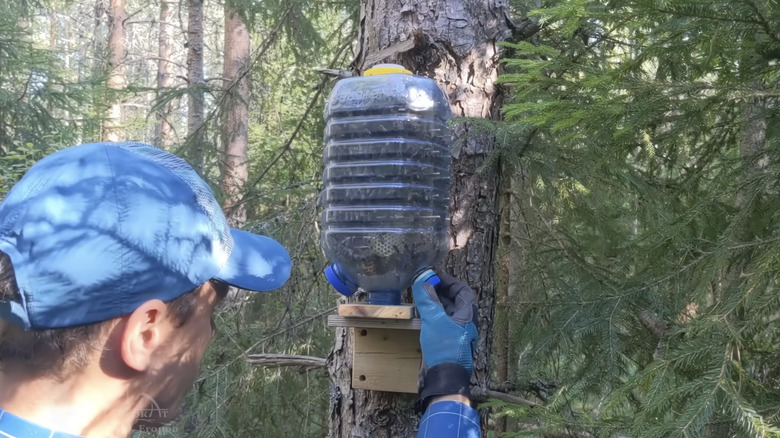
There are so many benefits of having a bee house in your yard that this cheap hive-building project may seem like a no-brainer. But before you start gathering the materials, you should first check the beekeeping rules in your area. As the creator in the video notes, legislation around beekeeping makes it surprisingly complicated. In other words, you need to know whether your state requires you to register your intentions to keep bees, and you also need to learn any restrictions around hive placement and numbers. Oh, and it can't hurt to speak to your neighbors, either. They may be delighted to learn that you're planning to encourage more bees. Equally, they may not be, so it's worth taking the time to let them know about your intentions before you start.
The next thing to know is that, just because you built a hive and managed to get a bee colony started inside, that doesn't guarantee a healthy colony. The video creator in this case adds plenty of ventilation. This is important to keep the hive from condensating inside, which can cause mold and, in turn, health issues among your bees. He also adds insulation, which is needed to protect the interior from extreme temperatures. As a guide to building your own hive, this video is certainly a great place to start. However, to help you understand the finer points and ensure you're in the best position to keep bees, it's recommended that you take a class, join your local beekeeping association, or both. Armed with your new-found knowledge, and equipped with a plastic-keg beehive, you could well find yourself with a garden buzzing with bees — not to mention a steady supply of fresh honey.
How to populate your beehive
The first thing you'll need to do here is ensure your hive is properly installed, safe from the elements (meaning it won't fall down in a stiff breeze), and ready to receive its occupants. Next, it's time to get some bees. You may be able to attract bees to your DIY hive with a fragrant essential oil, like lemongrass, although that relies a little on luck. The oil effectively attracts scouts from a colony, which then bring their friends back to your hive and begin populating it. However, this assumes there's a colony in your area that's on the move. For the best chance of success, lemongrass oil is best used during the swarming season, which, depending on your state, usually runs March through June.
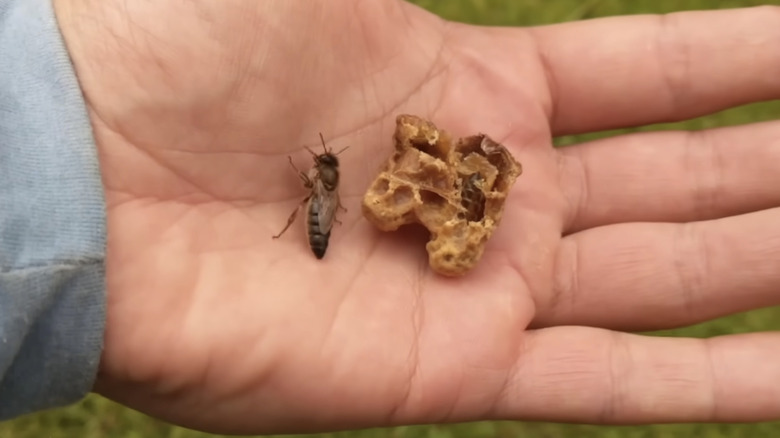
Alternatively, the creator in the above video suggests placing a queen cell into a bottle, then pouring some bees in with it to create a newly populated bee nucleus. As an alternative, you can buy your bees (queen and all) as a package. You can buy literal packages of honey bees and a mated queen. Alternatively, you can buy what's known as a nucleus colony, or "nuc." This features pre-build frames with ready-to-go resources, like honey, pollen, and brood (bee eggs and larvae) along with a small colony of bees and a queen that's already been accepted and mated. To transfer these to your hive, you can do what the creator does and cut out sections of comb, transferring them to your keg's interior by mounting them on your skewers.